























CISO as a Service Explained in Plain English
CISO as a service explained in plain English: what it delivers, how engagements start and how it differs from hiring a full-time executive.

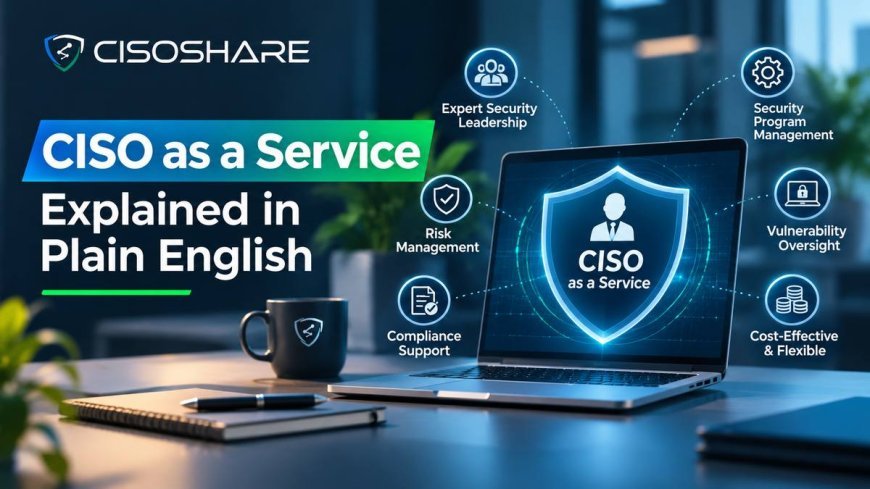
Cybersecurity decisions are not always technical decisions, even when they involve computers, networks, and cloud applications. A business needs someone to determine which information matters most, how risks should be managed, and whether security investments support its goals. CISO as a service gives organizations access to that leadership through a contracted arrangement rather than requiring them to hire a permanent chief information security officer. The service can be useful when executives need a coherent security plan but lack the internal expertise or capacity to develop one. Understanding what the service actually delivers helps businesses avoid confusing security leadership with a collection of technical tools.
What CISO as a Service Means for Your Business
A chief information security officer, commonly called a CISO, helps direct the way an organization protects its information and manages security risk. The role connects technical findings with business decisions about money, operations, customer relationships, and accountability. An external service provides this function according to a defined scope of responsibilities and an agreed schedule. Some arrangements involve a named leader supported by other professionals, while others concentrate on periodic executive advice. The exact responsibilities depend on the provider and the maturity of the organization receiving support.
A simple example of security leadership
Imagine a company that sells subscription software to other businesses and receives a customer questionnaire about its security practices. Its engineers know how the application works, but nobody has a complete picture of the company's risk decisions, policies, and supporting evidence. A security leader can bring these people together, identify missing processes, and establish a plan for addressing them. The leader can also help management decide whether requested changes are reasonable and how to communicate the company's position to customers. This is a governance function rather than simply an exercise in filling out a questionnaire.
What happens when an engagement begins
A productive engagement starts with understanding the organization rather than immediately prescribing a standard package of controls. The external leader needs to learn how the business generates revenue, where sensitive information is stored, and which systems support essential operations. Discussions with executives and technical staff reveal existing responsibilities, constraints, and concerns. Supporting cyber security risk management services can help translate this information into a structured view of threats, weaknesses, and potential business consequences. The resulting assessment should provide a defensible basis for selecting the first projects.
Developing priorities that management can understand
A security roadmap turns the initial assessment into a sequence of tasks with owners and expected outcomes. A company may need to improve employee account management before investing in more sophisticated detection technologies. Another may have reasonable technical controls but lack procedures for handling supplier risks or reporting incidents. The roadmap should explain the reasons for prioritizing each action rather than present an unranked list of recommendations. Executives can then allocate resources and revisit priorities when business conditions change.
How technical security services fit into the model
Security leadership establishes direction, but a program also needs practical activities that identify and address weaknesses. For example, vulnerability management as a service can help organizations discover, prioritize, and track weaknesses across an agreed technology scope. The security leader can establish remediation expectations and ensure that teams understand which findings need urgent attention. Operational teams then carry out fixes or implement compensating measures where immediate remediation is impractical. Regular reviews help confirm that the process is reducing exposure rather than merely accumulating scan results.
Testing whether controls work
A business may also use penetration testing as a service to evaluate security weaknesses through authorized testing within a defined scope. Testing can provide evidence of how weaknesses might affect systems and help teams validate their assumptions about existing controls. It does not replace continuous vulnerability management because the environment can change after the test concludes. A security leader can help select testing priorities, evaluate findings, and coordinate follow-up activities with the relevant system owners. Retesting important fixes provides a more meaningful outcome than simply receiving a report.
Connecting security governance with compliance
Security requirements may come from customers, industry rules, contractual obligations, or internal business policies. A governance program helps organizations understand these requirements and determine how existing controls address them. Where independent certification is a business objective, ISO 27001 Certification Services can help develop and maintain the information security management system needed for assessment. The external leader can coordinate policy development, risk treatment, and evidence collection without claiming that preparation itself constitutes certification. Management must remain involved because its decisions and commitment are part of an effective governance system.
Making policies useful to employees
Policies should explain how people are expected to handle information and use company systems in ordinary working situations. A policy that nobody reads or understands is unlikely to produce consistent behavior, even if it looks impressive in an audit folder. The security leader can help establish rules that are practical for the organization's size and operating model. Training, clear ownership, and appropriate exceptions make those rules easier to follow. Periodic reviews ensure that documents remain aligned with actual systems and business practices.
How the service differs from hiring a full-time executive
A fractional CISO typically dedicates an agreed portion of working time to an organization, while a permanent executive may be available throughout the working week. Businesses considering outsourced CISO services should evaluate how much leadership, implementation support, and emergency availability they really need. An external arrangement can offer flexibility, but it does not automatically provide the same capacity as a full-time employee. Companies with complex environments may benefit from a combination of internal leaders and external specialists. The best structure depends on the workload and the organization's ability to carry out security decisions.
Measuring the effectiveness of an external CISO
Organizations using CISO as a service should agree on reporting expectations before work begins. Useful measures can include the status of major risks, completion of planned control improvements, and evidence that important processes are operating. Executive reporting should explain the business implications of unresolved issues and identify decisions requiring management attention. Measures should also reflect changes in scope, such as acquiring another company or adopting a new cloud platform. A reliable reporting process makes the engagement accountable without suggesting that all security risks can be eliminated.
Frequently Asked Questions
Is this service the same as managed IT support?
No, managed IT support generally focuses on operating and maintaining technology. Security leadership focuses on governance, risk decisions, and the direction of the security program. The two functions may collaborate on activities such as access management and incident response. A provider can offer both functions, but the responsibilities should be clearly defined. Ask how security decisions will be escalated independently of routine IT operations.
Do we need a large security team to use the service?
A large internal team is not necessary for every engagement. Smaller organizations may rely on existing IT staff, business owners, and selected external specialists to implement improvements. The external leader can help establish responsibilities and identify missing capabilities. Companies should still reserve time and resources for operational changes. Leadership alone cannot implement every recommended control without cooperation from the people who manage systems.
Does the service include monitoring around the clock?
Continuous monitoring is a separate operational capability unless the contract specifically includes it. Executive security guidance does not automatically mean that a team is watching alerts at all hours. Ask which monitoring services, escalation procedures, and response commitments are included. Companies with important systems may need additional coverage based on their risks. Clear agreements help prevent misunderstandings during an actual security event.
How often should we meet our external CISO?
Meeting frequency should match the pace of security work and the decisions required from management. A new program may need frequent working sessions while a mature program may operate with a less intensive schedule. Regular governance meetings provide opportunities to review progress and unresolved risks. Urgent decisions should have a separate escalation path rather than wait for the next scheduled meeting. The cadence can be adjusted as the organization changes.
Can we use the service temporarily?
Yes, an external arrangement may help during a leadership vacancy, business transition, or period of accelerated growth. The organization should establish what it expects to accomplish and how responsibilities will transfer afterward. Documented decisions, policies, and risk records support continuity when a new leader takes over. Some companies retain external support even after appointing an internal executive. The arrangement should be reviewed against evolving business needs.
Conclusion
Understanding CISO as a service starts with recognizing that cybersecurity requires leadership as well as technical execution. A well-defined engagement can help organizations establish priorities, coordinate specialists, and communicate security decisions to executives. Its value depends on a realistic scope and a commitment to implementing the agreed improvements. CISOSHARE brings executive security guidance together with resources that can support the wider security program. Contact CISOSHARE to explore an approach that matches your organization's current capabilities and business objectives.
What's Your Reaction?
 Like
0
 Dislike
0
 Love
0
 Funny
0
 Angry
0
 Sad
0
 Wow
0