






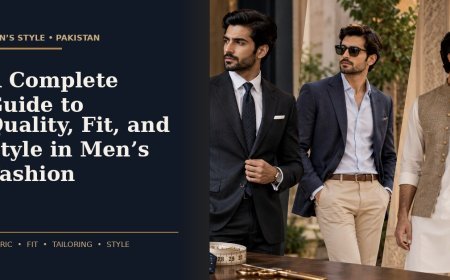












A Complete Guide to Quality, Fit, and Style in Men’s Fashion
Learn how fabric quality, proper fit, tailoring, and smart styling can help men build a refined, comfortable, and versatile wardrobe for every occasion.

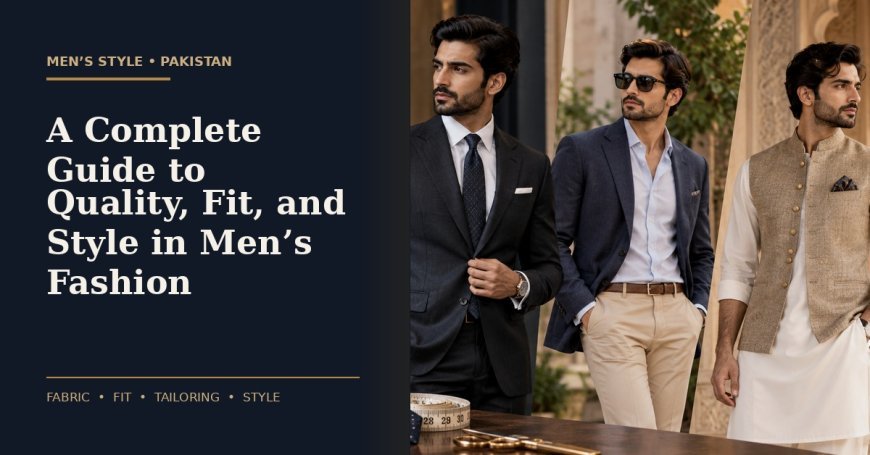
Men's fashion becomes easier to understand when you stop chasing every trend and focus on three fundamentals: quality, fit, and style. Quality determines how well a garment is made, fit determines how naturally it sits on the body, and style determines whether it is worn effectively. For shoppers considering premium men’s clothing Pakistan, learning these principles can prevent many poor buying decisions.
A garment can use excellent fabric and still look wrong because of poor fit.
Another can fit perfectly but use weak construction.
The best clothing gets all three areas right.
Understanding Quality
Quality includes much more than fabric.
Look at stitching, seams, buttons, collars, linings, finishing, and durability.
A high-quality garment should continue looking presentable after regular wear.
That means quality should be judged over time, not just in the fitting room.
Fabric Is the Foundation
Fabric affects comfort, breathability, durability, structure, and drape.
The correct material depends on the garment.
A summer kurta has different needs from a formal suit.
A business shirt needs different characteristics from a sherwani.
Do not assume heavier always means better.
The fabric simply needs to be appropriate.
Inspect Construction
Look closely at the stitching.
It should appear consistent.
Buttons should feel secure.
Buttonholes should be clean.
Internal seams should be properly finished.
On structured clothing, examine the lining and shape.
Small construction details often reveal whether a garment was produced carefully.
Fit Begins at the Shoulders
For shirts, blazers, and jackets, shoulder alignment is extremely important.
The seam should sit near the natural edge of your shoulder.
If it drops too far, the garment may look oversized.
If it sits too far inward, movement can become restricted.
Check Chest and Waist
The garment should close comfortably.
Buttons should not pull excessively.
At the same time, too much loose fabric can create an untidy silhouette.
Good fit follows the body without restricting it.
Sleeve and Trouser Length Matter
Sleeves that are too long can make even a quality shirt look careless.
Trousers that gather heavily over the shoes create a similar problem.
Fortunately, these are often straightforward tailoring adjustments.
Fit Is Not Tightness
A tight garment is not necessarily well fitted.
Good clothing allows movement.
You should be able to sit, walk, and move naturally.
Different body types require different cuts.
Traditional Clothing Needs Good Proportions Too
Eastern menswear may have more relaxed silhouettes, but balance still matters.
Look at shoulders, sleeves, kurta length, collar shape, and waistcoat fit.
Sherwanis and prince coats need structure while still allowing comfortable movement.
Style Depends on Occasion
Once quality and fit are right, styling becomes easier.
A polo and chinos may work for a smart-casual dinner.
A suit may be appropriate for an important meeting.
A kurta with a waistcoat may be ideal for a family event.
There is no single outfit that works everywhere.
Context determines style.
Color Coordination
Start with versatile shades.
Navy, charcoal, white, beige, grey, black, brown, and light blue work across many outfits.
Stronger colors can then be introduced selectively.
Footwear Completes the Look
Shoes should match the level of formality.
Suits usually need formal leather shoes.
Chinos work with loafers or clean sneakers.
Traditional clothing may work with khussa, Peshawari sandals, or refined loafers.
Tailoring Can Improve Ready-to-Wear
Not every wardrobe needs to be custom-made.
Small alterations can improve sleeves, trouser length, waist fit, and shirt width.
These adjustments can make relatively simple clothing look significantly more refined.
Versatility Improves Style
The best wardrobes contain interconnected pieces.
A navy blazer should work with multiple trousers.
A white shirt should work with several jackets.
A neutral kurta should work with different waistcoats.
This type of wardrobe planning is also why Collar n Cuff fits naturally into the conversation around modern Pakistani menswear, where eastern clothing, formal western pieces, fabrics, and tailoring often overlap.
Final Thoughts
Quality, fit, and style are not separate ideas.
They depend on each other.
Quality tells you whether a garment is worth owning.
Fit determines whether it works on your body.
Style determines whether you are using it appropriately.
Learn these three fundamentals and menswear becomes much easier to understand.
FAQs
What matters most in men's fashion?
Fit, fabric quality, construction, comfort, and suitability for the occasion are key.
Is fit more important than brand?
In most real situations, well-fitted clothing looks better than expensive clothing that fits poorly.
How can you identify quality clothing?
Inspect the fabric, stitching, seams, buttons, lining, and finishing.
Should men's clothes be tight?
No. Proper fit should create clean proportions while allowing movement.
What's Your Reaction?
 Like
0
Like
0
 Dislike
0
Dislike
0
 Love
0
Love
0
 Funny
0
Funny
0
 Angry
0
Angry
0
 Sad
0
Sad
0
 Wow
0
Wow
0