











How PgMP and PfMP Certifications Can Strengthen Your Program and Portfolio Management Career

In today's competitive business environment, organizations need experienced professionals who can manage complex initiatives, align business objectives with strategic priorities, and deliver measurable results. Professionals who can lead multiple projects or oversee strategic investments are increasingly focused on developing advanced management and leadership capabilities.
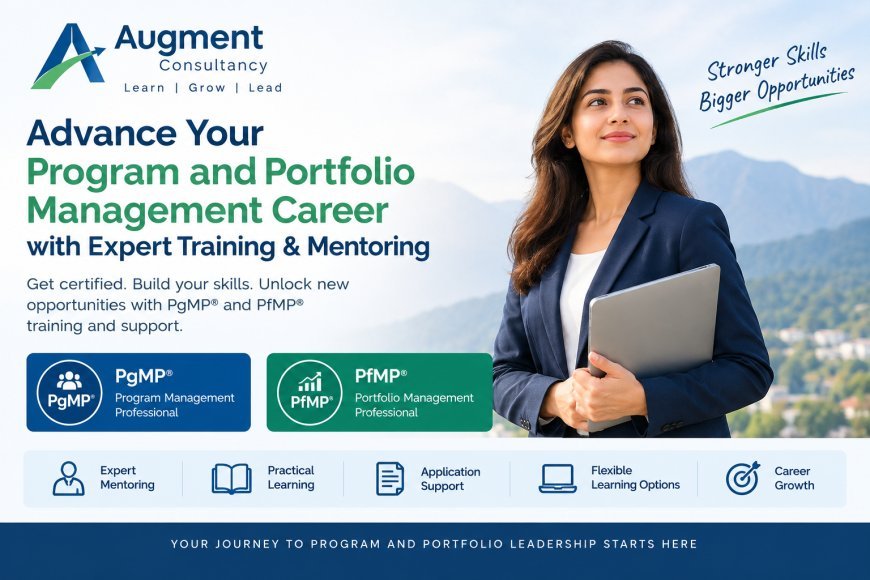
The PgMP and PfMP certification training offered by Augment Consultancy can help experienced professionals prepare for advanced program and portfolio management credentials through structured learning, mentoring, and practical guidance.
Understanding Program and Portfolio Management
Program and portfolio management help organizations connect business strategy with execution. Although both disciplines support organizational objectives, they focus on different levels of decision-making.
Program management involves coordinating related projects to achieve benefits that may not be possible when managing each project independently. Program managers oversee dependencies, stakeholder expectations, risks, governance, and benefits realization.
Portfolio management focuses on selecting, prioritizing, and managing investments across programs, projects, and other initiatives to support strategic business objectives.
Professionals looking to strengthen these capabilities can explore program and portfolio management learning resources to support their professional development.
What Is the PgMP Certification?
The Program Management Professional (PgMP) certification is designed for experienced professionals who manage multiple related projects and coordinate their activities to achieve strategic business benefits.
Preparing for the PgMP certification can help candidates develop a deeper understanding of program strategy alignment, governance, stakeholder engagement, benefits management, and program risk management.
Important areas of program management include:
-
Program strategy alignment and governance.
-
Benefits management and realization.
-
Stakeholder engagement and communication.
-
Program risk and issue management.
-
Program planning and performance monitoring.
-
Coordination of interdependent projects and resources.
For professionals seeking senior program management responsibilities, structured PgMP training and mentoring can provide a systematic way to review essential concepts and prepare for the examination.
What Is the PfMP Certification?
The Portfolio Management Professional (PfMP) certification is intended for experienced professionals who oversee portfolios of projects, programs, and other organizational investments.
Portfolio managers help organizations prioritize initiatives, allocate resources, assess risks, and evaluate whether investments contribute to strategic objectives.
The PfMP certification is relevant to professionals interested in strengthening their understanding of portfolio governance, strategic alignment, investment prioritization, performance measurement, and value delivery.
Key portfolio management areas include:
-
Strategic alignment and portfolio planning.
-
Portfolio governance and oversight.
-
Investment prioritization and resource allocation.
-
Portfolio risk assessment.
-
Performance measurement and value delivery.
-
Strategic stakeholder engagement.
Professionals seeking a structured preparation approach can explore PfMP certification preparation and identify learning options that suit their experience and career goals.
PgMP vs. PfMP: Which Certification Should You Choose?
The right certification depends on your current responsibilities and long-term professional objectives.
PgMP is generally suited to professionals who coordinate related projects, manage program dependencies, and focus on realizing benefits. PfMP is more relevant to professionals responsible for portfolio-level decisions, strategic investment priorities, and resource allocation.
Before choosing either credential, review the applicable Project Management Institute (PMI) eligibility requirements and examination information.
Candidates who need help organizing their preparation can explore PgMP and PfMP exam preparation support to find an approach aligned with their professional experience.
Why Structured Certification Preparation Matters
Advanced certification preparation requires more than memorizing definitions. Candidates must understand management principles and apply them to realistic business scenarios.
A structured learning plan can help candidates identify knowledge gaps, manage their study schedules, and prepare more effectively.
Understand the certification framework: Review the examination content and relevant professional standards to understand the concepts being assessed.
Assess your existing knowledge: Identify areas where additional study or practical clarification may be necessary.
Learn through case studies: Use realistic scenarios to understand governance, stakeholder management, strategic alignment, and benefits realization.
Prepare your application: Organize your professional experience accurately and follow the applicable certification application requirements.
Practice examination questions: Use practice questions and mock assessments to identify weak areas and improve time management.
Review your progress: Revisit challenging concepts and adjust your preparation plan based on your performance.
Through certification mentoring and application review support, candidates can seek guidance to organize their learning and better understand the certification process.
How Augment Consultancy Supports PgMP and PfMP Aspirants
Augment Consultancy provides learning and mentoring services for professionals preparing for PgMP and PfMP certifications. Its offerings focus on structured preparation, practical learning, application guidance, and understanding program and portfolio management concepts.
Depending on the selected program, learners may benefit from the following resources.
Live Online Mentoring
Live online mentoring allows participants to discuss difficult concepts, ask questions, and learn through guided explanations. This approach can be helpful for working professionals who prefer structured sessions.
Explore online PgMP and PfMP mentoring to learn about the available preparation options.
Self-Paced Learning
Self-paced learning gives professionals flexibility to study around work commitments. Learners can review course materials according to their schedules and revisit challenging subjects when necessary.
The certification preparation programs can be explored to identify suitable learning options.
Application Writing and Review Support
Certification applications require clear and accurate documentation of professional experience. Application review support can help candidates organize their experience and understand the relevant requirements.
Learn more about PgMP and PfMP application support and prepare your application using accurate information about your own responsibilities and achievements.
Practice Questions and Case Studies
Scenario-based exercises encourage candidates to apply management concepts to practical situations. These activities can help learners assess their understanding and identify topics that need further revision.
Structured PgMP and PfMP exam preparation can support a more organized approach to practice and revision.
Professional Mentoring
Mentoring can help candidates clarify complex topics, evaluate their readiness, and develop a focused study plan.
Professionals interested in guided learning can visit Augment Consultancy's official website to review its services and available programs.
Balancing Certification Preparation with a Full-Time Job
Many certification candidates work in demanding professional roles while preparing for examinations. A realistic study plan can make the process more manageable.
Begin by establishing a weekly schedule based on your available time. Divide the syllabus into smaller topics and allocate time for reading, practice questions, and revision.
Track your progress by evaluating how well you understand the concepts and apply them to realistic management scenarios rather than measuring progress only by study hours.
Regular revision and practice assessments can help you identify weak areas and prioritize your remaining preparation time.
Candidates who prefer additional structure can consider PgMP and PfMP preparation guidance when planning their learning journey.
Career Opportunities After PgMP and PfMP Certification
Program and portfolio management skills are relevant across industries such as information technology, consulting, finance, healthcare, manufacturing, and infrastructure.
Depending on experience and organizational requirements, related professional roles may include:
-
Program Manager
-
Senior Program Manager
-
Portfolio Manager
-
PMO Leader
-
Strategic Initiatives Manager
-
Transformation Program Leader
-
Enterprise Project Management Leader
Certification can demonstrate specialized knowledge, but career progression also depends on practical experience, leadership ability, industry knowledge, and measurable professional achievements.
For professionals planning their next career step, program management and portfolio management certification training can be one component of a broader professional development strategy.
Building Long-Term Leadership Capabilities
Successful program and portfolio leaders continually improve their strategic thinking, communication, decision-making, and stakeholder management skills.
They learn from previous initiatives, evaluate outcomes, and adapt their approaches to changing organizational priorities.
Preparing for advanced certifications can provide an opportunity to revisit established practices and strengthen an understanding of strategic execution. Applying these concepts in the workplace is essential for translating learning into professional value.
With structured learning and PgMP and PfMP certification mentoring, professionals can work toward their development goals while building a stronger foundation in program and portfolio management.
Conclusion
The PgMP and PfMP certifications can help experienced professionals demonstrate their understanding of program and portfolio management. PgMP emphasizes coordinating related projects and realizing program benefits, while PfMP focuses on strategic investment decisions and portfolio performance.
Choosing the appropriate credential requires an assessment of your experience, professional responsibilities, and career objectives. A structured study plan, practical exercises, application preparation, and mentoring can make the learning process more organized.
To explore relevant courses, mentoring, and certification preparation options, visit Augment Consultancy and review the programs that align with your professional goals.
What's Your Reaction?
 Like
0
Like
0
 Dislike
0
Dislike
0
 Love
0
Love
0
 Funny
0
Funny
0
 Angry
0
Angry
0
 Sad
0
Sad
0
 Wow
0
Wow
0