

















Non-Invasive Brain Therapy Honolulu: Exploring Modern Approaches to Brain Health
Explore non-invasive brain therapy in Honolulu, including brain mapping, qEEG, neurofeedback, and neuro-motor rehabilitation options at KOS Integrative Health.

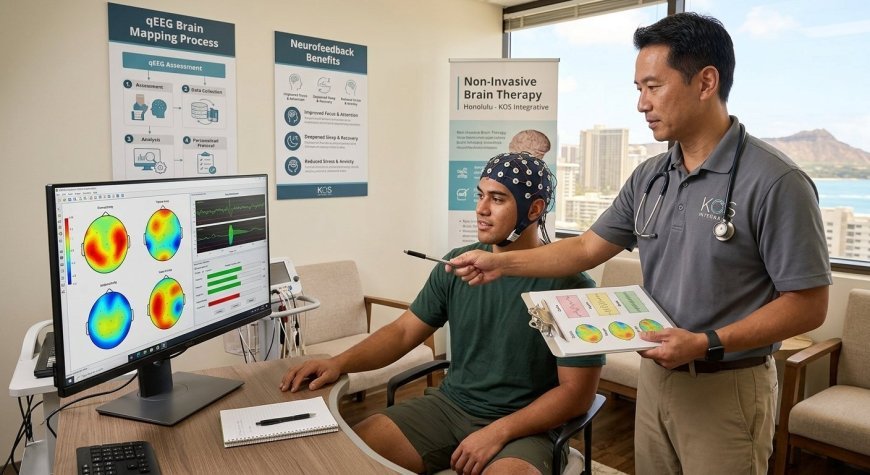
Brain health plays an important role in movement, balance, attention, memory, coordination, and everyday activities. When people experience difficulties with these functions, they may explore different brain health and rehabilitation services. For individuals searching for non-invasive brain therapy in Honolulu, understanding the available approaches can be a useful first step toward finding appropriate care.
Non-invasive approaches may include brain activity assessments, neurofeedback, neurological rehabilitation, and selected forms of brain stimulation. Each approach serves a different purpose, and the most appropriate option depends on a person's symptoms, health history, and treatment goals.
What Is Non-Invasive Brain Therapy?
Non-invasive brain therapy is a broad term for approaches that assess or work with brain function without surgery or implanted devices. Depending on the technique, these approaches may involve measuring brain activity, providing feedback during training, or using specific methods to stimulate brain circuits.
For example, quantitative electroencephalography (qEEG) records and analyzes electrical activity in the brain. Neurofeedback provides information about brain activity during a training session, while certain brain stimulation techniques have specific clinical applications.
These approaches are not interchangeable. Their purposes, supporting evidence, and suitability vary, so individuals should consult qualified professionals before starting a program.
Why Explore Non-Invasive Brain Therapy in Honolulu?
People in Honolulu may seek brain health services for different reasons. Some want to understand difficulties with concentration or coordination, while others are interested in rehabilitation following an injury.
Common concerns that may prompt an evaluation include:
-
Difficulty with balance or coordination
-
Challenges involving attention or concentration
-
Changes in movement following an injury
-
Concerns about visual-motor coordination
-
Interest in understanding brain activity
-
Specific neurological rehabilitation goals
These concerns can have several possible causes. A professional assessment can help determine whether additional testing, rehabilitation, or medical evaluation may be appropriate.
Understanding Brain Mapping and qEEG
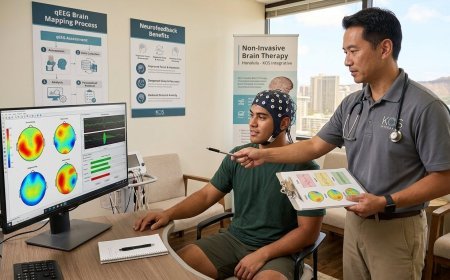
Brain mapping using quantitative electroencephalography is an assessment method that records and analyzes patterns of electrical activity in the brain.
During a qEEG assessment, sensors measure brainwave activity, and specialized software helps organize the recorded information. A qualified professional may interpret the findings alongside a person's symptoms, history, and other assessment results.
Brain mapping is an assessment tool, not a treatment by itself. Results should not be used alone to diagnose a medical or neurological condition.
For individuals interested in understanding brain function, asking how an assessment is performed and how its findings will inform a care plan can help establish realistic expectations.
How Neurofeedback Works
Neurofeedback is a form of training that provides information about brain activity in real time. Depending on the system, participants may receive visual or audio feedback during a session.
The aim is to help individuals practice regulating aspects of their brain activity. Training methods and intended outcomes can vary, and the evidence differs depending on the condition being addressed.
Neurofeedback should not be considered a guaranteed solution for attention difficulties, sleep concerns, anxiety, or other health conditions. Individuals should discuss the potential benefits, limitations, and alternatives with a qualified provider.
Non-Invasive Brain Therapy Honolulu: Exploring Available Options
Individuals searching for non-invasive brain therapy Honolulu may explore different approaches to brain health, including brain mapping, qEEG, neurofeedback, and neuro-motor rehabilitation. Choosing the right approach begins with understanding individual needs and consulting a qualified provider. Learning about available services can help individuals make informed decisions about their brain health and rehabilitation goals.
At KOS Integrative Health, services related to brain function and movement include brain mapping and qEEG, neurofeedback, and neuro-motor rehabilitation. Each service has a different purpose, so a consultation can help determine which options may be appropriate for an individual's goals.
Non-Invasive Brain Therapy and Neuro-Motor Rehabilitation
The brain and body work together to support movement, posture, balance, and coordination. The nervous system helps coordinate muscle activity and responses to changes in the surrounding environment.
Neuro-motor rehabilitation focuses on movement control and brain-body coordination. Depending on the person's needs, a rehabilitation program may involve balance exercises, movement activities, coordination tasks, posture training, and visual-motor exercises.
These approaches may be considered for people with specific functional challenges or rehabilitation goals. The exercises and treatment plan should be adapted to the individual rather than applied identically to everyone.
Exploring Brain Health Support After a Concussion
A concussion can affect concentration, balance, sleep, vision, and other aspects of daily functioning. Recovery varies between individuals, and persistent symptoms may require professional assessment.
A concussion recovery plan may involve medical evaluation, symptom monitoring, guidance on returning to normal activities, and rehabilitation based on individual needs. Depending on the assessment, rehabilitation may address balance, coordination, or visual-motor difficulties.
People considering brain health services after a concussion should ask providers about their qualifications and experience with concussion rehabilitation.
It is also important to understand that not every brain-training or stimulation technique is an established concussion treatment. Evidence varies across approaches, and patients should discuss potential benefits and risks with a qualified healthcare professional.
Who May Benefit From a Brain Health Evaluation?
A brain health evaluation may be worth discussing with a healthcare professional when someone experiences ongoing concerns involving attention, movement, balance, or coordination.
An assessment may also help clarify whether a person's goals are better addressed through rehabilitation, further medical evaluation, or another form of care.
Factors that may inform an individualized plan include:
-
Current symptoms and how long they have been present
-
Medical history and previous injuries
-
Daily activities affected by the symptoms
-
Existing diagnoses and treatments
-
Personal rehabilitation goals
The appropriate next step should be based on an individual's circumstances and a professional assessment, not simply on the popularity of a particular therapy.
What to Expect During an Initial Evaluation
An initial appointment may begin with a discussion of symptoms, medical history, daily challenges, and personal goals. Depending on the service being considered, the provider may assess aspects of movement, balance, coordination, or brain activity.
If additional testing or rehabilitation is appropriate, the provider should explain the purpose of the service and how the findings may influence the plan.
Before starting, consider asking:
-
What does this assessment measure?
-
How will the results influence my care plan?
-
What evidence supports the recommended approach?
-
Are there possible risks or limitations?
-
How will progress be evaluated?
-
Should I continue working with my existing healthcare provider?
Clear answers can help individuals understand the process and make informed decisions.
Choosing a Provider for Non-Invasive Brain Therapy in Honolulu
Choosing a brain health provider requires more than finding a convenient location. Services differ in their methods, professional requirements, evidence, and clinical applications.
When comparing providers, consider the following factors.
Professional qualifications: Check the provider's training and experience with the specific service offered.
Individual assessment: Look for an approach that considers your symptoms, history, and goals.
Clear explanations: A provider should explain what a technique may help with and what its limitations are.
Progress monitoring: Ask how outcomes will be measured and how the care plan may be adjusted.
Coordination of care: If you have ongoing neurological symptoms or an existing medical condition, ask whether coordination with your other healthcare professionals is appropriate.
These steps can help you evaluate available options and avoid unrealistic promises.
Brain Health Services at KOS Integrative Health
KOS Integrative Health provides services in Honolulu related to brain function and neurological movement, including brain mapping and qEEG, neurofeedback, and neuro-motor rehabilitation.
Brain mapping assesses patterns of electrical activity, neurofeedback provides feedback-based training, and neuro-motor rehabilitation focuses on movement and coordination. These services have different purposes and should be considered in light of each person's needs.
Final Thoughts on Non-Invasive Brain Therapy Honolulu
Finding an appropriate approach to brain health begins with understanding the available services and identifying the concerns that need attention. Brain mapping, neurofeedback, and neuro-motor rehabilitation serve different purposes, and no single method is suitable for everyone.
A qualified professional can help evaluate individual needs, explain the available options, and establish realistic goals. By focusing on personalized assessment, evidence-informed care, and progress monitoring, individuals can make more informed decisions about supporting brain health and daily function. Readmore blogs
What's Your Reaction?
 Like
0
Like
0
 Dislike
0
Dislike
0
 Love
0
Love
0
 Funny
0
Funny
0
 Angry
0
Angry
0
 Sad
0
Sad
0
 Wow
0
Wow
0