
























What Is a Forward Deployed Engineer? The Role Redefining Enterprise AI in 2026
In 2026, enterprises are no longer struggling to understand AI - they are struggling to deploy it. Proof-of-concept demos abound; production-grade AI that actually runs in a customer's stack does not. That gap is exactly where the Forward Deployed Engineer (FDE) lives.
Demand for FDEs has surged 800% since 2024. With over 224 open roles tracked globally, the title has moved from niche to essential inside any organisation serious about putting large language models, agentic workflows, and RAG pipelines into production. Unlike a solutions engineer who advises, or an AI consultant who delivers a slide deck, an FDE ships code — inside the client's environment, alongside the client's team, until the system is live and stable.
This guide explains what a Forward Deployed Engineer is, what skills the role requires, which industries are hiring them, and how to find and engage one quickly. If your enterprise AI project is stuck between demo and deployment, this is the role you are missing.
Forward Deployed Engineer vs Solutions Engineer vs AI Consultant
The confusion is understandable — all three roles sit at the intersection of technology and the customer. The difference is in what they actually produce.
|
Dimension |
Forward Deployed Engineer |
Solutions Engineer |
AI Consultant |
|---|---|---|---|
|
Primary output |
Working production code |
Technical sales support |
Strategy documents |
|
Works inside client stack? |
Yes |
Occasionally |
Rarely |
|
Commits to the codebase? |
Yes |
No |
No |
|
Typical engagement length |
3–12 months |
Pre-sales cycle |
4–16 weeks |
|
Deploys AI to production? |
Yes, as the primary job |
Demos only |
Recommends a roadmap |
|
Embedded with client team? |
Yes, daily |
No |
Periodic check-ins |
|
Success metric |
AI system live in prod |
Deal signed |
Report delivered |
An FDE is, in short, the engineer who stays until the thing works — not until the proposal is accepted or the engagement is over.
Core Skills and Technical Responsibilities of an FDE
A Forward Deployed Engineer is a full-stack AI practitioner, not a specialist. The role demands breadth across the modern AI engineering stack, combined with the judgment to know which tool to reach for in a given enterprise environment.
AI and ML engineering
- RAG (Retrieval-Augmented Generation) pipeline design: chunking strategies, embedding models, vector store selection (Pinecone, Weaviate, pgvector), retrieval tuning, re-ranking
- Agentic workflow development: multi-step reasoning chains, tool-calling agents, ReAct and Plan-and-Execute patterns, memory and state management
- LLM integration: API orchestration (OpenAI, Anthropic, Azure OpenAI, Bedrock), prompt engineering, context management, cost optimisation
- Eval engineering: building automated evaluation suites, RAGAS scoring, red-teaming, hallucination monitoring
- Fine-tuning and RLHF: LoRA/QLoRA, DPO, dataset curation for domain-specific models
Infrastructure and integration
- Legacy system integration: REST and SOAP API wrapping, ETL pipelines, database connectors (SQL, NoSQL, data warehouses)
- Cloud-native deployment: AWS, Azure, GCP; Kubernetes, Docker, serverless LLM inference
- Security and compliance: data residency, PII redaction, audit logging, SOC 2 and HIPAA-aligned architectures
Soft skills that matter as much as the technical stack
- Working directly with the client's engineering and product teams — translating between business requirements and implementation details
- Prioritising ruthlessly: an FDE decides what gets shipped first when everything is urgent
- Writing runbooks and handoff documentation so the client's team can own the system after the engagement ends
Industries Hiring Forward Deployed Engineers
FDEs are in demand wherever AI deployment complexity is high and the cost of a failed rollout is significant. Six sectors account for the majority of current demand.
Banking, Financial Services and Insurance (BFSI) FDEs deploy AI credit underwriting models, fraud detection agents, and regulatory document processing pipelines. The challenge here is compliance: systems must run inside the bank's own infrastructure, log every decision, and pass internal audit. FDEs who understand SOC 2, ISO 27001, and explainability requirements are in particularly short supply.
Healthcare Clinical documentation automation (ambient AI scribes), prior authorisation agents, and diagnostic support tools all require FDE-level integration work. HIPAA-compliant deployments, EHR connectors (Epic, Cerner, HL7/FHIR), and zero-hallucination requirements for clinical text make this one of the most technically demanding verticals.
Logistics and Supply Chain Demand forecasting agents, route optimisation co-pilots, and warehouse management AI are reducing costs significantly at scale. FDEs integrate these systems with WMS, TMS, and ERP platforms — connections that pre-packaged AI solutions cannot handle out of the box.
E-commerce and Retail Personalised recommendation engines, AI-powered catalogue management, and customer support agents are table stakes in 2026. FDEs deploy these at scale with real-time inference, A/B testing hooks, and existing commerce platform integrations.
SaaS Companies Product teams shipping AI features (copilots, generation, search) rely on FDEs to build the underlying AI layer — the retrieval system, the prompt pipeline, the eval harness — before their own engineers take ownership of it.
Enterprise Technology Large technology firms use FDEs to accelerate internal AI adoption: code review agents, knowledge management tools, internal search systems, and IT support automation.
How FDEs Work With Enterprise Data Services and Legacy Systems
The hardest part of enterprise AI deployment is not the model — it is the data layer. Most enterprise systems were not built with AI in mind. Customer records live in CRMs that predate the API economy. Financial data sits in mainframe databases. Operations data is scattered across a dozen point solutions that talk to each other through scheduled batch jobs.
An FDE's job is to bridge this reality with modern AI capabilities. This requires deep experience with enterprise data services the pipelines, warehouses, streaming platforms, and orchestration layers that move data where it needs to go.
What FDEs do at the data layer
- Data ingestion and normalisation: building connectors to SAP, Salesforce, Oracle, and custom databases; normalising schema differences; handling PII masking before data enters the AI pipeline
- Streaming vs. batch: determining whether a use case needs real-time context (a customer service agent that sees the live ticket queue) or batch-updated knowledge bases (a weekly-refreshed product catalogue)
- Vector store design: choosing between managed services (Pinecone, Weaviate Cloud) and self-hosted options (pgvector, Qdrant) based on data residency requirements, query volume, and cost
- Legacy API wrapping: exposing legacy SOAP services and stored procedures as tool-callable functions an LLM agent can invoke
- Observability: wiring LLM calls into existing monitoring stacks (Datadog, Grafana, CloudWatch) so the client's operations team can see latency, error rates, and cost in dashboards they already use
Without this integration work, even the best language model produces unreliable, hallucinated, or stale outputs. The FDE is the engineer who makes the data trustworthy before the AI ever touches it.
FDE Engagement Models
Not every organisation needs an FDE in the same way. The right engagement model depends on the scope of the AI initiative, the maturity of your internal engineering team, and how quickly you need to reach production.
Dedicated FDE Placement One senior FDE embedded full-time with your team, typically for 3–12 months. Best for: organisations that have a clear AI product roadmap and want a single expert who owns the AI layer end-to-end. The FDE works in your Jira, attends your standups, and merges code to your main branch.
FDE Pod Model (2–3 Engineers) A small, self-contained team: usually one senior FDE leading, one mid-level AI engineer building, and one MLOps/DevOps specialist deploying. Best for: larger initiatives where a single engineer would become a bottleneck — multiple AI features shipping in parallel, or a platform-level AI infrastructure build.
Project-Based Engagement Scoped to a single deliverable: ship a specific RAG system, build a particular agentic workflow, or integrate a named AI capability into an existing product. Fixed timeline, fixed scope, defined acceptance criteria. Best for: organisations testing AI capabilities before committing to a longer engagement.
IT Staff Augmentation for AI Roles For organisations that need AI engineering capacity without the overhead of direct hiring — payroll, benefits, visa sponsorship — staff augmentation provides pre-vetted FDE candidates within 48 hours. You interview, you select, they work on your timelines. Best for: scaling AI teams faster than the direct hiring market allows.
All four models can be combined. A common pattern: start with a project-based engagement to validate the architecture, then expand to a dedicated FDE or pod to ship the full product.
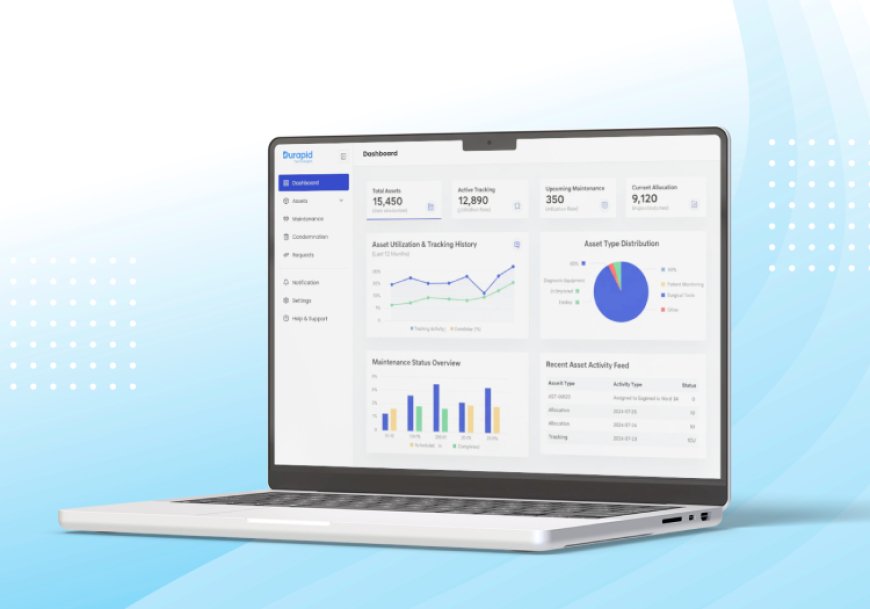
FDEs and Enterprise Software Integration: Asset Management as a Use Case
One of the most practical applications of a Forward Deployed Engineer is integrating AI capabilities into enterprise software that was never designed to support them. Asset management software is a strong example.
A typical enterprise runs thousands of fixed assets servers, vehicles, machinery, IT equipment, leased properties. Legacy asset management systems track these records in structured databases, but they cannot answer questions like: Which assets are likely to fail in the next 90 days based on maintenance history? or Which ghost assets in our register have not been physically verified in over 24 months?
What an FDE delivers in this context
- Builds a RAG pipeline over the asset register so the operations team can query asset data in natural language, without writing SQL
- Trains an anomaly detection model on historical maintenance logs to flag assets approaching end-of-life before they fail
- Creates an agentic workflow that cross-references purchase orders, depreciation schedules, and physical verification records to surface ghost assets automatically
- Integrates all of this into the existing asset management softwar interface the operations team sees AI-generated insights inside the tool they already use, with no context-switching
This pattern embedding AI intelligence into existing enterprise software rather than replacing it — is where FDEs deliver the most immediate ROI. The software stays. The data stays. The FDE adds the intelligence layer on top.
How to Evaluate and Hire a Forward Deployed Engineer
Hiring an FDE is different from hiring a software engineer or a data scientist. The role demands a rare combination: deep AI engineering skills and the ability to operate autonomously inside a client environment with minimal hand-holding. Screening needs to reflect both.
What to look for in a candidate
- Production deployments, not demos: Ask for examples of AI systems they shipped to production — not notebooks, not POCs, not slides. Specifically: what was the architecture, how many users, what was the failure mode they had to fix, and how did they handle it?
- Breadth across the stack: An FDE who only knows PyTorch but cannot debug a Kubernetes networking issue, or who builds clean RAG pipelines but cannot write a SQL connector, will get stuck. Test the full stack.
- Client communication: Give them a scenario where the client's requirements are ambiguous or changing. The best FDEs push back intelligently and propose a constrained MVP rather than gold-plating or stalling.
- Eval-first thinking: Ask how they would measure whether an LLM feature is working. Candidates who jump straight to accuracy metrics without asking about the business outcome being measured are often the ones who build impressive demos that fail in production.
A practical hiring checklist
- Review 2–3 production AI systems they built (not demo repos)
- Technical screen: live coding of a RAG pipeline with a document corpus they haven't seen
- System design: architect a multi-agent workflow for a realistic enterprise use case
- Reference check with a client they were embedded with — not a manager at their own company
- Culture fit with your engineering team: FDEs work inside your environment; the relationship matters
How quickly can you hire one?
Direct hiring typically takes 3–6 months for a senior FDE. Through an IT staff augmentation partner with a pre-vetted AI engineering bench, you can have profiles within 48 hours and a placed engineer within 5 working days.
Cost, ROI, and What to Expect From an FDE Engagement
FDE talent is priced at a premium relative to general software engineering, and for good reason: the supply is constrained and the scope of the role is broad. Here is what to expect.
Rate range
Senior FDEs engaged through staffing or augmentation typically run $55–$120 per hour, depending on seniority, specialisation (e.g., healthcare AI commands a premium over general SaaS), engagement length, and geography. A six-month full-time engagement at mid-range rates represents a total investment in the $90,000–$180,000 range.
For context: a direct hire for an equivalent role in the US market costs $200,000–$280,000 per year in total compensation, with a 4–6 month time-to-hire. Augmentation delivers faster and costs less in the first 12 months.
Timeline expectations
|
Phase |
Typical Duration |
|---|---|
|
Onboarding and discovery |
Week 1–2 |
|
Architecture design and data access |
Week 2–4 |
|
First working prototype in staging |
Week 4–6 |
|
Production deployment (initial scope) |
Week 6–12 |
|
Handoff and documentation |
Final 2 weeks |
ROI signals to track
- Time to first production AI feature: the benchmark for teams without an FDE is 6–18 months; with a dedicated FDE, 6–12 weeks is achievable for a scoped use case
- Engineering hours recaptured: FDEs own the AI layer, freeing your product engineers for feature work
- Cost per AI-processed transaction: a well-built RAG pipeline costs significantly less per query than a human analyst answering the same question
- NDA from day one, 5-day replacement guarantee if the placement does not work out: standard terms that de-risk the engagement
The ROI case for an FDE engagement is strongest when a company has already identified a high-value AI use case but cannot ship it. The FDE's job is to remove that bottleneck.
Hire a Forward Deployed Engineer Through Durapid
Durapid places senior Forward Deployed Engineers who ship production AI not demos. As a Microsoft Solutions Partner for Data & AI, Durapid's FDE network covers RAG pipelines, agentic workflows, LLM integration, eval engineering, and legacy system modernisation across BFSI, Healthcare, Logistics, E-commerce, and SaaS.
Why organisations choose Durapid for FDE placement
- 224 open FDE roles tracked globally — active bench, not a reactive search
- Profiles delivered within 48 hours of your brief
- 5-day replacement guarantee if the placement is not the right fit
- NDA signed from day one; your IP and data are protected before discovery begins
- Engagement models that flex from a single FDE to a full pod, and from project-based to long-term Staff augmentation
- Rates from $55–$120/hr
faster and cheaper than direct hiring for the first 12 months
If your enterprise AI project is stuck between proof-of-concept and production, a Forward Deployed Engineer is the fastest path to closing that gap.
What's Your Reaction?
 Like
0
Like
0
 Dislike
0
Dislike
0
 Love
0
Love
0
 Funny
0
Funny
0
 Angry
0
Angry
0
 Sad
0
Sad
0
 Wow
0
Wow
0