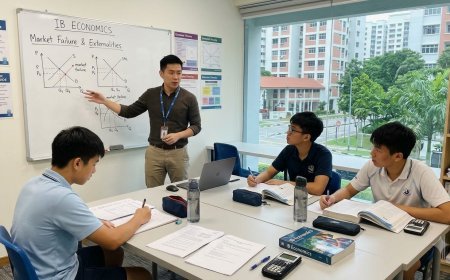





















Why ACT Preparation Often Fails: 7 Mistakes Singapore Students Should Avoid

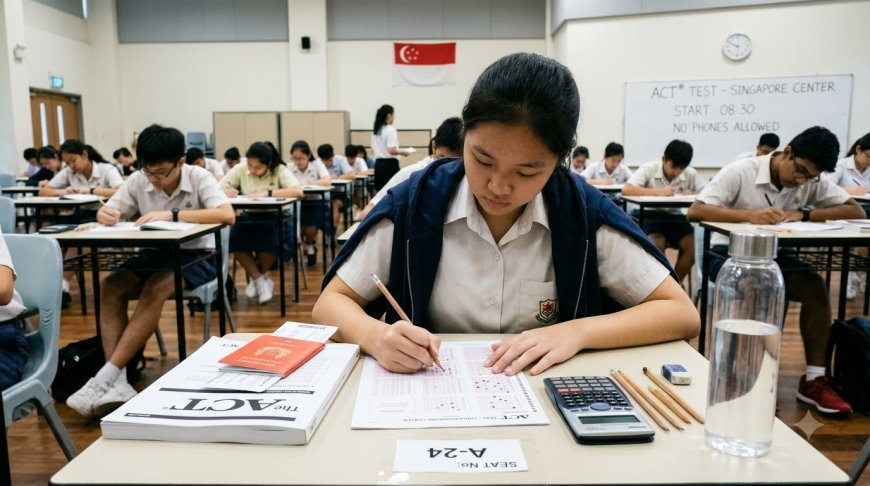
Preparing for a standardised university admissions examination while managing schoolwork, internal assessments and other application requirements can be challenging. Many Singapore students begin studying by downloading practice papers and completing as many questions as possible. However, doing more questions does not always lead to better results.
The real challenge is understanding why answers are incorrect, improving speed without sacrificing accuracy and developing a strategy for each section.
A successful ACT test preparation programme for improving examination performance should begin with a clear assessment of the student's current ability. It should then focus on specific weaknesses rather than repeating familiar questions.
Whether you are preparing independently or receiving structured support, the following mistakes can help you identify what needs to change.
1. Starting Preparation Without a Diagnostic Test
One of the most common mistakes is beginning preparation without understanding your current performance.
Students sometimes assume they are weak in Mathematics because they find school mathematics difficult. Others believe Reading will be their strongest section because they read frequently.
These assumptions may not reflect their actual examination performance.
A diagnostic practice test provides a starting point. It can help identify:
-
Which question types are causing difficulty.
-
Whether mistakes are related to knowledge or time pressure.
-
Which sections require the most attention.
-
Whether careless errors are affecting accuracy.
-
How comfortable the student is with the examination format.
What to do after a diagnostic test
Do not focus only on the overall score. Review each incorrect answer and classify the reason.
|
Error category |
What it means |
What to practise |
|
Knowledge gap |
You did not know the required concept |
Review the relevant topic |
|
Misreading |
You misunderstood the question |
Practise careful question analysis |
|
Time pressure |
You could not finish comfortably |
Improve pacing |
|
Careless mistake |
You knew the method but made an avoidable error |
Check calculations and answer choices |
|
Weak strategy |
You used an inefficient approach |
Learn alternative solving methods |
This creates a more useful preparation plan than simply repeating a full paper.
2. Spending Too Much Time on Questions You Already Understand
Students often prefer practising familiar question types because they feel confident when answering them.
However, this can create an unbalanced preparation routine. If a student already performs well in one area but repeatedly struggles in another, spending equal time on both may not be the best use of study time.
How to improve:
Use your diagnostic results to prioritise weaknesses.
For example, if your Mathematics performance is strong but you regularly struggle to understand Reading passages within the available time, your revision schedule should reflect that difference.
A useful approach is to divide practice into three categories:
-
Weak areas: Spend the most time learning and correcting mistakes.
-
Developing areas: Practise regularly to improve consistency.
-
Strong areas: Complete shorter revision sessions to maintain performance.
Reassess your progress periodically and adjust the balance.
3. Ignoring Time Management
Knowing how to solve a question is not enough if you cannot complete it within the examination time.
Some students spend too long on one difficult problem because they want to solve it perfectly. This can leave insufficient time for easier questions later.
Time management should therefore be part of preparation from the beginning.
A practical pacing method
-
Learn the question formats before practising under time pressure.
-
Complete short timed sets.
-
Record how long different question types take.
-
Identify questions that repeatedly slow you down.
-
Practise moving on when a question is consuming too much time.
-
Review unanswered questions to understand why you ran out of time.
The exact pacing strategy should reflect the current ACT format and the student's testing conditions. Students should always check the latest official examination instructions before planning a timed practice session.
4. Preparing for Every Section in the Same Way
The ACT includes different types of questions and skills. A single revision method will not address all of them effectively.
Students should understand what each section requires and select suitable practice methods.
English
The English section tests skills such as grammar, punctuation, sentence structure and rhetorical choices.
Useful preparation activities include:
-
Reviewing common grammar rules.
-
Understanding punctuation in context.
-
Practising sentence clarity and conciseness.
-
Learning how transitions affect meaning.
-
Explaining why an answer is correct rather than memorising the answer.
Mathematics
Mathematics preparation should combine concept revision with efficient problem-solving.
Students should:
-
Identify topics that require revision.
-
Practise translating word problems into mathematical relationships.
-
Check calculations and signs carefully.
-
Learn how to recognise familiar question patterns.
-
Review alternative methods when a solution takes too long.
Reading
Reading preparation involves understanding passages, locating evidence and distinguishing between what the passage states and what a student assumes.
Practise:
-
Identifying the main idea.
-
Finding supporting details.
-
Understanding the author's purpose.
-
Interpreting tone and relationships between ideas.
-
Answering questions using evidence from the passage.
Science
The Science section focuses on interpreting information, including data, graphs and scientific descriptions. Students should not assume that success depends entirely on memorising advanced scientific facts.
Useful practice includes:
-
Reading graphs and tables.
-
Identifying variables.
-
Comparing experimental results.
-
Recognising patterns.
-
Understanding conflicting viewpoints.
-
Distinguishing evidence from conclusions.
Students should check the current ACT test structure and section details because testing formats and available options can change.
5. Reviewing Only the Correct Answers
A student may complete a practice paper, calculate the score and move on to the next paper. This misses one of the most valuable parts of preparation.
The review process is where students discover why they made mistakes.
For every incorrect question, ask:
-
What was the question testing?
-
Which information did I overlook?
-
Why did I select the wrong answer?
-
Was my method too slow?
-
Could I solve the question correctly now without looking at the explanation?
Also review questions that were answered correctly by guessing. A correct answer does not always mean the underlying skill is secure.
Create an error log
|
Date |
Section |
Mistake |
Reason |
Next action |
|
Week 1 |
English |
Incorrect punctuation |
Rule not understood |
Revise punctuation |
|
Week 1 |
Math |
Incorrect sign |
Calculation error |
Show intermediate steps |
|
Week 2 |
Reading |
Missed supporting evidence |
Rushed reading |
Practise evidence-based answers |
|
Week 2 |
Science |
Misread graph |
Ignored axis units |
Complete graph interpretation exercises |
Review the log weekly. Repeated mistakes should become the priority for the next study session.
6. Following a Study Plan That Is Too Ambitious
Students sometimes create an unrealistic timetable that includes several hours of daily preparation on top of school responsibilities.
Such plans may work briefly but become difficult to maintain.
A better approach is to create a consistent routine with specific goals.
Example: A four-week preparation structure
|
Week |
Main focus |
Suggested activities |
|
Week 1 |
Understand current performance |
Diagnostic test and error analysis |
|
Week 2 |
Build core skills |
Targeted English, Math, Reading and Science practice |
|
Week 3 |
Improve timing |
Timed question sets and strategy review |
|
Week 4 |
Consolidate |
Practice test, error review and final revision |
This is an example rather than a universal schedule. Students who need more time to build foundational skills should extend the relevant stage.
7. Taking Practice Tests Without Simulating Real Conditions
Practice tests are useful, but students should understand the difference between casual practice and realistic examination preparation.
Pausing frequently, checking answers immediately or using notes can make a practice session easier than the actual test.
To develop examination readiness:
-
Follow the current test instructions.
-
Use the appropriate timing for the format you intend to take.
-
Avoid unnecessary interruptions.
-
Practise with permitted materials only.
-
Review the paper after completing the session.
-
Record the areas that need further work.
Also become familiar with the registration process, test availability and current testing policies. Students should verify these details before selecting a test date.
8. How Singapore Students Can Balance ACT Preparation with Schoolwork
Students preparing for university admission may already have demanding academic schedules. This is particularly relevant for those managing A-Levels, the IB Diploma, polytechnic studies or other school commitments.
The goal should be to make preparation sustainable.
Use shorter, focused study sessions
A focused session with a clear objective can be more productive than a long session without a plan.
For example:
-
Monday: English grammar and editing questions.
-
Tuesday: Mathematics problem-solving.
-
Wednesday: Reading comprehension.
-
Thursday: Science data interpretation.
-
Friday: Review mistakes from the week.
-
Saturday: Timed practice.
-
Sunday: Short revision or rest.
Students can adjust the schedule based on their school timetable and examination date.
Keep university application planning separate
ACT preparation is only one part of a university application. Students should also research university requirements, application deadlines, academic records and any other required documents.
Do not assume that every university or programme requires the ACT. Check the admissions policy of each institution before committing substantial time or money to an examination.
9. When Should You Consider ACT Preparation Support?
Independent study can work well for students who understand the examination format, can identify their weaknesses and are comfortable reviewing their own mistakes.
However, some students benefit from structured guidance.
A suitable ACT Exam preparation programme should provide more than a collection of practice questions. It should help students understand their performance and improve the skills behind their answers.
Look for support that includes:
-
A diagnostic assessment.
-
Section-specific learning strategies.
-
Clear explanations of incorrect answers.
-
Timed practice.
-
Progress monitoring.
-
Guidance on building a realistic study schedule.
Students can explore The Princeton Review Singapore for test preparation and education guidance. Before choosing a programme, ask how progress is measured and how teaching is adapted to individual weaknesses.
Illustrative Case Study: Improving Preparation Through Error Analysis
Consider a hypothetical Singapore student who takes a diagnostic ACT practice test and receives mixed results across the sections.
Initially, the student responds by completing full practice papers several times a week. However, the same mistakes continue to appear, especially in Reading and Mathematics.
The student then changes the approach. Instead of focusing only on the total score, they classify every mistake. They discover that some Reading errors occur because they select answers based on personal assumptions rather than passage evidence. In Mathematics, several incorrect answers come from rushing through calculations.
The revised study plan includes evidence-based Reading practice, shorter Mathematics question sets and regular timed sessions.
The main improvement is not simply completing more questions. It is understanding the cause of each mistake and choosing a practice activity that addresses it.
Frequently Asked Questions
1. When should Singapore students start ACT preparation?
The right starting point depends on the student's current academic level, target universities, available study time and intended test date. Starting early allows time for diagnostic testing, targeted revision and progress reviews.
2. Is the ACT difficult for students studying in Singapore?
The difficulty depends on the student's strengths and familiarity with the examination format. Students may be comfortable with some Mathematics concepts but need additional practice in Reading, English or data interpretation. A diagnostic test can help identify the areas requiring attention.
3. How many practice tests should I complete?
There is no single ideal number. Practice tests should be used to measure progress and improve examination readiness. Completing fewer tests with detailed review may be more useful than completing many tests without analysing mistakes.
4. Should I prepare for the ACT and SAT at the same time?
It depends on the student's university plans, available time and the requirements of the institutions they are considering. Compare the current formats and decide whether preparing for both is necessary. Avoid taking additional examinations without a clear admissions reason.
5. How can I improve my ACT Reading performance?
Practise identifying main ideas, locating supporting evidence, understanding the author's purpose and distinguishing direct information from assumptions. Review incorrect answers to understand why the passage does not support the selected option.
6. Does every university require an ACT score?
No. Requirements vary by institution, programme, applicant category and admissions cycle. Students should check the current official admissions information for each university before deciding whether to take the examination.
Conclusion
Effective ACT preparation is not about completing the largest possible number of practice questions. It is about understanding the examination, identifying weaknesses, improving timing and learning from mistakes.
Singapore students should begin with a diagnostic assessment, create a realistic study plan and practise each section using methods suited to its requirements. Regular progress reviews can help keep preparation focused and prevent students from wasting time on areas they have already mastered.
With a structured approach and consistent practice, students can develop stronger examination habits and make more informed decisions about their university admissions plans.
What's Your Reaction?
 Like
0
 Dislike
0
 Love
0
 Funny
0
 Angry
0
 Sad
0
 Wow
0