






















How to Choose the Right PT6A Engine Parts
PT6A engine parts by checking applicability, condition, records, supplier responses, lead time, and total procurement cost.

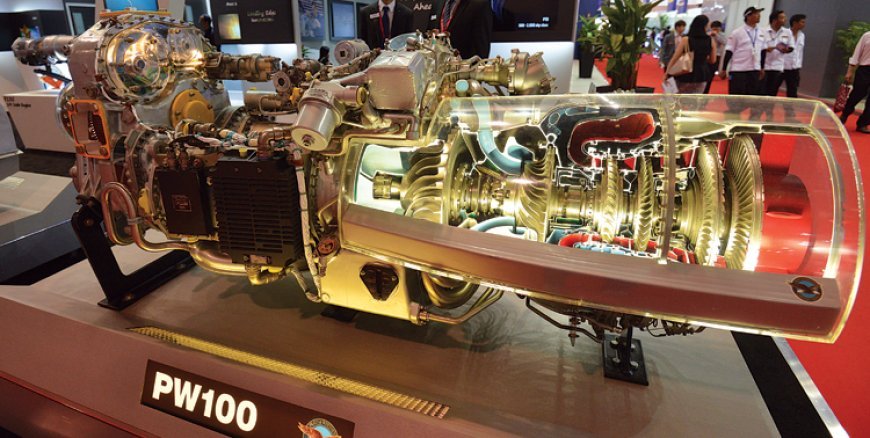
Choosing PT6A engine parts involves more than comparing prices or selecting the first item described as available. Buyers need to match the part to the engine configuration, assess the offered condition, verify the accompanying records, and confirm that the supplier’s terms fit the maintenance schedule. A disciplined process helps procurement teams compare equivalent offers and avoid delays caused by incorrect or incomplete requirements.
The PT6A engine family includes multiple variants and applications. That means the right part for one configuration should not automatically be assumed suitable for another. The maintenance organization’s current approved data and applicable documentation should guide the final technical decision.
Step 1: Define the requirement before requesting a quote
Start with the work scope or maintenance finding that created the requirement. Identify the part using the most authoritative information available, such as the applicable parts catalog, maintenance documentation, or instructions from the responsible maintenance organization.
A useful request includes the engine model, serial number where relevant, part number, description, quantity, and required-by date. If a part number has been superseded or an alternate is being considered, list that information as a question for verification—not as an assumption that the alternatives are interchangeable.
Also define what is acceptable commercially. Does the requirement call for new material, or can a documented serviceable-used or overhauled option be considered? Is a specific release document required by the operator, maintenance provider, lease agreement, or destination authority? The procurement team should clarify these points before comparing offers.
Step 2: Verify applicability and configuration
Part applicability is the first gate. Confirm that the quoted part matches the exact engine model and configuration, and check whether modifications, service bulletins, or other approved changes affect the installation. A broad “PT6A compatible” statement is not a substitute for model- and part-level verification.
Ask the supplier to identify the exact part number being quoted and disclose any cross-reference or supersession used. Have the responsible technical team validate the proposed part against the applicable documentation. If the engine serial number or configuration information is missing, resolve that gap before approval.
This step is especially important for assemblies, control units, gearbox components, rotating parts, and other items where configuration differences can be significant. Avoid relying on appearance or informal assurances as evidence of interchangeability.
Step 3: Compare condition options carefully
The word “condition” should be specific. A buyer may encounter new, serviceable-used, repaired, overhauled, or PMA parts. Each option should be evaluated against the maintenance requirement and acceptance criteria.
New parts: Confirm origin, identification, packaging where relevant, and appropriate documentation. If the item is described as OEM, establish what evidence supports that description.
Serviceable-used parts: Ask for the component’s status, available removal information, inspection details, and supporting records. Clarify any limitations or conditions attached to the offer.
Repaired or overhauled parts: Request the work scope and release paperwork, and determine whether the facility and work are acceptable for the intended use. Do not treat “repaired” and “overhauled” as interchangeable terms.
PMA alternatives: Confirm that the specific approval applies to the part and intended installation. An alternative part should be evaluated through the same disciplined applicability and documentation process as any other component.
There is no universally best condition category. The appropriate choice depends on the part, the approved maintenance requirements, the operator’s program, the applicable rules, and the evidence available.
Step 4: Review records and traceability
Records can determine whether a component is acceptable for the intended use. Request documentation early enough for the maintenance or quality team to review it before the order is finalized.
Depending on the part and transaction, the review may cover part and serial numbers, airworthiness approval or release documents, maintenance records, traceability, life status, and relevant inspection or overhaul details. Verify that the paperwork refers to the actual component being offered and that identifiers are consistent across the item and records.
FAA AC 20-154A provides guidance on receiving-inspection systems and traceability. FAA AC 43-9D addresses maintenance records and record-making requirements. These references are useful starting points for U.S. contexts, but buyers must still apply the regulations and acceptance requirements relevant to their aircraft and operation.
For life-limited parts, ask the responsible technical team what life-status and traceability records are required. If records are missing, inconsistent, or unclear, do not assume that a low price or a good visual appearance resolves the issue.
Step 5: Evaluate the supplier’s response
A supplier’s communication can reveal whether the transaction is being handled carefully. A useful response should clearly state the part number, condition, quantity, price basis, availability status, expected lead time, included documentation, and any open questions.
Ask direct questions:
- Is the quoted item physically in stock or being sourced?
- Is the exact part number confirmed?
- Which documents will accompany delivery?
- Are there any condition limitations or exclusions?
- How long is the quote valid?
- What are the shipping and return terms?
- Who should be contacted if technical questions arise?
Avoid treating marketing language as proof of a specific certification, authorization, or inventory position. Verify any credential that matters to your organization and confirm the terms for the exact transaction.
Step 6: Compare total cost and delivery risk
A meaningful comparison considers more than the headline price. Include shipping, duties or import costs where applicable, packaging, inspection effort, any necessary testing or additional review, and the operational impact of delay.
A lower-priced item may create higher total cost if its documentation is incomplete, its lead time is uncertain, or it does not meet the required condition. Conversely, a higher-priced offer may be justified if it is the correct configuration, includes the required records, and fits the maintenance schedule.
Step 7: Plan for the maintenance timeline
For scheduled work, request parts as soon as the work scope is sufficiently defined. Include a realistic date by which the part must arrive for receiving inspection and any necessary review—not merely the date it must be shipped.
For AOG requirements, send complete information in the first message and state the operational deadline. Identify which alternatives the technical team is prepared to evaluate. Urgency can justify faster communication and shipping, but it should not remove required verification steps.
For repeat demand, use maintenance and purchasing history to identify common requirements. Stock planning should account for actual consumption, lead time, shelf-life or storage considerations where applicable, and the organization’s quality procedures.
A practical purchase-approval checklist
Before approving a PT6A parts purchase, confirm:
- The part number and engine applicability have been checked.
- The offered condition matches the requirement.
- Required records have been identified and reviewed.
- Any proposed alternate has been evaluated by qualified personnel.
- Price, availability, and lead time are clear.
- Shipping, import, and return terms are understood.
- Open questions have an owner and a documented resolution.
- The receiving team knows what to inspect when the item arrives.
Conclusion
The right PT6A engine part is the one that meets the technical requirement, has acceptable supporting records, fits the maintenance schedule, and represents sound overall value. A structured selection process helps buyers compare offers fairly without overlooking applicability or paperwork. UTP Parts lists PT6A components and other turbine-engine parts on its website; send a detailed requirement to discuss the options currently available or that may be sourced.
What's Your Reaction?
 Like
0
 Dislike
0
 Love
0
 Funny
0
 Angry
0
 Sad
0
 Wow
0