

















What Does a UI/UX Design Agency Do? A Complete Guide
Discover what a UI/UX design agency does, its core services, design process, benefits, costs, and how to choose the right agency for your business.

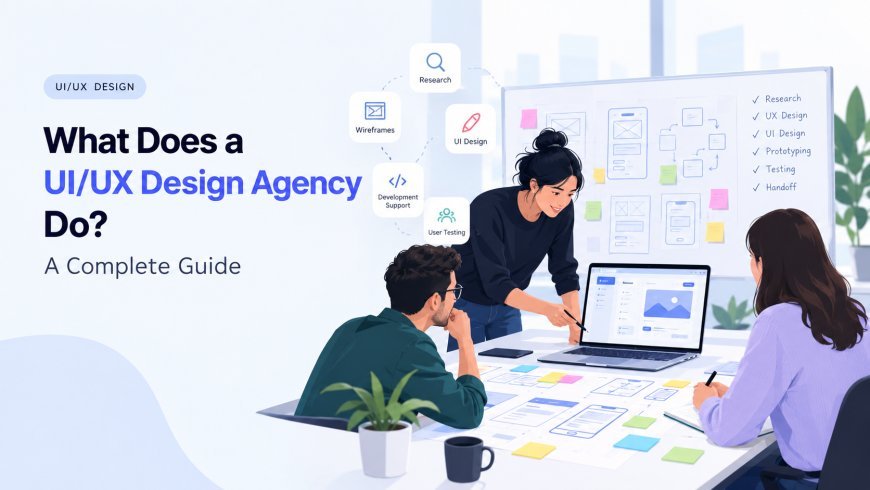
A digital product needs more than an attractive interface to succeed. It must be easy to navigate, simple to understand, and designed around the needs of its users. This is where a UI/UX design agency can make a difference. These agencies help businesses create websites, mobile applications, and software products that combine visual appeal with practical functionality.
For businesses exploring their options, Global UX Agency is a useful starting point for learning about the UI/UX design agency landscape and evaluating potential design partners.
In this guide, we will explain what a UI/UX design agency does, the services it provides, how its design process works, and when a business should consider hiring one.
What Is a UI/UX Design Agency?
A UI/UX design agency is a specialized team that helps businesses plan, design, and improve digital products. It combines user experience (UX) design, user interface (UI) design, research, and usability testing to create products that meet user expectations and business objectives.
Although UI and UX are closely connected, they serve different purposes.
User experience (UX) design focuses on how a product works and how people interact with it. It involves understanding user needs, organizing information, simplifying navigation, and making important tasks easier to complete.
User interface (UI) design focuses on the visual and interactive elements of a product, including typography, colors, buttons, layouts, icons, and other interface components.
For example, a SaaS dashboard might look modern but still frustrate users if its navigation is confusing. UX design addresses the underlying usability issues, while UI design ensures that the interface communicates information clearly and consistently. Together, these disciplines help businesses deliver digital experiences that are both functional and visually engaging.
What Services Does a UI/UX Design Agency Provide?
The services offered by a UI/UX design agency depend on the project, industry, and business goals. Most agencies provide several core services throughout the product design process.
1. UX Research and Discovery
UX research helps businesses understand their target audience before making important design decisions. Instead of relying entirely on assumptions, designers gather evidence about user behavior, preferences, challenges, and expectations.
Common research activities include:
-
User interviews and surveys
-
Competitor and market analysis
-
Customer journey mapping
-
User behavior analysis
-
Stakeholder interviews
-
Usability reviews of existing products
The findings help identify user pain points and opportunities for improvement. For example, a SaaS company might discover that new customers struggle to complete account setup. Research can reveal where users encounter difficulties and help the design team prioritize solutions.
2. Information Architecture and User Flows
Information architecture organizes a product's content, features, and navigation so users can find what they need without unnecessary effort.
User flows map the steps people take to complete specific tasks, such as creating an account, purchasing a product, or configuring a software feature.
A UI/UX design agency may create sitemaps, navigation structures, task flows, and journey diagrams to establish a logical foundation before detailed design begins.
Well-planned information architecture reduces confusion and makes complex products easier to use.
3. Wireframing and Prototyping
Wireframes are simplified layouts that show the structure and placement of interface elements without focusing on final visual details. They allow designers and stakeholders to evaluate page hierarchy, navigation, and functionality early in the process.
Prototypes take this process further by simulating how a product will behave. Depending on the project, prototypes may range from simple clickable demonstrations to detailed interactive experiences.
These deliverables help teams test ideas, gather feedback, and identify potential problems before investing heavily in development.
4. UI and Visual Design
Once the product structure is established, designers develop its visual appearance and interaction patterns.
This stage typically includes:
-
Typography and color selection
-
Layout and spacing
-
Buttons, forms, icons, and other components
-
Responsive interface designs
-
Visual hierarchy and interaction states
-
Brand consistency across screens
For a SaaS platform, the work might involve designing dashboards, data tables, account settings, reporting tools, and onboarding screens.
The objective is to make information understandable and interactions predictable while creating a visual identity that fits the business.
5. Design Systems
A design system is a collection of reusable components, design rules, and documentation that helps teams maintain consistency across a digital product.
It may include typography scales, color tokens, buttons, form elements, navigation patterns, spacing rules, and accessibility guidelines.
Design systems are particularly valuable for growing SaaS companies and enterprise platforms with many screens and features. Rather than designing every component independently, teams can reuse established patterns and make updates more efficiently.
A well-maintained design system can also improve collaboration between designers and developers.
6. Usability Testing and UX Audits
Usability testing evaluates whether people can complete tasks using a product without unnecessary confusion or difficulty. Designers may observe participants interacting with prototypes or existing products to identify obstacles.
A UX audit takes a broader look at an existing experience. It can examine navigation, content hierarchy, interaction patterns, accessibility, and potential usability problems.
These activities help businesses identify issues such as confusing forms, unclear calls to action, complicated onboarding, or inconsistent navigation.
The findings are usually organized into recommendations based on severity, user impact, and business priorities.
7. Developer Handoff and Design Support
After the designs are approved, the agency prepares the materials developers need to implement them accurately.
Depending on the engagement, this may include design files, component specifications, responsive behavior, interaction states, assets, and implementation notes.
Some agencies also provide design quality assurance, reviewing the developed product to identify differences between the approved designs and the final implementation.
Clear handoff reduces ambiguity and helps preserve the intended experience during development.
How Does a UI/UX Design Agency Work?
Although every project is different, a typical engagement follows a structured process.
Step 1: Understand the Business Goals
The agency begins by learning about the business, its users, the product, its competitors, and the problems the project needs to solve.
The team also establishes priorities, constraints, and potential measures of success.
Step 2: Research and Define the Problem
Next, the team gathers information through user research, stakeholder discussions, analytics, or competitor reviews.
The research helps clarify which problems matter most and which opportunities deserve attention.
Step 3: Plan the Product Experience
Designers define information architecture, user journeys, and task flows. Wireframes are then created to explore possible solutions and establish the product's structure.
Step 4: Design and Prototype
The team develops the visual interface, reusable components, and interactive prototypes. Stakeholders can review the work and provide feedback before development begins.
Step 5: Test and Refine
Usability testing and design reviews help identify areas where users may struggle. Designers refine the experience based on findings rather than relying solely on personal preferences.
Step 6: Handoff and Evaluate
The agency delivers developer-ready specifications and, where included, supports implementation. After launch, the team may review product analytics, customer feedback, and usability metrics to identify further improvements.
This process helps connect design decisions with actual user needs and measurable business objectives.
What Types of Businesses Need a UI/UX Design Agency?
UI/UX design services can support businesses at different stages of growth.
Startups: Early-stage companies can use research, wireframes, and prototypes to validate product ideas before committing significant development resources.
SaaS companies: Software businesses may need better onboarding, clearer dashboards, improved feature adoption, or a more consistent experience across their platforms.
E-commerce businesses: Online retailers can improve product discovery, navigation, checkout flows, and mobile shopping experiences.
Enterprise organizations: Larger companies may need design systems, consistent interfaces across multiple products, and research to understand the needs of different user groups.
Businesses redesigning existing websites or applications: Organizations experiencing usability problems, declining engagement, or outdated interfaces can use UX audits and redesign projects to identify opportunities for improvement.
The right engagement depends on the specific challenge rather than the size of the business alone.
What Are the Benefits of Hiring a UI/UX Design Agency?
Working with an experienced design team can provide several advantages.
Access to Specialized Expertise
An agency can bring together researchers, UX designers, UI designers, and other specialists without requiring a business to recruit every role internally.
A More User-Centered Product
Research and testing help teams understand user expectations and design solutions around real problems rather than internal assumptions.
Improved Product Usability
Clear navigation, logical workflows, and consistent interface patterns can make it easier for users to accomplish their goals.
Better Collaboration Between Design and Development
Structured deliverables, design systems, and clear specifications help developers understand how the product should work.
Support for Business Objectives
When design improvements address specific problems, businesses can evaluate their impact through relevant metrics, such as task completion, activation, conversion, customer retention, or support requests. These outcomes are not guaranteed by design alone. They depend on the quality of the work, implementation, product strategy, and the needs of the target audience.
UI/UX Design Agency vs. In-House Design Team
Both approaches can work well, but they offer different advantages.
An in-house team develops ongoing knowledge of the company's products, customers, and internal processes. It can be particularly effective for businesses that require continuous product design and close collaboration with engineering teams.
An external UI/UX design agency provides access to specialized expertise and additional design capacity when needed. It can be a practical option for startups, businesses planning a redesign, or organizations tackling a project that requires skills their internal team does not currently have.
Some businesses combine both approaches, using an in-house team for ongoing product development and an agency for research, strategic initiatives, or major redesigns.
The best choice depends on workload, budget, internal expertise, and the duration of the design requirement.
Conclusion
A UI/UX design agency does much more than create attractive screens. It helps businesses understand users, organize product experiences, design intuitive interfaces, validate solutions, and prepare designs for implementation.
From early-stage startups to established SaaS companies and enterprise organizations, the right design partner can help teams make better product decisions and address usability challenges systematically.
Before hiring an agency, identify the problem you want to solve, define your priorities, review relevant case studies, and compare the proposed scope of work. A thoughtful evaluation will help you choose a partner whose process and expertise align with your business goals.
What's Your Reaction?
 Like
0
 Dislike
0
 Love
0
 Funny
0
 Angry
0
 Sad
0
 Wow
0