
























What Should You Consider Before Choosing PTFE for Industrial Use?
Goa Polymer offers quality PTFE products, including sheets, rods, bushes, gaskets, and Glass-Filled PTFE for industrial and engineering applications.
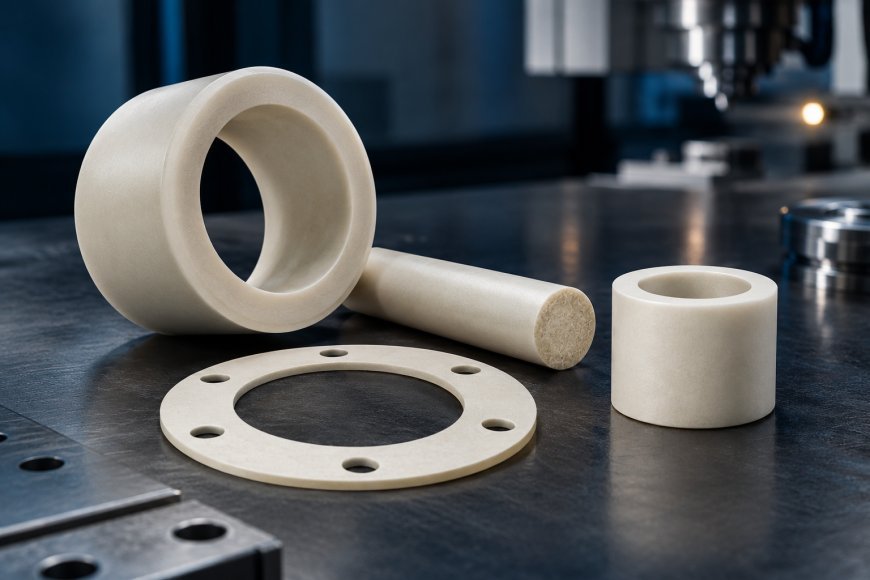
Selecting the right material for industrial applications is important for improving equipment performance, reducing maintenance costs, and preventing unexpected breakdowns. Industrial components often operate under challenging conditions, including high temperatures, chemical exposure, friction, and continuous mechanical loads. Choosing an unsuitable material can lead to premature wear, frequent replacements, and production delays. Understanding the properties of PTFE and its available grades helps businesses identify materials that meet their specific operational requirements.
Selecting the right material is essential for industrial applications that require durability, chemical resistance, and reliable performance under demanding conditions. When standard PTFE does not provide sufficient mechanical strength or dimensional stability, Glass-Filled PTFE can be a suitable alternative because glass fibre reinforcement improves stiffness and resistance to deformation in many applications. However, the final choice should depend on operating temperature, mechanical loads, chemical exposure, and the component's intended use.
1. Understand Your Industrial Application
Before choosing PTFE, identify how the material will be used and what conditions it must withstand. Different industrial components have different requirements, so one PTFE grade may not be suitable for every application.
For example, a gasket requires effective sealing, while a bush may need to withstand repeated movement and friction. Similarly, valve seats must maintain suitable sealing performance under specific pressure and temperature conditions.
Consider these questions before selecting a material:
-
Will the component experience continuous friction or movement?
-
Is it exposed to chemicals, oils, or corrosive substances?
-
Does it need to withstand mechanical pressure?
-
Will it operate under fluctuating temperatures?
-
Are dimensional accuracy and durability essential?
Answering these questions helps narrow down the available options and reduces the risk of selecting an unsuitable material.
2. Evaluate Mechanical Strength and Load Resistance
One common industrial challenge is finding a material that offers low friction without deforming under operating pressure. Standard PTFE has excellent sliding properties and chemical resistance, but it can experience creep or deformation under sustained loads.
Reinforced PTFE grades may offer improved stiffness and resistance to deformation, depending on their composition and operating conditions. Glass-filled PTFE is often considered for applications where maintaining component dimensions and supporting mechanical loads are important.
However, glass reinforcement also introduces certain considerations. The material may be more abrasive against some mating surfaces, so the design of the surrounding components must be evaluated carefully.
Before making a decision, compare the expected load, operating speed, surface contact, and temperature with the material's technical specifications. This approach helps ensure that the selected grade performs reliably in its intended application.
3. Check Temperature and Chemical Compatibility
Industrial materials frequently encounter temperature changes and chemical exposure. Although PTFE offers broad chemical resistance and can operate across a wide temperature range, its performance depends on the particular grade and working conditions.
Before selecting a PTFE material, review the following factors:
-
Operating temperature: Confirm suitability for both normal and peak temperatures.
-
Chemical exposure: Check compatibility with the specific chemical, concentration, and exposure duration.
-
Thermal changes: Determine whether repeated heating and cooling could affect dimensions or performance.
-
Operating pressure: Assess how pressure and temperature may affect deformation and service life.
Glass-filled PTFE retains many of the useful properties of PTFE, but compatibility should be assessed for the complete material grade and application. Checking these details in advance can help prevent unexpected material deterioration and equipment problems.
4. Consider Wear Resistance and Dimensional Stability
Excessive wear and dimensional changes can affect machinery efficiency and increase maintenance requirements. These problems are particularly important in components that experience continuous movement, repeated contact, or sustained mechanical loads.
When choosing PTFE, consider whether the application requires improved wear performance, resistance to deformation, or the ability to maintain precise dimensions. Reinforced grades may offer advantages in suitable applications, but the actual results depend on load, speed, temperature, and the mating surface.
For example, industrial bushes and guide components may require a material that balances friction, wear resistance, and dimensional stability. Sealing components may have different requirements because their performance depends on maintaining an effective seal.
Selecting a grade according to the actual working conditions helps avoid unnecessary replacements and supports consistent equipment performance.
5. Choose a Reliable PTFE Manufacturer
Material quality and manufacturing consistency are just as important as selecting the correct grade. Variations in composition, machining accuracy, and product dimensions can affect the reliability of industrial components.
When comparing suppliers, businesses should evaluate product quality, customization options, technical support, and material specifications. Experienced ptfe manufacturers in india can help industrial buyers identify appropriate PTFE grades for sealing, machining, sliding applications, and components exposed to demanding operating conditions. Their guidance can also help businesses understand the differences between standard and reinforced materials before placing an order.
Before finalizing a supplier, check whether they offer:
-
Virgin and reinforced PTFE grades.
-
PTFE sheets, rods, bushes, gaskets, and valve seats.
-
Customized components according to application requirements.
-
Consistent dimensions and suitable quality checks.
-
Technical guidance for material selection.
Working with a dependable manufacturer can help reduce selection errors and ensure that the supplied components match the intended application.
6. Compare Long-Term Costs Instead of Initial Prices
Choosing the cheapest material may reduce initial purchasing expenses, but it can increase overall costs if the component wears out quickly or requires frequent replacement. Equipment downtime, maintenance labour, and production interruptions can create additional expenses.
Instead of comparing purchase prices alone, evaluate the expected service life, replacement frequency, maintenance requirements, and consequences of component failure.
Standard PTFE may be sufficient for applications with relatively low mechanical demands. In more demanding conditions, a reinforced grade may provide better long-term value if its performance advantages justify the additional cost.
The best choice is the material that meets the application's requirements reliably without unnecessary expense.
7. Match the Material to the Component Design
Different PTFE products serve different industrial purposes. PTFE sheets and gaskets are commonly considered for sealing applications, while rods can be used to manufacture machined components. PTFE bushes support suitable sliding applications, and glass-filled grades may be appropriate where additional stiffness and dimensional stability are required.
Before finalizing a material, consider component dimensions, load, friction, operating temperature, chemical exposure, and contact surfaces. For complex applications, request technical advice and review relevant material specifications.
This process helps businesses select a suitable material rather than relying on general assumptions about PTFE performance.
Conclusion
Choosing PTFE for industrial use requires careful evaluation of mechanical strength, chemical compatibility, temperature limits, wear resistance, manufacturing quality, and long-term costs. Each factor influences how reliably the finished component performs in its operating environment.
Glass-filled PTFE can be a suitable option when additional stiffness and resistance to deformation are required, while standard PTFE remains useful for many sealing and low-friction applications. By understanding your operational needs and working with an experienced manufacturer, you can make an informed material choice, reduce avoidable maintenance, and improve the long-term reliability of industrial equipment.
What's Your Reaction?
 Like
0
Like
0
 Dislike
0
Dislike
0
 Love
0
Love
0
 Funny
0
Funny
0
 Angry
0
Angry
0
 Sad
0
Sad
0
 Wow
0
Wow
0