
























A Complete Guide to Generating Quality Logistics Sales Leads
Learn what logistics sales leads are, who buys, and how MarketJoy helps shipping and supply chain companies reach real decision-makers and book more meetings.
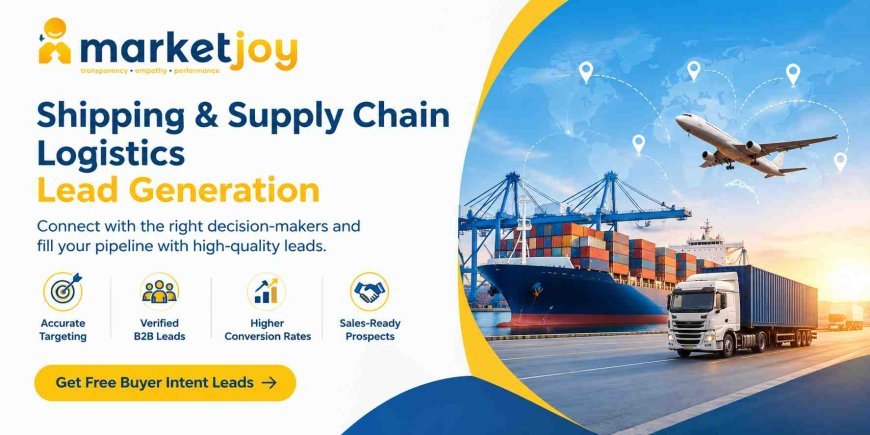
Every logistics company wants a full pipeline, yet few have a reliable way to build one. Referrals dry up, trade shows are expensive, and cold lists rarely reach the people who matter. This guide explains what logistics sales leads are, who your real buyers are, and how a structured outbound program turns a crowded market into booked meetings.
What Are Logistics Sales Leads?
Logistics sales leads are contacts at shipping, supply chain, and transportation-dependent companies who may need your services. A strong lead is more than a name and an email address. It is a decision-maker with real authority, a company that fits your ideal customer profile, and a reason to listen right now.
The difference between a lead and a qualified opportunity comes down to intent and relevance. A contact who is actively researching solutions is far more valuable than a name pulled from a generic database. That is why quality should always outweigh volume.
Who Actually Buys Logistics Services?
Buying decisions in this industry are almost always multi-layered. The people who influence a deal often include:
- Operations managers who deal with day-to-day delivery and efficiency.
- Procurement executives who compare vendors and negotiate terms.
- Logistics executives who set strategy and approve budgets.
- CEOs and business owners at smaller or fast-growing companies.
Large enterprises may add directors and VPs to the mix. Knowing who sits where, and who holds the final say, helps your team send the right message to the right person at the right time.
Why a Crowded Market Needs a Focused Approach
Companies that excel in shipping and supply chain logistics operate in a crowded market with many high-value sales opportunities. Even niche providers, such as temperature-controlled logistics firms, medical supply carriers, 3PL consultants, or fleet fueling innovators, often have larger-than-average total addressable markets.
The problem is visibility. Without a consistent outbound process, even excellent providers struggle to keep their brand in front of buyers. A focused approach to logistics sales leads solves this by creating steady, relevant contact with the people who can say yes.
The Building Blocks of a Strong Outbound Program
A dependable program rests on a few core elements:
Precise targeting. Hands-on research and deep industry segmentation identify prospects who closely match your ideal customer profile.
Personalized messaging. Templates and generic pitches get ignored. Multiple message approaches, tested and refined, earn replies.
Multichannel outreach. Email, phone, and LinkedIn work best together, giving decision-makers several ways to engage.
Clear reporting. Data-supported reporting shows what works by industry, role, message, and touch point, so the campaign keeps improving.
A Real-World Example: Diesel Direct
Diesel Direct offers a 24/7 on-site mobile fueling solution for fleets, bringing convenience, efficiency, and cost savings to fleet managers. Its goal was to reach CEOs, business owners, and fleet managers and build strategic partnerships. The obstacle was that sales efforts were sporadic and there was no formal outbound process.
Persuading fleet managers to move away from conventional self-fueling also required more than a sales pitch. It required a compelling story of transformation. A focused outbound campaign built around the benefits of mobile fueling delivered 42 high-quality meetings in just two months.
How to Choose the Right Lead Generation Partner
Not every provider is a fit for logistics. When evaluating partners, look for these qualities:
- Specialized knowledge of the shipping and supply chain industry.
- Direct access to senior decision-makers, not just general contacts.
- Personalized campaigns instead of recycled templates.
- Transparent reporting you can act on.
- A willingness to adapt targeting to your regional or national goals.
The right partner acts as an extension of your team, learning your value proposition and sharpening it over time.
Common Mistakes to Avoid
Many logistics companies lose momentum because of a few avoidable errors. They buy large lists without checking relevance. They send the same message to every buyer. They stop outreach after one or two touches. And they fail to track results, so nothing improves.
Avoiding these mistakes is simple in principle. Focus on fit, personalize every message, stay consistent, and review data regularly. Small improvements in each area add up to a noticeably stronger pipeline.
Turning Leads Into Revenue
Leads only matter when they become conversations, and conversations only matter when they become contracts. Quick follow-up, clear next steps, and a strong understanding of the buyer’s challenges help move deals forward. With well-qualified logistics sales leads, your team spends less time chasing and more time closing.
Questions to Ask Before You Start
Before launching any program, take time to answer a few practical questions. Which services do you want to sell first? Which industries or regions offer the best fit? What does a great customer look like, and what problems do they face every day? Which roles will you need to reach, and what message will matter most to each?
Clear answers make everything that follows easier. Targeting becomes sharper, messaging becomes more relevant, and reporting becomes more meaningful because you know what success looks like from the start.
Setting Realistic Goals
Lead generation is a process, not a switch. In the early weeks, the focus is on learning which messages and segments respond best. As data builds, results improve and meetings become more consistent. Setting goals around qualified conversations, not just raw activity, keeps the team focused on outcomes that drive revenue.
It also helps to align sales and outreach efforts. When the people booking meetings and the people running them share the same understanding of your ideal customer, handoffs are smoother and buyers have a better experience from the first touch.
Keeping Your Pipeline Healthy Over Time
Even a strong campaign needs steady attention. Markets shift, buyers change roles, and competitors adjust. Regular review of reporting, fresh message tests, and updates to your target list keep results strong long after the first meetings are booked. Treat logistics sales leads as an ongoing discipline, and your pipeline will stay full when others run dry.
Ready to Scale Your Logistics Sales Pipeline?
If you are ready to reach high-intent buyers and turn your market potential into real revenue, MarketJoy can help. Our team will build a campaign around your goals and put your brand in front of the decision-makers who matter.
Get a Free Strategy Call: https://meetings.hubspot.com/curtis-bendt/inbound-round-robin-for-discovery-calls
Company Name: MarketJoy, Inc
Email: hello@marketjoy.com
Phone Number: +1 (484) 638-6389
Address: 186 N Palafox Street, Pensacola, FL 32502
Email: hello@marketjoy.com
Phone Number: +1 (484) 638-6389
Address: 186 N Palafox Street, Pensacola, FL 32502
What's Your Reaction?
 Like
0
 Dislike
0
 Love
0
 Funny
0
 Angry
0
 Sad
0
 Wow
0

marketjoyinc
MarketJoy is a B2B lead generation company that helps businesses generate qualified sales opportunities through targeted prospecting, buyer intent data, B2B list building, personalized outreach, appointment setting, and outbound SDR services. MarketJoy connects businesses with relevant decision-makers using data-driven strategies designed to build consistent sales pipelines, improve prospect engagement, and support business growth across multiple industries.