

















Connecting Engineers Through Knowledge, Research, and Innovation
Discover how knowledge sharing, research, and innovation connect engineers, strengthen collaboration, advance technology, and support professional career growth.

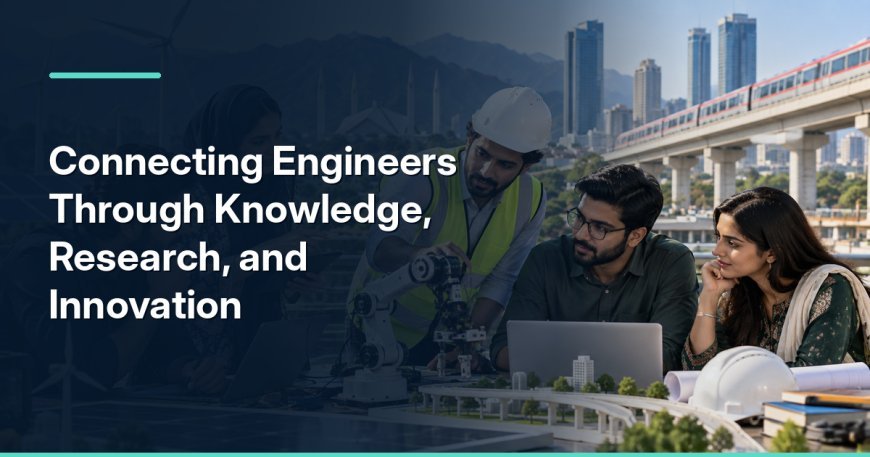
Engineering moves forward when people exchange ideas. Knowledge becomes more useful when professionals can test it, question it, and improve it together.
Professional communities such as The Institution of Electrical & Electronics Engineers Pakistan can help create connections between engineers, researchers, students, and technical professionals.
One person may understand a problem.
Another person may know a better tool.
A researcher may have useful data.
An industry engineer may have real experience.
When these people connect, stronger ideas can appear.
Knowledge Is Stronger When Engineers Share It
IEEEP represents the wider value of bringing engineering professionals together around learning and technical exchange.
Engineering knowledge grows through discussion.
A textbook can explain theory.
A research paper can test an idea.
A working engineer can show what happens in practice.
All three forms of knowledge matter.
Practical Experience Adds Context
Imagine a new electrical system.
The design may look perfect on paper.
A maintenance engineer may notice a problem.
They may know the equipment is difficult to repair locally.
That practical insight improves the design.
Research Adds Evidence
Experience is useful.
Research adds another level.
Data can show whether an idea actually works.
It can compare different solutions.
This makes engineering decisions stronger.
Research Needs Good Questions
Strong research usually begins with a real question.
What problem needs solving?
Why does the problem matter?
What information is missing?
These questions guide useful work.
Local Problems Can Create Valuable Research
Pakistan has many areas for technical research.
Energy efficiency is important.
Renewable energy is growing.
Industrial automation has room to expand.
Electrical safety remains important.
Electronics also continues changing.
These challenges can become research opportunities.
Research Should Solve Real Problems
A paper should not exist only for publication.
Good research can improve practice.
It may reduce energy waste.
It may improve reliability.
It may make equipment safer.
This creates stronger value.
Innovation Often Starts With Collaboration
Innovation does not always come from one brilliant person.
Many useful ideas are built by teams.
One person contributes technical skill.
Another brings industry knowledge.
Someone else understands users.
Different Fields Can Work Together
Electrical engineers may work with software developers.
Electronics engineers may work with medical teams.
Power engineers may work with data analysts.
These combinations can create new solutions.
Diverse Views Improve Ideas
People with different backgrounds notice different problems.
This can prevent weak designs.
It can also create more creative solutions.
Professional communities make these conversations easier.
Students Bring Fresh Thinking
Students may not have years of experience.
However, they often bring curiosity.
They ask basic questions.
Sometimes those questions reveal important issues.
Students Can Challenge Old Habits
Industry may follow the same method for years.
A student may ask why.
That question can start useful discussion.
New technology may offer a better approach.
Students Need Guidance Too
Fresh ideas still need practical direction.
Senior engineers can help students understand limits.
They can explain cost.
They can explain safety.
They can also explain what works in real conditions.
Senior Engineers Preserve Experience
Experienced engineers hold valuable knowledge.
They have seen systems change.
They have handled failures.
They have worked through difficult projects.
Lessons Should Not Disappear
When experienced engineers retire, knowledge can be lost.
Professional communities help transfer this experience.
Talks and mentoring are useful.
Written articles are also valuable.
Failure Stories Are Important
Success is useful to study.
Failure can teach even more.
Why did equipment fail?
Why did a project go over budget?
Why did a system become difficult to maintain?
These lessons can prevent future mistakes.
Technical Publications Help Knowledge Travel
Not everyone can attend every event.
Written knowledge can reach more people.
Research journals are one example.
Technical articles also help.
Publications Build Long-Term Value
A seminar happens once.
A written paper can remain available for years.
Students can read it later.
Engineers can compare it with new work.
This creates a stronger knowledge record.
Writing Improves Thinking
Writing also helps the author.
An engineer must organize ideas.
They must explain evidence.
They must make the argument clear.
This process improves professional thinking.
Conferences Create Useful Connections
Engineering conferences can bring many groups together.
Researchers attend.
Industry professionals attend.
Students attend.
Technology companies may also participate.
Ideas Move Faster
A researcher may explain a new method.
An industry engineer may see a practical use.
A company may offer equipment.
A student may join the project.
These connections can begin from one conversation.
Questions Improve Research
Conference questions can reveal weak areas.
A speaker may discover missing information.
They may also receive a new idea.
Good criticism improves technical work.
Exhibitions Support Innovation
Engineering exhibitions make technology visible.
People can see equipment.
They can compare systems.
They can ask suppliers questions.
Engineers Can Explore New Tools
A new monitoring system may solve an old problem.
A better control device may improve production.
A new sensor may provide useful data.
Seeing products directly helps engineers understand possibilities.
Industry Feedback Matters
Companies also learn from engineers.
Users may explain what they dislike.
They may ask for new features.
This feedback can improve products.
Professional Networks Support Research Partnerships
Many research projects need more than one organization.
A university may have experts.
A company may have data.
Another partner may have equipment.
Professional networks can help these people find one another.
Partnerships Can Reduce Research Limits
A student may not have access to industrial equipment.
A company may not have time for detailed research.
Working together can solve both problems.
Trust Makes Collaboration Easier
Good partnerships need trust.
Professional relationships built over time can help.
People know each other’s work.
This reduces uncertainty.
Innovation Must Consider Local Conditions
A technology that works abroad may need changes in Pakistan.
Costs may differ.
Weather may differ.
Infrastructure may differ.
User needs may also differ.
Local Engineers Understand Local Limits
They know what equipment is available.
They understand maintenance challenges.
They know local skills.
This experience helps adapt solutions.
Affordable Innovation Matters
A very advanced system may be too expensive.
A simpler solution may create more value.
Good innovation solves the real problem.
It does not only look impressive.
Knowledge Sharing Supports Better Safety
Technical knowledge can prevent accidents.
Engineers should share important safety lessons.
One Failure Can Teach Many People
If a system fails, investigate it.
Understand the cause.
Then share the lesson where appropriate.
This can protect other projects.
Safety Research Has Real Value
Research can improve protection systems.
It can study equipment failure.
It can also improve maintenance.
This is innovation with direct human value.
Digital Tools Make Knowledge Sharing Easier
Engineers no longer need to meet physically every time.
Online events can connect people across cities.
Digital publications can reach large audiences.
Distance Matters Less
An engineer in Lahore can learn from someone in Karachi.
Students in smaller cities can join online sessions.
Researchers can share documents quickly.
This improves access to knowledge.
Quality Still Matters
More information does not always mean better information.
Engineers should check sources.
They should compare evidence.
Professional judgment remains important.
Innovation Requires Continuous Learning
Engineers cannot innovate with old knowledge alone.
They need to understand new tools.
They must also understand changing problems.
Learning Should Be Regular
Do not wait for a major problem.
Read regularly.
Attend useful sessions.
Study current research.
Talk with other professionals.
These habits keep ideas fresh.
Curiosity Is Valuable
Good engineers ask why.
They ask how.
They ask whether something can work better.
Curiosity drives innovation.
Professional Communities Create a Culture of Growth
A strong community makes learning normal.
People discuss research.
They share opportunities.
They talk about new technologies.
This creates positive professional pressure.
People Improve Together
One person learns a new tool.
They share it.
Others test it.
Someone finds a better use.
This cycle strengthens the whole group.
Final Thoughts
Knowledge, research, and innovation are closely connected.
Knowledge explains what we already understand.
Research tests new questions.
Innovation turns useful ideas into better solutions.
Engineers need all three.
Professional communities can help connect them.
They allow students to meet experienced professionals.
They bring researchers closer to industry.
They create places for technical discussion.
They also help useful ideas travel.
Pakistan has many engineering challenges.
These challenges need more than individual effort.
They need collaboration.
Energy problems require different experts.
Industrial growth requires technology and practical knowledge.
Electronics will keep expanding.
Digital engineering will also become more important.
Strong connections between professionals can help address these changes.
The best engineering communities do not only share information.
They encourage people to question it.
They test ideas.
They compare experience.
They learn from failure.
That process creates stronger solutions.
Engineering progress becomes faster when knowledge does not stay isolated.
Connecting engineers through research, learning, and innovation helps both careers and society.
Frequently Asked Questions
Why is knowledge sharing important in engineering?
It allows engineers to learn from other people’s experience and research.
How does research support innovation?
Research provides evidence that can help test and improve new ideas.
Can students contribute to engineering innovation?
Yes. Students can bring new questions, ideas, and technical approaches.
Why should industry work with universities?
Universities bring research skills, while industry brings practical problems and experience.
Do engineering conferences help research?
Yes. They provide feedback, discussion, and opportunities for collaboration.
Why are technical publications useful?
They preserve knowledge and allow more people to study technical work.
Can exhibitions support engineering innovation?
Yes. Engineers can discover new equipment and discuss technology directly with suppliers.
Why do local conditions matter in innovation?
A solution should match local cost, infrastructure, skills, and operating conditions.
How do digital tools help engineers collaborate?
They support online learning, document sharing, and communication across locations.
What drives engineering innovation?
Curiosity, research, practical experience, collaboration, and continued learning all contribute.
What's Your Reaction?
 Like
0
 Dislike
0
 Love
0
 Funny
0
 Angry
0
 Sad
0
 Wow
0