
























From Concept to Show Floor: The Ultimate Guide to Building a Custom Trade Show Booth
Learn how to build a custom trade show booth from concept to show floor, covering booth design, planning, fabrication, logistics, installation, visitor engagement, and post-event evaluation for a successful exhibition presence.
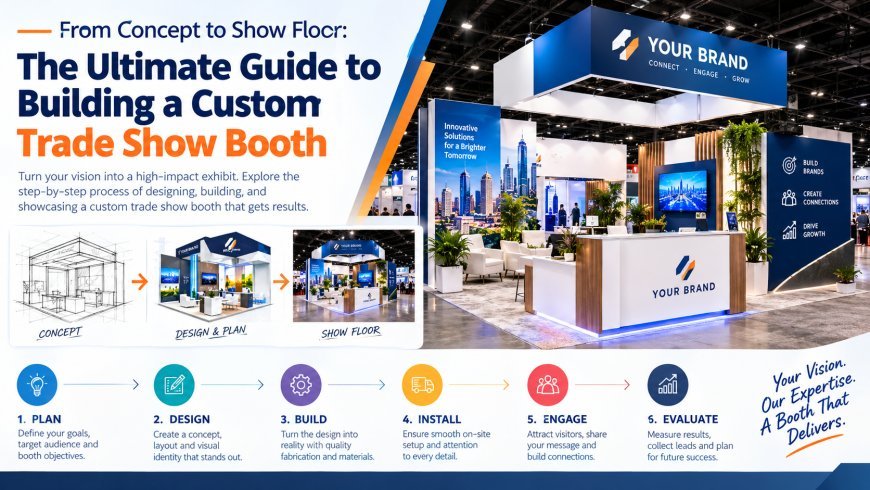
A finished trade show booth looks easy. The lights are on, the walls are straight, and the crowd walks right in. But that moment takes a lot of work behind the scenes. Someone had to plan it, draw it, engineer it, build it, ship it, and put it together on the floor.
A custom booth is not like a pop-up display you order online. It is built around your brand, your show, and your goals. That gives you a lot of freedom. It also means you will make a lot of choices. Whether you have a small space or you are paying for top-level Las Vegas Trade Show Exhibit Design, it helps to know how the process works.
Let's walk through it step by step, the way I would explain it to a first-timer over coffee.
Defining Your Booth Goals and Creative Brief
-
Know the goal: Decide what the booth must do: collect leads, launch a product, host client meetings, or build awareness. You can want several, but pick the top one.
-
Know your audience: A busy buyer wants something different from a curious first-timer. Design for the people you want to reach.
-
Check your space: Confirm the size, hall location, height limit, and show rules. Some shows ban certain hanging signs or closed-in walls, so learn this early.
-
Set a real budget: Share the number with your designer. They can spend on big items like a hanging sign or demo station and save elsewhere.
-
Write a short brief: Put everything in one document so your whole team stays aligned.
Developing a Concept That Reflects Your Brand
Once your goals are set, the fun part starts. Your designer turns your plan into a booth idea that looks great and works in real life.
Start with your brand story. What do you want visitors to feel and remember when they walk away? A strong booth sticks to one big idea. The walls, graphics, and demos all tell the same story. That idea also sets the look, including shapes, colors, and materials.
Then think about the visitor's path. What do people see first? Where do they go next? Where should the real talks and demos happen? Here is a real example. One client wanted a big product wall right at the front, but that would have blocked the aisle view of the meeting area. We moved the wall to the side, and traffic flowed much better. A booth has to work in a loud, crowded hall, not just look good in a design meeting.
Turning Concepts Into Detailed 3D Designs
After you approve the concept, your designer builds 3D renderings and drawings. These show you what the booth will look like long before anyone cuts wood or welds metal. Strong Las Vegas Trade Show Exhibit Design always starts with this step. It is much cheaper to change a drawing than a finished wall.
Good designers show the booth from several angles, including the ones your visitors will actually see. You can check the floor plan and make sure the meeting lounge, product displays, storage closet, and staff area all fit without feeling tight.
Sightlines matter too. Stand in the main aisle in the render and ask, can I see the logo from here? Can I read the screen? People decide fast at a trade show, so your branding must be visible from a distance. Small details get settled now, like where the lights go, what the lounge chairs look like, and how the finishes feel. Once you sign off, the 3D design becomes the guide for the whole team.
Engineering for Safety, Practicality, and Construction
A pretty design is only half the job. The booth also has to be safe, and it has to be built, packed, shipped, and set up without trouble.
This is where engineers step in. They take the 3D model and figure out how the tall walls, raised floors, hanging rigs, and heavy screens will be held up. They check loads, so a wall can carry a big LED screen without leaning.
Engineers also think about freight. A booth that cannot break down into standard crates will cost you a lot in shipping. So the design gets built in modular pieces that pack tight and go back together fast. They also prepare the drawings that venue inspectors ask for. Those papers show that the booth meets the rules on height, fire safety, and electrical power.
Selecting Materials, Finishes, and Structural Elements
The materials you pick decide how your booth looks, how much it weighs, how much it costs to ship, and how long it lasts. Get them right, and your booth looks great without breaking the budget.
-
Think beyond looks: Materials affect weight, shipping cost, durability, setup speed, and your total budget.
-
Match the material to the job: Wood feels solid and classic. Aluminum is light and flexible. Tension fabric gives huge, seamless graphics. Glass, acrylic, and laminate add polish.
-
Choose tough for many shows: If you exhibit often, pick materials that survive repeated packing, shipping, and setup.
-
Let finishes show your brand: Glossy laminate, matte paint, textured panels, and special lighting all change the feel.
-
Spend where people touch: Put fancy finishes on reception counters and demo stations, and use simpler materials on the back wall for a high-end look at a lower cost.
Fabricating the Booth and Producing Graphics
Now the drawings turn into real things. In the builder's shop, carpenters, metalworkers, and technicians build the walls, counters, meeting rooms, and display stands exactly to the plans. This is the heart of exhibition booth fabrication, and it is where a good shop earns its money.
At the same time, the print team makes your graphics. That includes big tension fabric frames, rigid panels, backlit boxes, 3D logos, and hanging signs.
Measurements get checked, then checked again. A graphic that is one inch off will sag or stretch, and everyone will notice. Before anything ships, a good Las Vegas Trade Show Exhibit Design Company will stage the booth. That means they put big sections together in their own shop. They look at the paint, test the lights, and make sure every latch and hinge works. Problems are far easier to fix in the shop than on the show floor.
Integrating Lighting, Technology, and Product Displays
Today's booths are alive. Smart lighting, clean tech, and well-placed products turn a plain structure into a real brand experience.
Do not treat lighting as an afterthought. Light pulls the eye toward your hero product, shows off the architecture, and sets the mood in a VIP lounge.
Tech should look like it belongs. LED walls, touchscreens, tablets, and lead scanners work best when they are built into the booth, not dropped on a table at the last minute. Products need to sit at the right height along the visitor path so people can see and touch them. And hide the mess. Power cables, media players, and extension cords should be tucked out of sight so the booth looks clean and professional.
Preparing Shipping, Logistics, and Installation
A great booth means nothing if it shows up late or broken. A custom exhibit has hundreds, sometimes thousands, of parts, so shipping needs a solid plan.
The logistics team makes a full packing list. Every bolt, graphic, and screen gets counted. Fragile pieces, custom furniture, and AV gear go into custom crates so they don't get damaged on the road. Every crate gets a clear label, so the crew knows which one has the floor wiring, which has the wall frames, and which has the graphics. That one small step can save hours on move-in day.
Trade show paperwork is its own challenge. Your planner has to work with show management on deadlines for advance warehouse shipping, direct delivery, and your move-in time slot. You also need the right install labor, which often means a union crew, the right equipment, and a supervisor ready to go the minute your freight lands. A good Custom trade show booth builder handles all of this for you.
Building and Testing the Booth on the Show Floor
Move-in day is when months of planning show up in real life. The crew follows the approved drawings and the venue's safety rules.
They build from the ground up. Floor and electrical come first, then the main structure like walls, arches, and rigging. Once the frame is stable, graphics get stretched, signs get mounted, and finishes go on.
Then AV techs connect the screens, tune the LED walls, and test the lights. Last, the furniture, desks, and displays go where the floor plan says.
Before the doors open, the supervisor does a full walk-through. They look for torn graphics, loose parts, dead bulbs, and messy cables. Small flaws can make a whole booth look careless.
Final Handover, Teardown, and Planning for Reuse
The job is not done when the booth is built. It is done when your team takes over. Do a final walk-through and see the space like a visitor would. Fix anything that feels off now.
During the show, write down small problems, like a scratched graphic or a counter that needs more storage, so they can be fixed before the next event.
When the show ends, teardown begins. Do it with care. Take parts apart slowly, wrap them well, and pack them back into the right crates. A booth built well can last for years. With good storage, you can refresh it with new graphics or reshape it for a different space size, and your money keeps working for you.
The Formula for Exhibition Success
Building a custom exhibit is a big job, but the recipe is simple:
Clear Goals + Strong Design + Solid Engineering + Quality Fabrication + Smart Logistics + Professional Installation = A Show-Ready Custom Exhibit.
Each step leans on the one before it. A great idea can't fix weak engineering, and great building can't fix messy shipping. When you understand how the pieces connect, you can work better with your exhibit builder and get a booth that draws people in, starts real conversations, and brings results.
What's Your Reaction?
 Like
0
Like
0
 Dislike
0
Dislike
0
 Love
0
Love
0
 Funny
0
Funny
0
 Angry
0
Angry
0
 Sad
0
Sad
0
 Wow
0
Wow
0