






















Inside an Engine Dyno Test Cell: Types, Measurements and Day-to-Day Operating Tips
The whole point is repeatability. If the room temperature, air supply and load pattern are the same every time, then a change in the results points to the engine itself, not the surroundings.

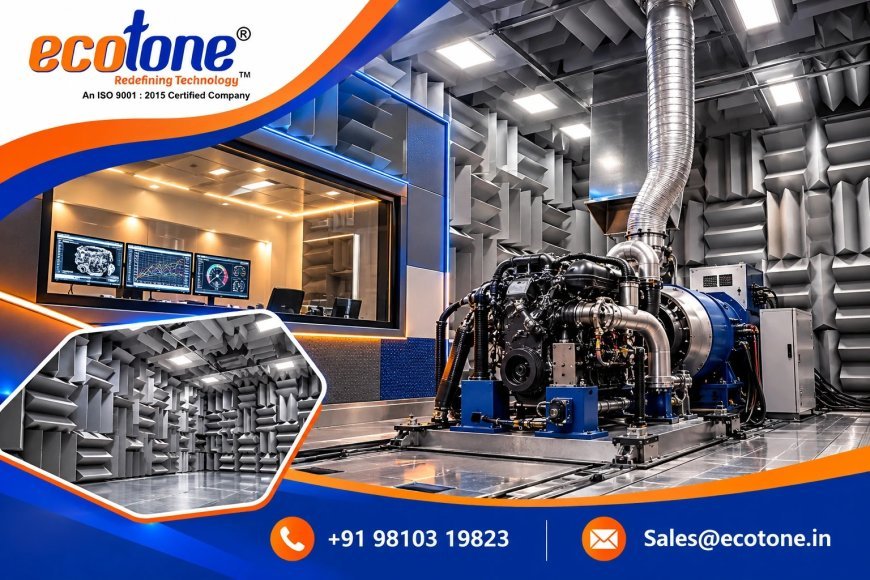
When a new engine is developed, tuned or repaired, someone has to prove that it performs the way it should. That proof comes from a room built for one purpose: running engines hard, safely and repeatably. This blog walks through how an engine dyno test cell works, the main types you will come across, what gets measured, and how to keep the space running well over the years.
How an Engine Dyno Test Cell Works
The idea is simple. An engine is mounted on a bed and connected by a shaft to a dynamometer. The dynamometer acts as a controllable brake. It holds the engine at chosen speeds and loads while instruments record what happens. Around this core are the supporting systems: fuel supply, cooling water, intake air, exhaust extraction and a control room where operators watch the test without standing beside the engine.
The whole point is repeatability. If the room temperature, air supply and load pattern are the same every time, then a change in the results points to the engine itself, not the surroundings.
Common Types of Dynamometers
Different testing needs call for different load units. The most common options are:
- Eddy-current dynamometers: popular for steady-state testing and general development because they are robust and fairly economical.
- AC dynamometers: able to both absorb and drive the engine, which makes them suited to transient cycles and motoring tests.
- DC dynamometers: an older but still capable choice for accurate speed and torque control.
- Water-brake units: often used for high-power engines where heavy continuous loads are expected.
Choosing the right unit for your engine dyno test cell depends on engine size, test type and budget, so match the unit to your real workload rather than the biggest number on a brochure.
What Gets Measured
A typical engine dyno test cell records far more than horsepower. Operators track torque, speed, fuel consumption, intake and exhaust temperatures, coolant and oil pressure, and often exhaust gas composition. Modern data systems log these values many times per second, letting engineers spot small changes that would be invisible by ear or feel. Good measurement depends on stable conditions, calibrated sensors and clean signal wiring, so these items deserve regular checks.
Why Acoustics Cannot Be Ignored
A running engine is loud, and that noise affects hearing safety, nearby offices and even the accuracy of some tests. Sound treatment inside an engine dyno test cell usually combines heavy wall construction, absorptive linings, silenced air paths and sealed acoustic doors. Vibration isolation under the dynamometer bed completes the picture by stopping vibration from travelling into the building.
Companies planning a new facility often benefit from specialist help here. Ecotone Systems works in acoustic engineering for industrial environments, and its experience with noise control and enclosures is relevant to this kind of project. Involving Ecotone Systems early lets the acoustic design grow together with the layout, rather than being squeezed in after the walls are up.
Operating Tips for Long-Term Reliability
Good habits keep a cell dependable. Warm engines up gradually and follow a written start-up and shutdown routine. Inspect shaft guards, couplings and mounts on a schedule, since vibration loosens fasteners over time. Keep ventilation filters clean, because restricted airflow quietly raises cell temperature and changes test results. Check fuel lines, gas sensors and fire systems regularly, and record every check so trends are easy to see.
Housekeeping matters too. Oil spills, loose tools and cluttered walkways turn a controlled space into a hazard. Set clear rules on who may enter during a run and make sure emergency stops are always reachable.
Planning an Upgrade or New Build
Whether you are building from scratch or improving an older engine dyno test cell, start with a realistic profile of your engines and test hours. Allow room for larger engines than you use today, because needs usually grow. Discuss noise limits with your site team early, and ask designers how they will handle ventilation at peak load. A short planning phase saves a great deal of rework later, and a partner such as Ecotone Systems can review noise targets before construction begins.
Final Thoughts
A well-run engine dyno test cell is more than a room with a dynamometer. It is a system where mechanical design, airflow, safety and sound control all work together to produce trustworthy results. Choose the right dynamometer, maintain the basics and treat acoustics as a core requirement. For teams who want acoustic guidance from the start, Ecotone Systems is worth including in the conversation, so the finished facility is quiet, safe and ready for the demands ahead.
What's Your Reaction?
 Like
0
Like
0
 Dislike
0
Dislike
0
 Love
0
Love
0
 Funny
0
Funny
0
 Angry
0
Angry
0
 Sad
0
Sad
0
 Wow
0
Wow
0