






















Kabardino-Balkarian State University: A Practical Guide for International Students
Kabardino-Balkarian State University guide: medical faculty, MBBS in Russia, life in Nalchik and who it suits. Read this before you apply.

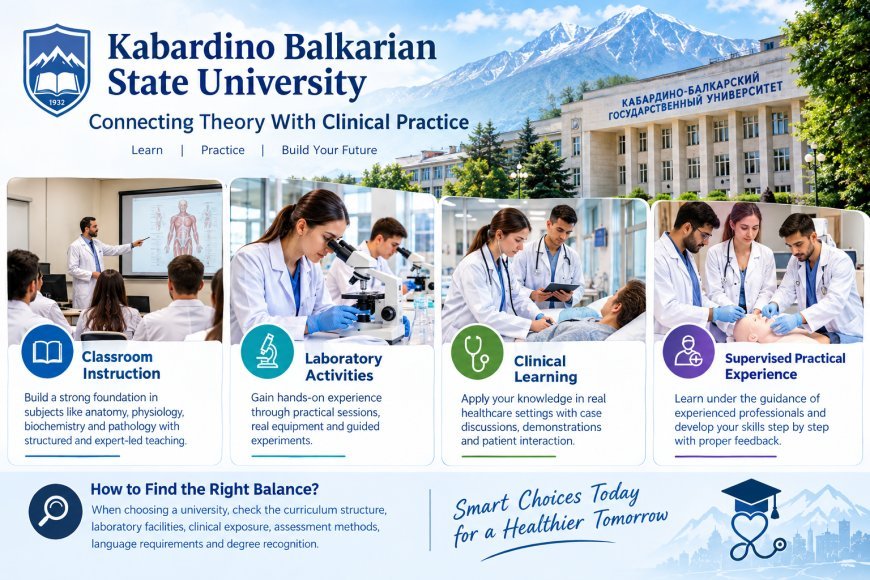
If you’re looking at medical degrees in Russia, you’ve probably seen Kabardino-Balkarian State University (KBSU) on a few shortlists. It doesn’t get as much attention as the big Moscow and St. Petersburg names, but it has a loyal following among international students, especially from South Asia. Here is a plain look at what it offers, where it is and who it might suit.
A Quick Look at the University
Kabardino-Balkarian State University, named after H.M. Berbekov is based in Nalchik, the capital of the Kabardino-Balkarian Republic in the North Caucasus. Its roots go back to a pedagogical institute opened in the early 1930s, and it was formally established as a university in 1957. Today it is a large public university with tens of thousands of students and a long list of bachelor’s, master’s and doctoral programs.
Sources give different student numbers, so treat any single figure with caution. What’s consistent is that international students come from dozens of countries, which gives the campus a genuinely mixed feel.
The Medical Faculty
Medicine is the main reason many foreign students apply. The medical faculty was opened in the 1960s and has grown into one of the university’s biggest units. It is made up of around 15 departments and offers specialties such as Medicine, Pediatrics and Pharmacy. The faculty also works with hospitals in the region, so students get real clinical exposure.
The university began English-medium teaching for General Medicine in 2017, which is a big deal if you don’t speak Russian. That said, you’ll still need to pick up some Russian. Hospital rotations and conversations with patients happen in the local language, and students who learn it early find the later years much easier.
Why Students Consider MBBS in Russia
The main attraction of MBBS in Russia is cost and access. Tuition is generally lower than at private medical colleges in India, and admission usually doesn’t involve a competitive entrance exam run by the university. The degree is a six-year General Medicine program, which is awarded as an MD in Russia but is commonly marketed to Indian students as MBBS.
If you’re from India, remember that NEET qualification is typically required for eligibility to practice back home. KBSU is often described as recognised by the WHO and listed in the World Directory of Medical Schools, but you should confirm its current NMC status yourself rather than trusting an agent’s word.
Life in Nalchik
Nalchik is a mid-sized, relatively calm city set against the Caucasus mountains. It is a much quieter experience than Moscow, with lower living costs, green parks and easy access to mountain scenery. Winters are cold, so be ready for that if you’re coming from a warmer country. The university provides hostel accommodation, and many students also rent shared flats nearby.
Life around KBSU Nalchik is simple and study-focused. You won’t find the nightlife of a major capital, but you will find a friendly student community and a pace that suits people who want to concentrate on their degree.
Who Is It Best For?
Kabardino-Balkarian State University may be a good fit if you:
-
Want to study medicine in Russia on a modest budget
-
Prefer a smaller, quieter city over a big metropolis
-
Are ready to learn Russian alongside your English-taught lectures
-
Are comfortable living in a cold climate
It may not suit you if you want a big-city lifestyle or if you haven’t checked the licensing rules in your home country.
What to Check Before You Apply
-
Recognition and licensing: Confirm the university’s status with your country’s medical regulator and the World Directory of Medical Schools.
-
Fees: Ask for a written breakdown covering tuition, hostel, food, insurance and visa costs.
-
Visa and travel conditions: Rules for studying in Russia can change, so check the latest guidance from your own government and the university’s international office.
-
Documents: Typical requirements include a passport, school certificates, NEET scorecard (for Indian students), medical certificate and photographs.
Final Thoughts
Kabardino-Balkarian State University offers an affordable, English-taught medical route in a quiet, scenic part of Russia. If you want to study medicine in Russia on a modest budget and prefer a calmer city over a big metropolis, it deserves a serious look. It isn’t for everyone, so do your research, talk to current students and confirm fees, recognition and visa rules directly with the university before you commit.
What's Your Reaction?
 Like
0
 Dislike
0
 Love
0
 Funny
0
 Angry
0
 Sad
0
 Wow
0