





















How Custom Food Wrapping Paper Improves Food Presentation and Builds Brand Identity
Custom Food Papers improve food presentation, strengthen brand identity, and create a professional look for restaurants, cafés, bakeries, and takeaway businesses.

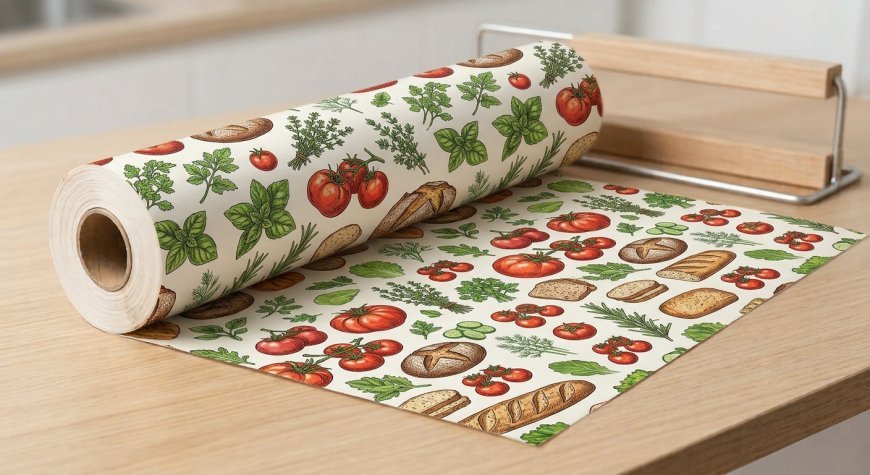
Food packaging plays an important role in how customers perceive a meal before taking the first bite. For restaurants, cafés, bakeries, food trucks, and takeaway businesses, wrapping materials are more than practical necessities. They help protect food, maintain presentation, and create a consistent customer experience. Customized Food Papers offer businesses an opportunity to combine everyday packaging needs with recognizable visual branding.
From wrapping burgers and sandwiches to lining food trays and packaging bakery products, printed paper can make food service look more professional. The right material also supports hygiene, grease management, and efficient handling. When businesses select packaging according to their products and operating requirements, they can improve presentation without adding unnecessary complexity to daily operations.
What Are Custom Food Papers?
Custom Food Papers are food packaging papers designed with specific sizes, prints, patterns, colors, or brand elements to suit a business's requirements. Depending on the intended application, they may be used to wrap prepared meals, separate food portions, line serving trays, or package bakery items.
Businesses can choose plain or printed materials, with designs ranging from simple patterns to logos and brand colors. The paper itself may vary according to its intended use, including grease-resistant, moisture-resistant, or food-contact-suitable options.
Common applications include:
-
Burger and sandwich wrapping
-
Bakery and pastry packaging
-
Deli counters and prepared foods
-
Restaurant trays and serving baskets
-
Takeaway meals and food trucks
-
Catering, events, and food sampling
The best option depends on the type of food, its temperature, oil content, moisture level, and expected time inside the packaging.
Why Food Presentation Matters in a Competitive Market
Customers often form an impression of a food business through small details. A neatly wrapped sandwich, an organized takeaway box, or a cleanly lined serving tray can make a meal feel more considered and professional.
Packaging also influences how food appears in photographs and social media posts. Businesses that serve visually appealing products can benefit from packaging that complements the meal rather than distracting from it.
Creating a Consistent Customer Experience
Consistent packaging helps connect different parts of a customer's experience. Whether someone orders through a delivery platform, visits a café, or purchases food from a market stall, recognizable wrapping creates visual continuity.
For example, a burger restaurant might use matching printed paper inside its takeaway boxes and serving baskets. This small detail can make the presentation feel coordinated across dine-in and delivery orders.
Making Everyday Packaging More Memorable
Plain packaging can perform its practical function, but custom designs introduce additional opportunities for recognition. Distinctive patterns, carefully placed logos, and coordinated colors can make packaging easier to associate with a particular business.
However, effective design does not need to be complicated. A clean layout with readable branding often works better than a crowded design containing too many messages.
How Custom Food Papers Strengthen Brand Identity
Brand identity includes the visual elements and experiences that help customers recognize a business. Packaging provides a physical space for these elements, particularly when customers interact with food outside the restaurant.
Using Logos and Brand Colors
Printed logos and brand colors create a consistent visual appearance across packaging materials. Businesses can match their wrapping paper with menus, takeaway bags, cups, labels, and delivery boxes.
Custom food paper with logo designs are particularly useful for restaurants that want their packaging to remain recognizable without using large or expensive labels on every item.
A bakery, for example, might use a subtle repeating logo pattern on pastry wrapping. A fast-casual restaurant could choose bold colors and a simple graphic that matches its menu and storefront.
Supporting Brand Recall
Customers may encounter a food business through packaging even after leaving the premises. A recognizable wrapper can remind them where the meal came from, especially when the design is consistent with other brand materials.
This does not guarantee repeat purchases. Food quality, pricing, convenience, and customer service remain important. Nevertheless, well-designed packaging can reinforce the overall impression created by those factors.
Improving Social Media Presentation
Food photographs frequently include wrappers, liners, takeaway containers, and serving surfaces. Visually coordinated packaging can help products look more polished in customer-generated photographs.
Branded paper liners for restaurants can support this presentation by introducing brand colors and patterns beneath burgers, fries, sandwiches, and other menu items. The design should remain attractive while allowing the food itself to stay at the center of attention.
Practical Benefits Beyond Appearance
Good packaging design must balance visual appeal with everyday performance. Paper that looks attractive but tears easily or allows excessive grease to spread can create avoidable service problems.
Managing Grease and Food Contact Requirements
Grease resistance matters when wrapping burgers, fried foods, pastries, and other oily products. Choosing a suitable material can help reduce visible oil transfer and maintain a cleaner presentation.
Businesses should evaluate grease-resistant paper for food service according to the specific menu and serving conditions. A material that works for a dry pastry may not perform equally well with hot, oily food.
Food-contact suitability is equally important. Suppliers should provide relevant specifications and compliance information for the intended market and application. Printing inks, coatings, and other material components should also be appropriate for their intended food-contact use.
Supporting Efficient Food Preparation
Standardized wrapping sheets can help staff prepare orders more consistently. When paper arrives in suitable dimensions and is easy to handle, employees may spend less time cutting oversized sheets or correcting untidy wrapping.
Operational benefits can include:
-
More consistent portion presentation
-
Easier preparation during busy service periods
-
Less unnecessary paper use when sizes are selected correctly
-
Improved organization at wrapping and packing stations
-
A more consistent appearance across different staff shifts
The actual efficiency gains depend on the workflow, paper format, and volume of orders.
Protecting Food During Takeaway
Packaging should suit the distance between preparation and consumption. Wrapping materials may help contain crumbs, reduce direct handling, and protect the product from some external contact.
However, paper alone cannot guarantee food safety or prevent temperature loss. Hot meals, chilled products, and delivery orders may require additional containers or packaging systems designed for their particular needs.
Choosing the Right Custom Printed Food Wrapping Sheets
Selecting the right paper requires more than choosing a color or print. Buyers should assess product performance, design requirements, supplier reliability, and total cost.
1. Match the Paper to the Food
Different foods create different packaging challenges.
-
Burgers and fried foods: Consider grease resistance and the effect of trapped steam.
-
Sandwiches and wraps: Look for suitable flexibility, strength, and convenient sheet sizes.
-
Bakery products: Choose materials appropriate for pastries, cookies, bread, and other baked goods.
-
Food trays and baskets: Consider paper dimensions, placement, and how easily the liner stays in position.
-
Moist foods: Check whether the selected paper can handle the expected moisture exposure.
A small sample test with the actual menu can reveal issues that are difficult to identify from a product description alone.
2. Evaluate Printing Quality
The visual quality of customized printed papers depends on print clarity, color consistency, and the suitability of the design for the paper surface.
Before placing a large order, businesses should review a sample or proof. Fine text may become difficult to read on textured paper, while overly dense printing can make a wrapper look cluttered.
A practical design usually prioritizes a recognizable logo, a limited color palette, and enough open space to keep the overall appearance clean.
3. Consider Personalized Food Packaging Paper
Personalized food packaging paper can be tailored to different menu categories, promotional campaigns, seasonal events, or customer groups.
For example, a café might use one design for daily bakery packaging and a separate version for holiday gift orders. A multi-location restaurant may prefer a standardized design that keeps branding consistent across branches.
The key is to maintain recognizable brand elements while making sure each design remains practical for the packaging application.
4. Check Supplier Capabilities
When evaluating food wrapping paper suppliers Canada, businesses should review product specifications, printing options, sample availability, order minimums, production timelines, and shipping arrangements.
Important questions include:
-
What paper types and sheet sizes are available?
-
Is the material suitable for the intended food application?
-
What documentation supports food-contact suitability?
-
Can the supplier provide print proofs or samples?
-
What are the minimum order quantities?
-
How are defects, delays, or reprints handled?
Clear answers can help buyers compare suppliers more effectively than price alone.
Custom Food Papers Compared With Plain Wrapping Paper
Both printed and plain paper can serve useful purposes. The appropriate choice depends on a business's branding goals, budget, order volume, and packaging requirements.
| Factor | Plain food wrapping paper | Custom printed food paper |
|---|---|---|
| Visual identity | Neutral appearance | Can reinforce brand recognition |
| Design flexibility | Limited | Supports logos, patterns, and colors |
| Initial setup | Usually simpler | May require design and print preparation |
| Cost structure | Often straightforward | Depends on print, quantity, material, and setup |
| Promotional potential | Limited | Can support campaigns and seasonal designs |
| Consistency | Depends on other packaging | Can match the wider brand identity |
Custom printing may offer greater branding value, but it is not automatically the best option for every business. A small operation with limited packaging demand may prefer plain paper, while a growing restaurant chain may benefit from a standardized printed design.
Understanding Cost and Wholesale Purchasing
Packaging costs depend on paper type, dimensions, printing coverage, order quantity, customization, and shipping. Comparing only the unit price can lead to misleading decisions.
Businesses considering wholesale printed food liner paper should calculate the total landed cost, including any setup charges, freight, taxes, storage requirements, and potential waste.
What Buyers Should Calculate
A useful purchasing assessment includes:
-
Cost per sheet: The amount paid for each usable piece of paper.
-
Usage per order: How many sheets are required for each meal or product.
-
Waste rate: The proportion discarded because of incorrect sizing, damage, or handling.
-
Storage capacity: Whether the business can store bulk orders in suitable conditions.
-
Reorder timing: How early new stock must be ordered to avoid shortages.
Bulk purchasing may reduce the cost per sheet, but only when the quantity matches realistic demand. Excess inventory can occupy valuable space, tie up cash, and become unsuitable if the business changes its branding or menu.
Sustainability and Responsible Packaging Choices
Environmental considerations increasingly influence packaging decisions. However, a paper-based product is not automatically recyclable, compostable, or environmentally preferable in every situation.
Businesses interested in sustainable paper for food packaging should examine the full product specification rather than relying on broad marketing claims.
Useful considerations include:
-
Whether the paper contains recycled or responsibly sourced fiber
-
Whether coatings or laminations affect disposal options
-
Whether food contamination limits recycling
-
Whether compostability claims are supported by relevant certification
-
Whether the paper can be used efficiently without unnecessary excess
-
Whether local waste-management systems accept the material
Grease-resistant treatments and food residues can affect disposal. As a result, sustainability claims should reflect the actual material construction and the facilities available to customers.
Common Mistakes to Avoid When Ordering Custom Food Paper
Even a well-designed packaging project can underperform when practical requirements are overlooked.
Choosing appearance over performance: Attractive printing cannot compensate for paper that fails under expected grease, moisture, or handling conditions.
Skipping samples: Testing a small quantity first helps identify problems with color, print alignment, sheet size, and product compatibility.
Overcomplicating the design: Too many graphics, messages, and colors can weaken brand recognition instead of improving it.
Ignoring minimum order quantities: Large orders can create storage and cash-flow challenges when demand is uncertain.
Overlooking compliance documentation: Businesses should confirm food-contact suitability and relevant requirements for the markets where the packaging will be used.
Failing to standardize sizes: Too-small sheets may not cover the product adequately, while oversized sheets can increase material use and slow preparation.
A Practical Checklist Before Placing an Order
Before purchasing printed wrapping paper, businesses can use this checklist to reduce avoidable problems.
-
Identify the foods the paper will wrap or line.
-
Confirm suitable material specifications and food-contact requirements.
-
Select sheet dimensions that match the products.
-
Prepare a readable design using consistent brand elements.
-
Request a sample or print proof.
-
Test the paper under real service conditions.
-
Compare unit price, setup charges, shipping, and minimum quantities.
-
Confirm production and delivery timelines.
-
Review storage and reorder requirements.
-
Check any environmental claims against available documentation.
This process helps align the packaging's appearance with operational requirements and purchasing objectives.
The Future of Custom Food Packaging
Food packaging continues to evolve as restaurants balance convenience, customer expectations, operational costs, and environmental considerations. Digital printing may provide greater flexibility for businesses that want smaller customized runs, while improved material options can help buyers match paper performance to specific food applications.
Packaging is also becoming more closely connected with the broader customer experience. Businesses may coordinate wrapping paper with takeaway bags, labels, loyalty promotions, and seasonal campaigns to create a unified visual identity.
Nevertheless, successful packaging choices will continue to depend on practical fundamentals: appropriate materials, clear design, reliable supply, sensible costs, and consistent performance. Businesses that evaluate these factors together are better positioned to select packaging that serves both customers and staff.
Conclusion
Custom Food Papers can improve food presentation, reinforce brand identity, and support more consistent packaging operations when the material and design suit the intended application. From selecting grease-resistant paper to evaluating print quality, wholesale costs, and sustainability claims, every decision contributes to the final customer experience. Businesses should test materials, confirm relevant specifications, and choose quantities that reflect actual demand rather than focusing on appearance alone. For businesses seeking practical packaging options that balance presentation, functionality, and brand consistency, Wax Paper CA may be worth considering when evaluating suitable solutions for their food service needs.
Frequently Asked Questions
1. What are Custom Food Papers used for?
Custom Food Papers are used to wrap, separate, or line food products such as burgers, sandwiches, bakery items, and takeaway meals. Printed versions can also support a business's visual identity.
2. Are custom printed food wrapping sheets suitable for greasy foods?
Some custom printed food wrapping sheets are designed for grease resistance, but performance depends on the paper construction and intended application. Buyers should check specifications and test the material with their actual menu items.
3. What should businesses look for in personalized food packaging paper?
Businesses should assess food-contact suitability, paper strength, print quality, dimensions, grease resistance, order minimums, and delivery times. Samples can help confirm that the paper meets operational needs.
4. Can branded paper liners for restaurants improve brand recognition?
Yes. Branded paper liners for restaurants can reinforce brand colors, logos, and design elements across dine-in and takeaway experiences. Their effectiveness depends on consistent use and the overall quality of the customer experience.
5. How can a business choose food wrapping paper suppliers in Canada?
When comparing food wrapping paper suppliers Canada, businesses should review material options, printing capabilities, documentation, samples, pricing, minimum quantities, and delivery arrangements. Reliability and product suitability matter alongside cost.
6. Is sustainable paper for food packaging always recyclable?
No. Sustainable paper for food packaging may include coatings, laminations, or food contamination that affect disposal. Buyers should verify product-specific claims and check local recycling or composting requirements.
7. Is wholesale printed food liner paper cost-effective?
Wholesale printed food liner paper can reduce unit costs at suitable order volumes. However, buyers should account for setup fees, shipping, storage, expected usage, and the risk of holding excess inventory.
What's Your Reaction?
 Like
0
 Dislike
0
 Love
0
 Funny
0
 Angry
0
 Sad
0
 Wow
0