























MEXC Clone Script: Build a Future-Ready Crypto Exchange for the Next Market Shift
Learn how a MEXC clone script can help businesses build a future-ready crypto exchange with modern trading features, scalable infrastructure, security, liquidity, and automation.

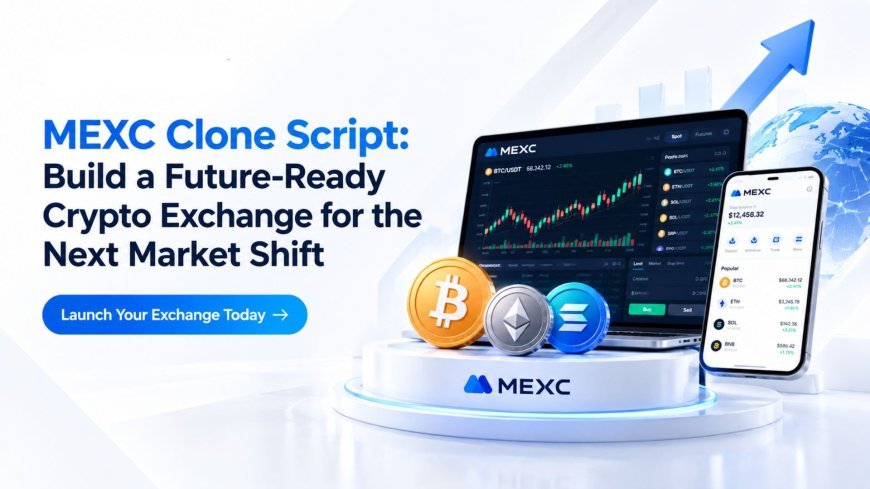
Crypto exchange businesses are entering a market where traders expect more than basic buying and selling. Faster execution, deeper liquidity, multiple trading products, secure wallets, mobile access, automated trading, and reliable market data are becoming part of the standard exchange experience. For businesses planning a new trading platform, a MEXC Clone Script can provide a structured starting point while leaving room to build features around a specific market and business model.
The market opportunity remains significant. CoinGecko reported that centralized exchanges handled nearly $80 trillion in combined spot and perpetual trading volume during 2025, showing the continued importance of centralized trading platforms. At the same time, decentralized exchanges are gaining ground, with DEX spot trading share reaching about 13.6% in January 2026. This shift means a new exchange needs infrastructure that can adapt as trader preferences, assets, and market structures change.
Quick Answer: What Is a MEXC Clone Script?
A MEXC Clone Script is a pre-built crypto exchange platform based on the core functionality commonly found in large centralized exchanges. It can provide modules for spot trading, futures, wallets, order management, user accounts, liquidity, administration, security, and market data.
The purpose is not to reproduce another exchange exactly. Businesses can use the existing exchange architecture as a foundation and customize the platform for their target users, supported assets, trading products, regional requirements, revenue model, and compliance needs. This can make the development process more structured while allowing the final exchange to have its own identity and market strategy.
Why Should Businesses Consider a MEXC Clone for the Next Market Shift?
Crypto trading markets change quickly. New blockchain networks gain users, new assets attract liquidity, and traders move between centralized and decentralized platforms depending on features, fees, liquidity, and market conditions. Building an exchange architecture that can accommodate these changes is therefore more useful than developing a platform around a narrow trading model.
A MEXC Clone Script can provide a modular foundation that businesses can expand as market requirements change. Spot trading can be the initial product, followed by futures, copy trading, trading bots, staking, launchpad services, institutional APIs, or other products where legally permitted. This approach allows the exchange to expand based on actual user demand.
What Features Does a Future-Ready MEXC Clone Script Need?
A future-ready exchange needs strong core trading infrastructure. Important components include a matching engine, order book, market and limit orders, advanced order types, real-time market data, trading charts, wallet management, deposits and withdrawals, transaction history, user accounts, notifications, and an administration dashboard.
Businesses can then add features based on their target market. These may include futures trading, copy trading, staking, trading bots, referral programs, launchpad functionality, API access, price alerts, multi-language support, KYC verification, AML monitoring, and portfolio management. A modular approach allows the platform to add new services without rebuilding the entire exchange.
How Can a MEXC Clone Script Adapt to Changing Trading Trends?
Adaptability depends heavily on the architecture behind the exchange. APIs, modular services, blockchain integrations, liquidity connectors, and configurable trading modules allow businesses to add new assets, networks, and products more efficiently.
This flexibility is becoming more relevant as CEX and DEX markets continue to overlap. CoinGecko's 2026 research shows that DEX activity has taken a larger share of crypto spot trading, while centralized exchanges still account for most of the market. (CoinGecko) A future-ready MEXC Clone Script can therefore be planned with both centralized exchange functionality and connectivity to selected blockchain-based liquidity sources.
How Important Are Liquidity and Market Connectivity?
Liquidity directly affects the trading experience. A user may leave an exchange if orders experience high slippage, spreads are too wide, or popular trading pairs lack sufficient depth. A new exchange therefore needs a liquidity strategy alongside its technical development plan.
A MEXC Clone Script can connect with liquidity providers, market makers, external exchanges, and approved liquidity sources through APIs, depending on the business model. Businesses can also prioritize liquidity around specific trading pairs instead of launching with a very large asset list. This can help concentrate trading activity and provide a more consistent experience for the initial user base.
What Security Infrastructure Should a MEXC Clone Include?
Security should cover every major exchange component, including user accounts, wallets, APIs, trading systems, administrative access, and blockchain transactions. Multi-factor authentication, role-based permissions, withdrawal controls, wallet segregation, encryption, API restrictions, transaction monitoring, audit logs, and suspicious-activity detection can form part of the security architecture.
Recent industry incidents show why these controls matter. CoinGecko's 2026 crypto security research reported billions of dollars in losses from hacks and exploits across the crypto sector, with private-key compromise remaining a major concern for centralized platforms. Security should therefore be planned during architecture design instead of being treated as a final development step.
How Can a MEXC Clone Support Global Expansion?
Global expansion requires more than translating an exchange interface. A business may need multiple languages, fiat currencies, payment integrations, regional trading pairs, local customer support, jurisdiction-specific onboarding, and different compliance processes.
A MEXC Clone Script can be customized around these requirements so the same technical foundation can support different markets. Businesses can select the countries they intend to serve and then determine which assets, payment methods, verification procedures, and trading products are appropriate for each jurisdiction.
How Much Does It Cost to Build a MEXC Clone Script?
The cost depends on the scope of the exchange. A basic spot trading platform will require a different budget from a multi-product exchange with futures, copy trading, staking, trading bots, mobile applications, multiple blockchains, advanced APIs, and institutional features.
Businesses should also consider liquidity, blockchain infrastructure, cloud hosting, security audits, KYC and AML services, third-party APIs, maintenance, and future upgrades. Defining the required features and target market before development makes it easier to create a realistic project estimate.
Build a Future-Ready MEXC Clone Script With Malgo
Malgo provides crypto exchange development services for businesses planning customized centralized trading platforms. A MEXC Clone Script can be adapted with trading modules, wallet infrastructure, liquidity integrations, APIs, security controls, KYC and AML workflows, administration tools, mobile applications, and other features required by the business model.
The development approach can also account for the exchange's target market, preferred blockchain networks, supported trading pairs, revenue model, localization requirements, and future expansion plans. This gives businesses a starting platform while keeping room for features that differentiate the exchange from competing products.
Planning your own future-ready crypto exchange?
Explore Malgo Crypto Exchange Development Services
Call: +91 87780 74071
Email: info@malgotechnologies.com
Free demo available to discuss the exchange concept, features, target market, liquidity requirements, and technology architecture.
Conclusion
The next phase of crypto exchange growth will likely depend on adaptability as much as trading volume. Centralized exchanges continue to process substantial market activity, while DEXs, automated trading, new blockchain networks, and changing trader preferences are reshaping how users interact with digital assets.
A MEXC Clone Script can give businesses a practical foundation for entering this market without limiting the exchange to one fixed product model. With modular trading infrastructure, strong security, liquidity connectivity, flexible APIs, and market-specific customization, businesses can build an exchange prepared to respond to new trading products and changing user expectations.
What's Your Reaction?
 Like
0
Like
0
 Dislike
0
Dislike
0
 Love
0
Love
0
 Funny
0
Funny
0
 Angry
0
Angry
0
 Sad
0
Sad
0
 Wow
0
Wow
0