
























NDIS Website Redesign: Signs Your Business Needs a New Website
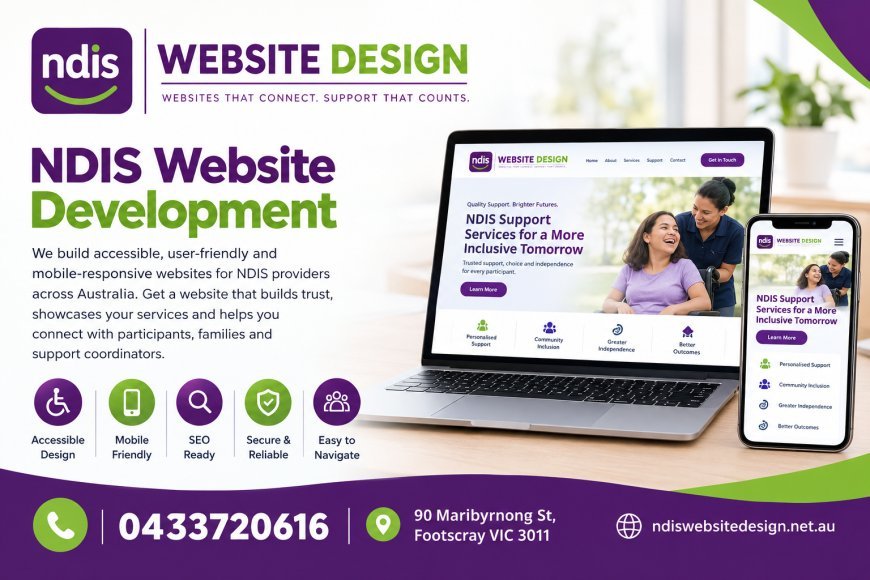
Your website is an important part of how people discover and understand your NDIS business. It introduces your organisation, explains your services and provides visitors with a way to contact you.
However, a website that worked well several years ago may no longer meet your business needs. Design trends change, technology develops and service offerings expand. Over time, an outdated website can make it harder for visitors to find information or understand what your organisation provides.
A website redesign gives NDIS providers an opportunity to improve their online presence, update important information and create a more useful experience.
Here are some signs that your business may need a website redesign.
1. Your Website Looks Outdated
First impressions matter when someone visits your website.
An old layout, inconsistent colours, outdated images and difficult-to-read fonts can make your business appear less established online.
A modern website does not need complicated animations or excessive visual effects. It should have a clean layout, consistent branding and a clear structure.
If your website no longer reflects the quality or direction of your organisation, it may be time to review its design.
2. Your Website Does Not Work Properly on Mobile Devices
Many people use smartphones to search for local services and compare businesses.
If your website requires visitors to zoom in, scroll sideways or struggle with small buttons, the mobile experience needs improvement.
A redesigned website should adjust to different screen sizes and provide easy access to important information.
Navigation menus, service descriptions, images and enquiry forms should all work properly on smartphones and tablets.
Mobile usability should be tested before a redesigned website goes live.
3. Visitors Struggle to Find Your Services
As an NDIS provider, you may offer several types of support. If these services are not organised clearly, visitors may struggle to understand what your business provides.
For example, someone looking for community participation support should be able to locate the relevant information without searching through unrelated pages.
A website redesign provides an opportunity to reorganise service categories, improve page headings and create separate pages for important services.
Each service page should explain what the service involves, who it is intended for and how visitors can enquire.
4. Your Website Loads Slowly
Website speed affects how visitors interact with your pages.
Large image files, unnecessary scripts, outdated plugins and poor hosting can contribute to slow loading times.
If visitors have to wait too long for important content to appear, they may leave before exploring your services.
During a redesign, developers can review image sizes, hosting performance, caching, scripts and other technical elements.
The goal should be to create a website that loads efficiently without sacrificing usability or visual quality.
5. Your Website Does Not Generate Enquiries
A website should provide visitors with clear ways to contact your business.
If your contact information is difficult to find, enquiry forms are complicated or service pages lack clear next steps, visitors may not know how to proceed.
A redesign can improve these elements by adding:
-
Clearly displayed contact details.
-
Simple enquiry forms.
-
Relevant contact buttons.
-
Service-specific enquiry options.
-
Consistent contact information across pages.
It is also useful to review website analytics to understand which pages receive visits and where visitors may be leaving.
6. Your Website Is Not Supporting Your SEO Strategy
A website redesign can also be an opportunity to improve search engine optimisation.
If your website has poorly structured pages, duplicate content, missing page titles or confusing navigation, these issues may affect its search performance.
NDIS SEO services can help providers review website content, keyword targeting, internal links and technical SEO.
However, redesigning a website does not automatically improve Google rankings. SEO planning should happen before the new website is launched.
Important steps include maintaining relevant URLs where possible, setting up redirects when URLs change, reviewing metadata and ensuring important pages remain accessible to search engines.
7. Your Business Has Changed
Your organisation may now offer services that were not available when the original website was created.
You may have expanded into new locations, introduced additional support options or changed your business structure.
If your website still displays old service information or outdated contact details, visitors may receive an inaccurate understanding of your organisation.
A redesign gives you an opportunity to update your website so that it accurately represents your current business.
8. Your Website Does Not Match Your Marketing Campaigns
If you are running NDIS Google Ads or other online marketing campaigns, your website should support those activities.
For example, an advertisement promoting a particular service should direct visitors to a relevant landing page rather than a general homepage.
The landing page should explain the service clearly and provide an easy way to enquire.
A well-planned redesign can create dedicated pages that better match your advertising messages and SEO strategy.
What to Consider Before Redesigning Your Website
Before starting a redesign, identify what is working and what needs improvement.
Review your existing website traffic, important landing pages, search rankings, enquiries and visitor feedback.
Also consider website ownership, hosting, security, accessibility, content management and ongoing maintenance.
Do not remove useful pages simply because you are changing the design. Existing content may already attract visitors through Google.
Conclusion
A website redesign can help NDIS providers create a more organised, accessible and updated online presence. Whether your website looks outdated, performs poorly on mobile devices or no longer reflects your services, reviewing its structure can be a valuable business decision.
At NDIS Website Design, we help Australian providers build and improve websites that clearly communicate their services. Our approach to NDIS website design in Australia focuses on usability, accessibility, search visibility and creating a website that supports your business as it grows.
What's Your Reaction?
 Like
0
 Dislike
0
 Love
0
 Funny
0
 Angry
0
 Sad
0
 Wow
0