




















Play, Curiosity and Confidence: Decoding Early Years Education For First-Time Parents
How play, curiosity and confidence shape the early years, plus a first-time parent’s checklist for choosing a warm, stimulating start.
Somewhere between your child’s second birthday and the first school brochure landing in your inbox, a strange thing happens. Suddenly everyone has opinions. Phonics at two? Worksheets at three? Does a toddler really need a “curriculum”? If you’re searching for nursery schools in Pune, the options can feel louder than the answers.
Let’s slow it down. Early years education is less about early academics and more about how a child learns to learn. Once you see that, the choices get a lot clearer.
What Actually Happens in the Early Years
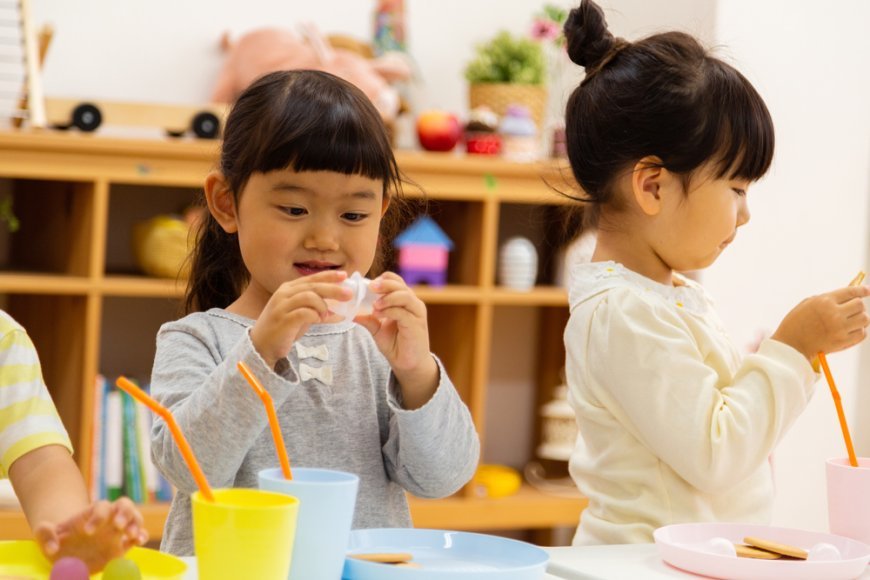
A good early years classroom looks, to an untrained eye, a lot like organised chaos. Children are digging, pouring, stacking, pretending, arguing over a toy, then sharing it two minutes later. That’s the work.
Many quality programmes follow a structured framework, such as the Early Years Foundation Stage, which breaks development into seven areas. Three are “prime” areas that come first, and four are “specific” areas that build on them.
|
Area |
What it looks like day to day |
|
Communication and language |
Listening to stories, naming things, taking turns in conversation |
|
Physical development |
Climbing, balancing, holding a crayon, cutting with scissors |
|
Personal, social and emotional |
Sharing, waiting, handling frustration, making friends |
|
Literacy |
Mark-making, rhymes, recognising letters through play |
|
Mathematics |
Counting steps, sorting shapes, comparing sizes |
|
Understanding the world |
Noticing plants, weather, families and traditions |
|
Expressive arts and design |
Painting, music, role-play, building |
None of that needs a desk. All of it needs adults who notice and respond.
Why Play Isn’t “Just Play”
Parents sometimes worry that a play-based day means nothing is being taught. It’s the opposite. When a child builds a tower and it falls, they’re learning cause and effect. When two children negotiate who gets the red truck, that’s language, patience, and empathy in one scene.
The difference between ordinary play and purposeful play is the adult. Teachers set up the space, introduce new words, ask open questions, and step back when children are absorbed. It looks effortless because it’s carefully planned.
Curiosity Is the Engine
Young children ask “why” about everything, and the answers matter less than the asking. Classrooms that protect this habit tend to offer:
● Open-ended materials like blocks, fabric, clay, and natural objects
● Unhurried time to explore without being moved on
● Outdoor spaces where mud, leaves and puddles are welcome
● Teachers who ask “What do you think will happen?” before explaining
Confidence Grows From Small Wins
Confidence isn’t praise. It’s the quiet feeling of “I can do this.” It comes from fastening your own shoes, pouring your own water, finishing a puzzle that was frustrating ten minutes ago. Settings that let children try, struggle a little, and succeed build that feeling far better than ones that do everything for them.
What to Look For When Comparing Preschools in Pune
Brochures all say similar things. Visits tell you the truth. When you’re comparing preschools in Pune, spend time on what you actually see.
Look at the Adults
● Do teachers crouch to a child’s eye level?
● Are they calm when something goes wrong?
● Do they know every child’s name, and one thing about them?
Look at the Space
● Is there room to move, and natural light?
● Are materials within children’s reach?
● Is there safe, shaded outdoor access, important in Pune’s warmer months?
● Does it feel calm rather than overstimulating?
Look at the Day
|
Healthy sign |
Worth a second question |
|
Mix of free play, group time and outdoor time |
Long stretches of seated work for toddlers |
|
Gradual settling-in for new children |
“Drop and go” from day one with no support |
|
Regular updates to parents |
Little or no communication about progress |
|
Staff who talk about wellbeing, not only skills |
A focus on early reading and writing drills |
Your Visit Checklist
Carry this in your phone and tick it off as you go:
- Ask about the learning framework and how it’s adapted for children aged two to five.
- Ask how teachers help a child who cries at drop-off.
- Ask about toilet routines, nap time and food, the unglamorous things that matter most.
- Ask how the school keeps parents informed.
- Ask what happens after the early years, since a smooth path into primary school saves a lot of upheaval.
When you reach your shortlist of preschools in Pune, visit at a normal time, not just on an open day. Watch how children move between activities. If they look settled and curious, that tells you more than any prospectus.
Helping Your Child Settle In
The first weeks can be tougher on parents than on children. A few things help:
● Visit the school together before the first day, more than once if possible
● Keep goodbyes short and warm; lingering makes it harder
● Talk about school in simple, positive terms
● Build the routine early: sleep, meals, bags packed the night before
● Expect some wobbles. Regression is common and usually passes
Final Thoughts
Choosing among nursery schools in Pune isn’t really about picking the school with the longest feature list. It’s about finding the place where your child will feel safe enough to be curious and trusted enough to try things on their own.
Wellington College Pune is one example of a school that thinks about the early years as the base of a longer journey. It’s a co-educational day school for ages 2 to 18 on the banks of the Mula-Mutha River in Wagholi. Children can begin in Pre-Nursery at age 2 under the Early Years Foundation Stage framework, and its early years programme has earned accreditation for a curiosity-led approach centred on wellbeing and involvement. From there, the pathway continues through the English National Curriculum to IGCSE and the IB Diploma.
Parents comparing the best international schools in Pune may find it useful to look not just at the senior years but at how a school treats its youngest learners, since everything else is built on that first classroom.
What's Your Reaction?
 Like
0
 Dislike
0
 Love
0
 Funny
0
 Angry
0
 Sad
0
 Wow
0