




















Private Label with Clothing Manufacturers in Poland: How Boutiques Launch Their Own Line
Learn how boutiques can launch a private-label clothing line in Poland, from product selection and sampling to manufacturing and quality checks.


Introduction
Launching a private label clothing line allows boutiques to move beyond selling other brands and build a collection under their own name. Instead of relying entirely on ready-made wholesale products, boutique owners can develop garments that reflect their customers' preferences, pricing strategy and brand identity.
Working with private label clothing manufacturers in Poland can be one way to develop a local or European production network. However, a successful launch depends on more than finding a manufacturer. Boutiques need a clear product plan, realistic quantities, approved samples and a reliable production process.
What Is Private Label Clothing Manufacturing?
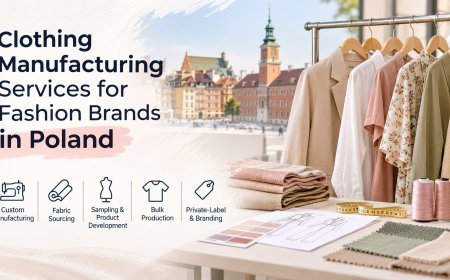
Private label clothing manufacturing is a production arrangement in which a manufacturer makes garments that are sold under a retailer's or fashion brand's name. The boutique decides what products to develop, while the manufacturing partner handles agreed production activities.
Depending on the manufacturer, services may include:
- Garment development based on a design or reference.
- Fabric and trim sourcing.
- Pattern development and sampling.
- Custom labels, tags and packaging.
- Bulk garment production.
- Quality checks before dispatch.
For example, a boutique specialising in women's everyday wear could develop its own collection of linen shirts, cotton dresses and coordinated sets. Rather than purchasing finished products from multiple wholesale suppliers, it can work with a manufacturing partner to create garments that follow a consistent brand identity.
How Boutiques Can Launch a Private Label Clothing Line in Poland
1. Define Your Boutique's Product and Target Customer
Start with a focused product range. Trying to launch too many categories at once can increase development costs, complicate sourcing and make inventory planning difficult.
Consider:
- Who will buy the collection?
- What price range will suit your customers?
- Which styles are missing from your current product range?
- Will the collection focus on casualwear, occasionwear, workwear or another category?
- Which garments are suitable for repeat production?
A boutique targeting customers who prefer everyday premium clothing, for instance, might begin with a small range of shirts, trousers and dresses.
2. Prepare Designs and Tech Packs
A tech pack communicates the garment's construction and specifications to the manufacturer. It reduces misunderstandings and gives both parties a shared reference during sampling and production.
A useful tech pack should include:
- Front and back garment sketches.
- Measurements and size specifications.
- Fabric composition and weight, where known.
- Stitching and construction details.
- Colour references.
- Labels, trims and finishing requirements.
- Size grading instructions, if applicable.
If you are launching your first collection, you may not have complete technical documents. Discuss development support with the manufacturer before assuming that every detail can be created during production.
3. Select Fabrics and Materials
Fabric selection influences the garment's appearance, comfort, durability, fit and final cost. Boutiques should evaluate materials against the intended use of each product.
For example:
| Garment Type | Fabric Options to Consider | Key Checks |
|---|---|---|
| Summer shirts | Cotton, linen blends | Breathability, shrinkage and opacity |
| Everyday dresses | Cotton, viscose | Drape, comfort and colour consistency |
| Structured trousers | Cotton twill, suitable blends | Weight, strength and fit |
| Lightweight tops | Viscose, modal blends | Softness, drape and care requirements |
Request fabric swatches where possible. Check composition, colour, texture and care requirements before approving bulk materials.
4. Evaluate Private Label Clothing Manufacturers
Not every clothing manufacturer offers the same services. Some focus on bulk production, while others also support product development, sampling and private label finishing.
Before selecting a clothing manufacturer in Poland, ask about:
- Experience with your garment category.
- Development and sampling capabilities.
- Minimum order quantities for each style.
- Fabric and trim sourcing options.
- Custom branding and labelling.
- Production quality checks.
- Communication and production updates.
- Payment terms and delivery arrangements.
Ask for relevant samples or examples of previous work where available. Do not base your decision on the quoted unit price alone. Construction quality, material suitability, communication and production consistency also affect the value of a manufacturing partnership.
5. Approve Samples Before Bulk Production
Sampling gives boutique owners an opportunity to check how a design works as a finished garment. Review the sample carefully before authorising production.
Check the measurements, fit, stitching, fabric feel, colour, finishing and label placement. If changes are required, communicate them clearly and request an updated sample when necessary.
Keep an approved sample as a reference for bulk production. This helps establish expectations for the finished order.
6. Plan MOQs, Costs and Inventory
Minimum order quantity (MOQ) is an important consideration for boutiques because a large first order can tie up working capital.
Ask manufacturers whether MOQs apply per style, colour or size. Also clarify whether sampling, fabric sourcing, labels and packaging are included in the quotation.
Build a realistic cost estimate that considers:
- Fabric and trims.
- Sampling and development.
- Garment manufacturing.
- Labels and packaging.
- Shipping and insurance.
- Applicable import duties and taxes.
- Potential quality-related or production adjustments.
Start with a manageable collection and use early sales data to decide which styles deserve repeat orders.
Should Boutiques Choose a Polish Manufacturer or an International Partner?
Polish manufacturers may suit boutiques that value a production partner within the European market. Proximity can make in-person communication, sample reviews and coordination easier, depending on the manufacturer's location and the boutique's arrangements.
However, local production is not automatically the best option for every collection. Fabric availability, production capacity, order quantities, product complexity and total landed cost should all influence the decision.
An international partner may offer a different combination of fabric sourcing, customisation and production options. Boutiques should compare complete quotations and approved samples rather than choosing a supplier based only on geography.
How Fabriclore Supports Private Label Clothing Production
Fabriclore supports fashion businesses with fabric sourcing and garment manufacturing from India. For boutiques planning a private label collection, this provides an option to coordinate material selection and garment production through one sourcing partner.
Its garment manufacturing solutions include woven and knit apparel production, sampling and product development support, custom branding requirements and quality-control coordination.
The stated starting MOQs are 100 pieces for woven garments and 300 pieces for knit garments. These are starting points, not fixed quantities for every product. Actual MOQs depend on garment type, design and production requirements.
Boutiques can discuss their product range, fabric preferences, technical specifications and target quantities before moving ahead. This is particularly useful for brands that want to evaluate an international manufacturing option alongside local production in Poland.
Common Mistakes to Avoid When Starting a Private Label Line
- Launching too many styles: Begin with a focused collection that is easier to develop and manage.
- Choosing fabric based only on price: Check composition, feel, performance and suitability for the garment.
- Skipping sample approval: Confirm fit, measurements and construction before bulk production.
- Ignoring the full cost: Include shipping, taxes, packaging and development expenses in your calculations.
- Leaving branding details until the end: Confirm labels, tags and packaging requirements during product development.
- Choosing a manufacturer without checking its capabilities: Match the supplier's experience and production process to your product requirements.
Conclusion
Private label clothing gives boutiques greater control over product design, branding and collection development. Working with private label clothing manufacturers in Poland can be a suitable route for businesses that prioritise European production, while international partners may provide additional sourcing and manufacturing options.
The strongest starting point is a focused collection supported by clear tech packs, suitable fabrics, approved samples and realistic production quantities. By evaluating manufacturers on quality, communication, capability and total cost, boutique owners can build a more reliable foundation for their own clothing line.
FAQs
1. What Is Private Label Clothing Manufacturing?
Private label clothing manufacturing is when a manufacturer produces garments that a boutique or fashion brand sells under its own brand name. The boutique defines the product and branding requirements, while the manufacturer handles the agreed development and production work.
2. How Do Boutiques Find Private Label Clothing Manufacturers in Poland?
Boutiques can shortlist manufacturers through industry directories, trade events, referrals and supplier websites. They should assess product experience, sampling support, MOQs, quality processes, communication and commercial terms before placing an order.
3. What Is the Minimum Order Quantity for Private Label Clothing?
MOQs vary by manufacturer, garment category, fabric and production requirements. Some suppliers accept smaller development runs, while others require larger quantities. Always request a style-specific MOQ rather than assuming one quantity applies to the entire collection.
4. Can Small Boutiques Start Their Own Clothing Line?
Yes. Small boutiques can begin with a focused collection of a few styles, validate customer demand and expand based on sales. Careful planning of samples, production quantities and inventory can help manage the initial investment.
5. Can Boutiques Work with Clothing Manufacturers Outside Poland?
Yes. Boutiques can work with international manufacturers if the supplier meets their requirements for product development, quality, communication, shipping and total cost. They should also check import documentation, duties, taxes and applicable product-labelling requirements before ordering.
What's Your Reaction?
 Like
0
 Dislike
0
 Love
0
 Funny
0
 Angry
0
 Sad
0
 Wow
0