


















How first party car insurance differs from third party insurance explained
You can buy it with a package policy or as a standalone policy, if you already hold a valid liability policy.

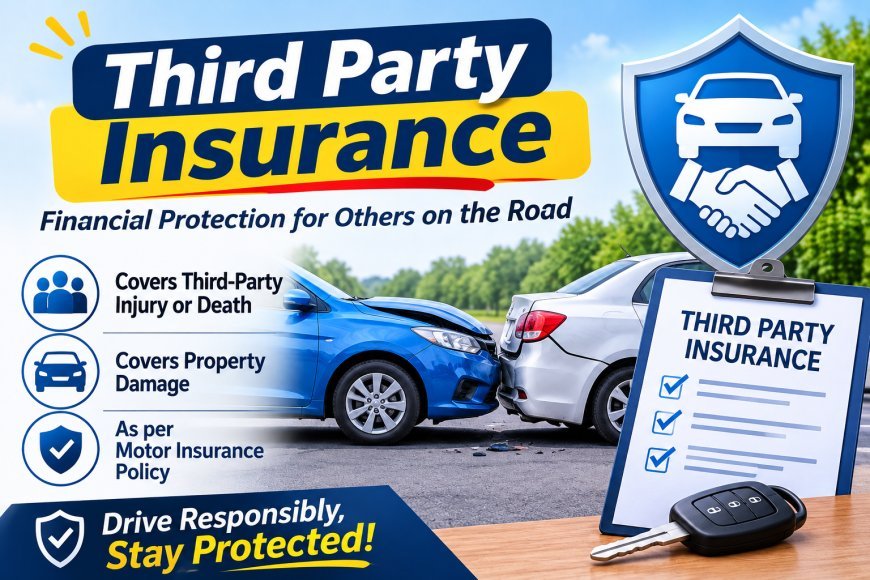
Many buyers see the terms first party and third party on a quote and may find it difficult to understand the difference. Both types of cover serve different purposes. One protects your own car, while the other protects people you may harm. Understanding how first party car insurance works and what it pays for can help you compare it with third party insurance, which is required by law.
What first party cover means
First party cover pays for losses to your own vehicle. It applies when an accident, fire, flood, theft, or riot damages the car. In India, this cover is called own damage cover. You can buy it with a package policy or as a standalone policy, if you already hold a valid liability policy.
What third party cover means
Third party cover pays for harm you cause to others. If your car injures a pedestrian, kills a passenger in another vehicle, or damages someone’s property, this cover pays the claim. The Motor Vehicles Act makes it compulsory for every vehicle on public roads. A policy with only this cover is a liability only policy, so it pays nothing for your own car.
The table shows the main differences.
|
Point |
First party |
Third party |
|
Who is protected |
You and your car |
Other people |
|
Legal need |
Optional |
Compulsory |
|
Premium |
Set by insurer |
Set by regulator |
|
Covers theft |
Yes |
No |
|
Covers injury to others |
No |
Yes |
How claims work for each cover
For a claim under first party car insurance, you inform the insurer, a surveyor checks the car, and the insurer pays for repairs or the insured declared value in case of a total loss. A deductible and depreciation may reduce the payout. You can use a cashless garage if your insurer has one near you.
A third party claim works differently. The injured person or the owner of the damaged property files the claim, usually through a police report and the motor accident claims tribunal. Your insurer pays compensation to the victim, and you do not pay from your pocket unless you broke a policy condition. Personal injury and death liability has no fixed upper limit, while property damage liability is capped at Rs 7.5 lakh.
What each cover leaves out
Each cover has gaps, so read the exclusions before you buy.
-
First party cover does not pay for wear and tear, mechanical failure, or loss when the car is driven without a valid license.
-
Third party cover does not pay for damage to your own car or theft of the vehicle.
-
Own damage claims fail when the car is used for purposes not stated in the policy, such as commercial use under a private plan.
How to choose the right mix
Your choice depends on your car and how you use it. Consider these points:
-
A new or costly car needs both covers, since repairs cost more than most owners can absorb.
-
An old car with a low market value may do well with liability cover alone, if you accept the risk of repair costs.
-
A car parked in a flood or theft prone area benefits from own damage cover.
-
A loan on the car usually needs a package policy, as lenders ask for it.
Also keep in mind that own damage cover builds a no claim bonus, which lowers the premium in later years. A policy with only third party insurance does not build one.
Common mistakes to avoid
-
Buying liability cover only to save money, then facing a large repair bill.
-
Setting a low insured declared value, which cuts the payout after theft or total loss.
-
Skipping the exclusions list and finding out at claim time.
-
Letting the policy lapse, which ends all cover and can remove your discount.
Steps to decide
-
Check your car’s market value and age.
-
List the risks in your area, such as flood, theft, or heavy traffic.
-
Decide how much repair cost you can pay yourself.
-
Compare package and liability quotes from two or three insurers.
-
Read the policy wording and exclusions before you pay.
Document checks help too. Keep your registration certificate, the policy copy, and proof of your no claim bonus ready, since insurers may ask for them at purchase or claim time.
Conclusion
First party cover protects your car, and third party cover protects other people from the harm your car may cause. The law requires only the second, but your own savings need the first. Weigh your car’s value, your area, and your budget before you choose. Treat first party car insurance as protection for your own investment. Treat third party insurance as a legal duty that also shields you from large liability claims. Read the policy wording, renew on time, and review your cover each year. A clear choice now prevents costly surprises after an accident.
What's Your Reaction?
 Like
0
 Dislike
0
 Love
0
 Funny
0
 Angry
0
 Sad
0
 Wow
0