














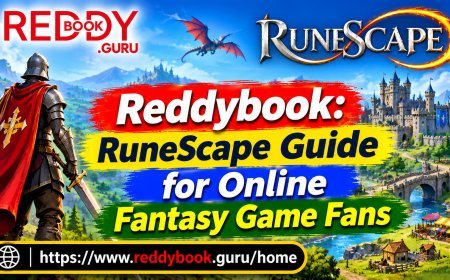



Reddybook: RuneScape Guide for Online Fantasy Game Fans
Explore RuneScape with beginner tips on skills, quests, combat, gear, exploration, and multiplayer activities in the fantasy world of Gielinor.
Fantasy games allow players to explore mysterious lands, develop powerful characters, complete challenging quests, and discover exciting stories. RuneScape is one of the best-known online fantasy games, offering a large world filled with adventures, skills, monsters, dungeons, and multiplayer activities. Its open-ended gameplay gives players the freedom to choose how they want to progress. Some focus on combat, while others prefer crafting, trading, exploration, or completing quests.
Set in the fantasy world of Gielinor, RuneScape offers an experience that can appeal to both casual players and dedicated MMORPG fans. There is no single path that every player must follow. You can develop your character at your own pace, explore different regions, and work towards personal goals. This flexibility makes the game interesting for players who enjoy long-term progression.
This guide from Reddybook explains the main features of RuneScape and shares practical tips for beginners. It covers character development, skills, quests, combat, equipment, exploration, and multiplayer activities. Whether you are discovering the game for the first time or returning after a break, understanding these systems can help you enjoy your adventure.
What Is RuneScape?
RuneScape is a massively multiplayer online role-playing game developed by Jagex. It takes place in Gielinor, a fantasy world containing kingdoms, towns, wilderness areas, dungeons, and many other locations. Players create characters and explore the world while developing skills, completing quests, fighting creatures, and interacting with other players.
One of the game's main strengths is its freedom of progression. You are not required to follow a fixed story path at all times. You can spend time improving a particular skill, collecting resources, earning in-game currency, completing quests, or preparing for difficult battles.
It is important to understand that the RuneScape franchise includes different versions. Modern RuneScape and Old School RuneScape share the setting and some familiar concepts, but their interfaces, combat systems, content, and progression methods are different. Old School RuneScape uses a more traditional style based on an earlier version of the game, while modern RuneScape has developed its own systems and additional content.
Before starting, choose the version that best matches your preferences. Players who enjoy modern interfaces and updated combat mechanics may prefer RuneScape. Those who enjoy a classic experience and traditional gameplay may find Old School RuneScape more suitable.
Getting Started in the World of Gielinor
The first stage of the adventure involves creating a character and learning the basic controls. New players are introduced to important gameplay systems through the opening experience. This helps them understand movement, interaction, inventory management, and other essential features.
After completing the introduction, take time to explore the nearby areas. Towns and settlements contain useful characters, shops, banks, training locations, and quest opportunities. Speaking with non-player characters can reveal useful information and introduce activities that support early progression.
The minimap is an important navigation tool. It helps you understand your surroundings and identify nearby locations. Learning how to use the world map and available travel options can also make exploration easier.
Do not feel pressured to complete every activity immediately. RuneScape contains a large amount of content, and trying to understand everything at once can become confusing. Start with simple tasks, learn how the interface works, and gradually explore more advanced features.
Understanding the Skill System
Skills are central to character development in RuneScape. They represent different abilities and activities that players can improve through practice. Performing actions related to a skill provides experience points, and gaining experience increases the corresponding level.
Higher skill levels unlock additional activities, equipment, locations, and quest requirements. This creates a long-term progression system in which small improvements can lead to new opportunities.
The skills cover several areas of gameplay. Combat skills help players fight enemies and survive dangerous encounters. Gathering skills allow them to collect resources from the environment. Artisan skills turn raw materials into useful products, while support skills provide other benefits.
For example, Woodcutting allows players to collect logs, while Firemaking uses logs to create fires. Fishing provides food resources, and Cooking allows players to prepare them. Mining provides ores that can be processed through Smithing to create equipment.
These systems often work together. A player who collects resources can use them to develop crafting skills or sell them through the in-game economy. Understanding these connections can help you plan your progression more efficiently.
Modern RuneScape and Old School RuneScape do not have identical skill lists or progression systems. Check the skill information for your chosen version before following a specific training method.
Choosing Skills That Match Your Playstyle
New players often try to improve too many skills at once. Although exploring different activities is part of the fun, choosing a few early priorities can make progression easier to manage.
Players who enjoy combat may want to focus on skills such as Attack, Strength, Defence, Ranged, Magic, and Prayer, depending on the version they play. These skills influence different parts of combat and help unlock stronger equipment or abilities.
Players who prefer gathering can spend more time on Mining, Fishing, and Woodcutting. These activities provide materials that can support crafting and other forms of progression.
Crafting-focused players may enjoy Cooking, Smithing, Crafting, and Fletching. These skills allow players to turn collected resources into useful items. Some products can also be traded with other players, depending on the selected game mode and version.
A balanced character can be useful because many quests and activities require different skill levels. However, there is no need to develop every skill equally from the beginning. Choose activities that you enjoy and gradually expand your abilities as new opportunities become available.
Exploring Quests and Storylines
Quests are an important part of the RuneScape experience. They introduce characters, locations, historical events, and mysteries from the world of Gielinor. Some quests are short and simple, while others involve several stages, puzzles, battles, and difficult requirements.
Completing quests can provide experience, equipment, access to new areas, and other rewards. Some also unlock important features or introduce storylines that continue through later adventures.
Beginners should start with quests that have manageable requirements. These provide an opportunity to learn how quest instructions work and how to interact with different characters. Reading dialogue can also make the experience more enjoyable because many quests contain humour, world history, and interesting character details.
Before starting a quest, review its requirements and recommended preparation. Some quests may require specific skill levels, items, or access to certain locations. Preparing in advance can prevent unnecessary travel and delays.
Do not treat quests only as tasks to complete for rewards. They are also one of the main ways to understand the world and its characters. Players who enjoy fantasy storytelling may find quest progression just as rewarding as combat or skill training.
Understanding the Combat System
Combat allows players to challenge creatures, defeat enemies, explore dangerous areas, and earn useful rewards. The exact combat mechanics depend on the version of RuneScape being played.
Modern RuneScape uses an ability-based combat system with different attack styles and abilities. Players can use melee, ranged, and magic attacks, along with other combat features. Understanding ability effects, timing, and equipment choices becomes increasingly important as encounters become more challenging.
Old School RuneScape uses a more traditional combat system. Players choose weapons, armour, spells, and prayers while managing attack styles and protection. Timing and preparation still matter, but the overall approach is different from modern RuneScape.
For beginners, it is best to start with weaker enemies. This provides a safe way to learn attack styles, monitor health, understand equipment, and collect basic rewards. As combat levels and equipment improve, you can gradually challenge stronger creatures.
Before entering a difficult area, check the enemy's combat level and understand its attack style. Carry suitable food and equipment, and avoid fighting enemies that are far beyond your current abilities. Preparation is often more useful than rushing into a battle.
Choosing Weapons, Armour, and Equipment
Equipment has a major influence on combat performance. Weapons determine how players attack, while armour provides protection against incoming damage. Different equipment types may be more effective for specific combat styles or enemies.
Melee weapons are used for close-range attacks, while ranged weapons allow players to attack from a distance. Magic equipment supports spellcasting and can provide access to different offensive or defensive effects.
When choosing equipment, consider its level requirements, combat bonuses, cost, and suitability for the activity. A powerful weapon may not always be the best choice if it does not match your current combat style or available resources.
Food and other supplies are also important. They can help players recover health or prepare for longer encounters. Before entering a dungeon or dangerous region, make sure your inventory contains the items you may need.
As you progress, compare equipment options rather than replacing items simply because they appear newer. The best setup depends on the enemy, activity, and combat approach.
Making Progress Through Gathering and Crafting
Gathering and crafting provide alternatives to combat-focused gameplay. These activities allow players to collect materials, create products, and contribute to the in-game economy.
Mining, Fishing, and Woodcutting are examples of gathering activities. Players interact with resources in the world to obtain ores, fish, and logs. These materials can then be used in other skills or traded where the game rules allow.
Crafting activities turn basic materials into more useful items. Smithing can produce metal equipment, Cooking prepares food, and Fletching creates bows and ammunition in the relevant version. Other skills provide different forms of production and utility.
A good approach is to understand how skills connect with one another. If you enjoy Mining, consider developing Smithing so that collected ores can become equipment. If you spend time Fishing, Cooking can help turn your catches into useful supplies.
This type of progression creates a sense of independence. Rather than relying entirely on purchased items, players can develop the abilities needed to gather and produce resources themselves.
Understanding the In-Game Economy
The economy is another important part of the RuneScape experience. Players collect resources, create items, trade equipment, and use available market systems to exchange goods. The exact trading features depend on the version and game mode.
In modern RuneScape, the Grand Exchange is a central trading feature where eligible items can be bought and sold. Old School RuneScape also has its own Grand Exchange system. Market prices can change according to supply, demand, updates, and player activity.
Beginners should learn the value of commonly used resources and equipment before making expensive purchases. Avoid spending all your available currency on one item when you still need supplies for training or quests.
Gathering and crafting can also help players understand the economy. Materials used in popular activities may have changing values, and learning how supply and demand work can improve trading decisions.
Be careful when interacting with other players. Use the game's official trading systems where available, check trade details before confirming, and avoid offers that seem suspicious or promise unrealistic benefits.
Multiplayer Activities and Community Features
Although RuneScape can be enjoyed independently, its multiplayer environment adds another dimension to the experience. Players can meet others, communicate, trade, join groups, and participate in shared activities.
Clans provide a way to connect with players who share similar interests. Some clans focus on combat and boss encounters, while others organise social activities, skill training, or general community events. Joining a suitable group can help beginners learn the game and find people to play with.
Group activities can also make challenging encounters more manageable. Players may coordinate roles, share information, and work together towards common goals. Communication is important because every member needs to understand the activity and their responsibilities.
Not every player wants to join a large group. Some prefer solo progression and occasional interaction with others. RuneScape supports different playstyles, so you can choose the level of social activity that feels comfortable.
Exploring Different Regions and Dangerous Areas
Gielinor contains a wide variety of environments, including cities, forests, deserts, islands, caves, and dangerous wilderness regions. Each area offers different activities, characters, resources, and challenges.
Exploration is useful because new regions can unlock quests, training locations, and valuable items. However, some locations are designed for more experienced players. Before travelling to a dangerous area, review its requirements and understand the risks.
The Wilderness is a notable example of a high-risk region, particularly in versions where player-versus-player combat is available there. Depending on the rules, players may face threats from both creatures and other players. Valuable rewards can make such areas attractive, but entering without preparation can lead to losses.
Travel methods also become important as the world opens up. Learn which transportation options are available in your version and unlock useful routes when possible. This can reduce travel time and make questing or resource gathering more efficient.
Free-to-Play and Membership Content
RuneScape offers free-to-play content as well as membership options that provide access to additional features. Free players can experience a substantial portion of the game, develop skills, complete available quests, and explore selected regions.
Membership expands the available content. Depending on the version, it can unlock additional skills, quests, locations, activities, and equipment. This provides more options for players who want to explore the game in greater depth.
New players do not need to make a membership decision immediately. Spend time learning the basic systems and deciding which activities you enjoy. If you later want access to more content, review the official membership details and pricing before subscribing.
The content available through membership can differ between modern RuneScape and Old School RuneScape. Always check the official information for the version you intend to play.
Practical Tips for Long-Term Progression
Long-term progression becomes easier when you set realistic goals. Instead of trying to reach high levels in every skill immediately, focus on a few activities that support your preferred style of play.
Complete suitable quests as you develop your character. Quest rewards can provide useful experience and unlock additional content. At the same time, improve gathering or crafting skills so that you can collect and prepare supplies.
Review your equipment regularly and replace items when an upgrade provides a meaningful benefit. Keep enough currency for essential supplies and avoid unnecessary purchases. When attempting difficult combat activities, learn the mechanics before investing heavily in equipment.
It is also important to use reliable information. RuneScape contains many detailed systems, and requirements can vary between versions. Official game guides and version-specific community resources can help you check skill details, quest requirements, and combat mechanics.
If you use Reddybook login to access your account, follow the relevant security instructions, choose a strong password, and never share private credentials. Use official game services for account access, downloads, and updates. Avoid third-party offers that request account details or promise rewards outside the game's authorised systems.
Why RuneScape Appeals to Fantasy Game Fans
RuneScape offers a combination of exploration, character development, storytelling, and multiplayer interaction. Its open-ended structure gives players control over how they spend their time. One day can be focused on completing a quest, while another can involve gathering resources, improving combat skills, or joining friends for a group activity.
The skill system creates clear progression goals, while quests provide context and stories that make the world feel connected. Combat offers challenges for players who enjoy testing their equipment and abilities. The economy and social features create additional reasons to interact with other players.
Its different versions also give fans more than one way to experience the franchise. Players can choose a modern approach or a classic style based on their preferences.
Final Thoughts
RuneScape remains an engaging choice for players who enjoy online fantasy adventures and long-term character progression. Its world of Gielinor offers a wide range of activities, from skill training and crafting to quests, combat, exploration, and multiplayer events.
New players should begin by learning the basic controls, exploring nearby locations, and developing a few useful skills. As their characters grow, they can complete more demanding quests, improve their equipment, discover new regions, and take part in group activities.
The most enjoyable way to experience the game is to choose goals that match your interests. You do not need to follow every progression route or focus only on combat. Explore at your own pace, learn how the different systems connect, and build a character that reflects your preferred style of adventure.
What's Your Reaction?
 Like
0
 Dislike
0
 Love
0
 Funny
0
 Angry
0
 Sad
0
 Wow
0