

























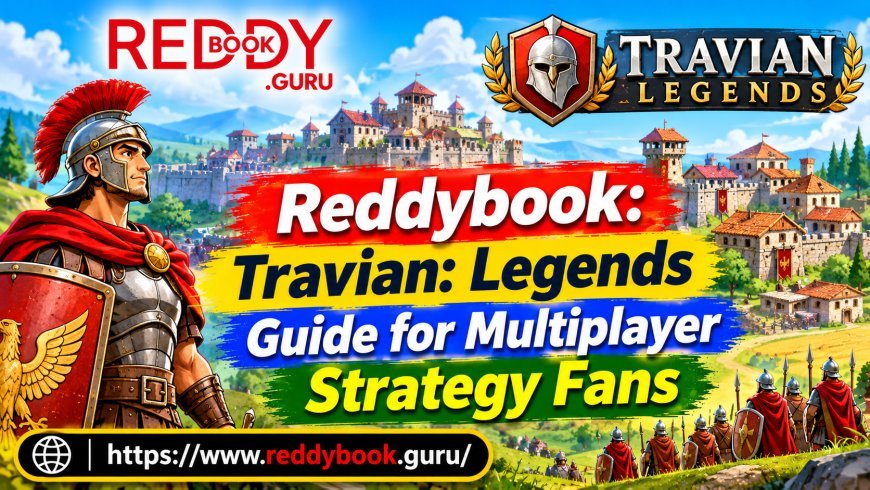
Reddybook: Travian: Legends Guide for Multiplayer Strategy Fans
Explore Travian: Legends with tips on village growth, resources, tribes, troops, alliances, expansion, and multiplayer strategy.
Multiplayer strategy games are most rewarding when every decision has a lasting effect. Players must manage resources, develop settlements, build armies, and work with others to achieve larger objectives. Travian: Legends brings these elements together in a browser-based strategy experience set in an ancient world. It challenges players to grow from a small village into a powerful empire while competing and cooperating with people across the gameworld.
Unlike games that focus only on short battles, Travian: Legends develops over an extended period. A decision made during the early stages can influence village growth, military strength, and alliance relationships much later. Players need to think about both immediate needs and long-term goals. This makes the game especially interesting for fans of planning, diplomacy, resource management, and coordinated multiplayer competition.
This guide from Reddybook explains the main systems in Travian: Legends and explores practical ways to improve your performance. Whether you are starting your first village or returning to the game after a break, understanding its core mechanics can help you make more informed decisions.
What Is Travian: Legends?
Travian: Legends is a multiplayer, browser-based strategy game in which players develop villages, collect resources, train troops, and compete for influence on a shared map. Everyone begins with a small settlement and gradually expands their presence through construction, economic development, military activity, and diplomacy.
The game is played in rounds, also known as gameworlds. Each round has its own map, players, alliances, and overall progression. In regular gameworlds, the major endgame objective involves working with an alliance to build a Wonder of the World and reach its final level. Other special gameworlds can use different rules and victory conditions.
One of the most important features is the multiplayer environment. Nearby players may become trading partners, allies, or opponents. Your decisions can affect the surrounding community, while the actions of other players can change your plans. This creates a dynamic experience in which adapting to the situation is just as important as following a fixed strategy.
Understanding the Four Main Resources
Resources are the foundation of village development. Almost every important activity requires them, including building construction, field upgrades, troop training, and research. Travian: Legends uses four primary resources: lumber, clay, iron, and crop.
Lumber, clay, and iron are used for many construction and military expenses. Crop is equally important, but it has an additional role because it supports the population and feeds stationed troops. A growing army increases crop consumption, so players must monitor production carefully.
Resource fields are located outside the village centre. Woodcutters produce lumber, clay pits produce clay, iron mines produce iron, and croplands produce crop. Upgrading these fields increases hourly production. Although individual upgrades may appear small, their combined effect can create a stronger economy over time.
Storage capacity also deserves attention. The warehouse stores lumber, clay, and iron, while the granary stores crop. If either building becomes full, additional production can be wasted until storage space becomes available. Players should plan upgrades and construction queues around their expected production.
A strong economy supports every other part of the game. Before investing heavily in an army, make sure your resource production can support its training and upkeep. An impressive military force is difficult to maintain if the village cannot produce enough crop.
Choosing the Right Tribe
Tribe selection is an important early decision because each tribe has its own units, strengths, and preferred style of play. The available tribes can vary according to the gameworld version. Depending on the server, players may encounter Romans, Gauls, Teutons, Egyptians, Huns, Spartans, or Vikings.
Romans are often associated with balanced development and strong building capabilities. They can be suitable for players who want to manage their economy and military together. Their ability to construct a building and upgrade a resource field at the same time can support efficient village growth.
Gauls are known for their defensive options and can appeal to players who prefer a more cautious approach. Their gameplay can suit those who want to protect their villages while developing a stable economy. Teutons are commonly associated with aggressive raiding and offensive activity, making them attractive to players who enjoy frequent interaction with nearby opponents.
Egyptians offer useful economic and defensive possibilities, while Huns are associated with fast-moving offensive strategies. Spartans provide a different military approach in gameworlds where they are available. Vikings also have their own distinctive features in supported versions.
There is no single best tribe for every player. Your choice should reflect your preferred playstyle, available time, nearby competition, and the rules of the selected gameworld. A beginner may benefit from choosing a tribe that supports steady development rather than selecting one only because it appears powerful in combat.
Building a Strong First Village
Your first village provides the foundation for future expansion. During the early stages, focus on creating a stable economy and completing useful development tasks. Upgrading resource fields helps increase production, while important village buildings unlock additional features.
The Main Building is useful for construction development, while the Warehouse and Granary provide storage. Other buildings support troop training, trading, alliance participation, and village expansion. Each building has a specific role, so it is worth understanding its purpose before spending resources.
Travian: Legends also provides beginner protection in supported gameworlds. This period gives new players time to learn the game and develop their villages before normal interactions with other players begin. Use this opportunity carefully. Improve resource production, understand the map, review available tasks, and prepare a plan for when protection ends.
Do not rush into training a large army before your economy is ready. Troops require resources to train and crop to maintain. An early military investment may slow down development if it is larger than your production can support.
A balanced opening gives you more flexibility. Build a reliable economic base, maintain enough protection for your circumstances, and prepare for the next stage of growth.
Expanding Your Empire with New Villages
Village expansion is one of the most important milestones in Travian: Legends. A single village can provide a starting economy, but additional settlements increase production capacity and create new strategic opportunities.
To establish a new village, players generally need the required expansion building, available expansion slots, settlers, culture points, and resources. The exact requirements should be checked in the selected gameworld before preparing the settlement.
Choosing the right location is just as important as meeting the requirements. A village with a useful resource-field distribution can support a particular development plan. Crop-focused locations, often called croppers, are especially valuable because they can support larger armies when developed properly. Nearby oases may also improve resource production when the required conditions are met.
Expansion should fit your overall strategy. A new village placed near important alliance territory may strengthen your group's position. Another location may be more suitable for economic growth or future military operations.
However, spreading too far too quickly can create difficulties. New villages need resources, development time, and protection. Before founding another settlement, consider whether your existing villages can support it and whether the location fits your long-term objectives.
Developing an Effective Military Strategy
Military strength is essential, but successful players do not build armies without considering their purpose. Troops can be used for defence, raids, attacks, reinforcements, and coordinated alliance operations. Different units have different strengths, movement speeds, and resource requirements.
Before training troops, decide what role your army will perform. An offensive force may be designed to attack enemy villages and support planned operations. A defensive force should be prepared to protect settlements and assist alliance members. Some players maintain a combination of both, depending on their resources and responsibilities.
Crop management is particularly important when maintaining large armies. Troops consume crop continuously, and an army that exceeds the village's sustainable production can create serious problems. Monitor net crop production and make sure the granary can support your needs.
Before launching an attack, study the target and consider the possible losses. The combat simulator can help estimate battle outcomes by allowing players to test different troop combinations. It does not remove uncertainty, but it can make planning more informed.
Defence also requires preparation. Walls, suitable defensive troops, and support from alliance members can make a village more difficult to attack. Players should avoid leaving valuable settlements without protection, especially when they hold important resources or strategic positions.
The Role of Heroes and Adventures
Heroes add another layer to village and military development. Each player has a hero with attributes that can improve through experience and skill points. Depending on the tribe, heroes may also have distinctive passive abilities.
Hero attributes can support personal fighting strength, army attack bonuses, army defence bonuses, or resource production. The most useful allocation depends on your preferred playstyle and the needs of your villages.
Adventures provide opportunities to gain experience and obtain useful rewards. However, heroes can lose health during adventures and battles, so their condition should be monitored. Equipment and other available features can also influence how effectively a hero supports your plans.
For newer players, the hero can be a useful part of early development. Rather than treating the hero only as another combat unit, understand how its abilities can contribute to your economy and military strategy.
Why Alliances Are Essential
Travian: Legends is designed around interaction between players. Alliances provide a way to coordinate development, exchange information, organise defence, and plan military operations. Joining an active alliance can make the experience easier to understand, especially for beginners.
A good alliance is more than a group of players with the same tag. Members need to communicate, follow agreed plans, and contribute to shared objectives. When one member faces an attack, other players may provide reinforcements or help coordinate a response.
Diplomacy also plays a major role. Alliances can establish relationships with other groups through agreements such as non-aggression pacts and confederacies, where supported by the game rules. These arrangements can reduce conflict on certain fronts and help groups focus on larger objectives.
However, cooperation requires trust and communication. Players should understand their alliance's expectations before making commitments. Reliable participation, timely responses, and responsible resource management can help build a stronger reputation within the group.
Understanding the Endgame Objective
The endgame gives long-term direction to the regular Travian: Legends experience. In standard gameworlds, alliances work towards building a Wonder of the World. Reaching the required final level is the central victory objective.
This stage involves extensive coordination. Alliances must plan resource deliveries, protect important villages, organise attacks, and respond to threats from competing groups. Individual development remains important, but the outcome depends heavily on collective preparation.
Artefacts can also influence the strategic balance in regular gameworlds. These special objectives provide bonuses when acquired and controlled under the relevant rules. Their appearance can change alliance priorities and create competition for valuable positions.
Players should not wait until the endgame begins to think about these objectives. Building a stable economy, developing suitable villages, and maintaining good alliance relationships throughout the round can create a stronger foundation for the final stage.
Common Mistakes That Can Slow Your Progress
One frequent mistake is ignoring resource production. Players may focus on buildings and troops while leaving resource fields at low levels. This creates a shortage that affects every later decision. Consistent economic development is usually more reliable than short bursts of activity.
Another mistake is training too many troops too early. Military units need resources and ongoing crop supply. If an army becomes too expensive to maintain, village growth may slow down. Match military investment to your actual production.
Poor village placement can also limit future opportunities. Before founding a settlement, consider its resource distribution, nearby oases, distance from alliance members, and strategic value. A location that looks attractive at first may become difficult to defend.
Some players also ignore communication. In a multiplayer strategy game, failing to read alliance messages or respond to important requests can affect the entire group. Regular communication helps members coordinate their actions and avoid conflicting plans.
Finally, avoid making permanent decisions without checking their consequences. Some actions in Travian: Legends cannot easily be reversed. Review costs, requirements, travel times, and target information before committing resources or troops.
Choosing a Gameworld and Managing Your Time
Travian: Legends offers gameworlds with different speeds and versions. A standard-speed world provides a longer development cycle, while faster worlds increase the pace of construction, resource production, and troop movement. This can significantly change how much attention a player needs to give the game.
Choose a gameworld that fits your availability. A faster server may create more frequent activity and shorter decision windows. A regular-speed world may offer more time to plan, although the overall round can still require consistent involvement.
It is also useful to understand the round's schedule and special rules before joining. Some versions use different maps, tribes, or victory conditions. Knowing these details early can help you select a suitable strategy.
If you use Reddybook login to access your account, follow the site's security guidance, use a strong and unique password, and never share private credentials. Access details should remain confidential, and game downloads or updates should come from official sources.
Final Thoughts
Travian: Legends offers a deep multiplayer strategy experience built around village development, economic planning, military decisions, and diplomacy. Its long-term structure means that every stage matters. A strong opening can support future expansion, while effective alliances can help players compete in the most demanding parts of a round.
The best approach is to understand the gameworld before choosing a tribe, develop resource production consistently, and build an army that your economy can maintain. Expand when your villages are ready, protect valuable positions, and communicate regularly with alliance members.
With patience and careful planning, players can become more confident in managing their empire and responding to changing situations. Whether your goal is to become a skilled defender, an active raider, or a reliable alliance member, learning the core systems is the first step towards a stronger Travian: Legends experience.
What's Your Reaction?
 Like
0
 Dislike
0
 Love
0
 Funny
0
 Angry
0
 Sad
0
 Wow
0