
























10 Flat Roof Maintenance Tips to Help Prevent Leaks and Damage
flat roof maintenance in London

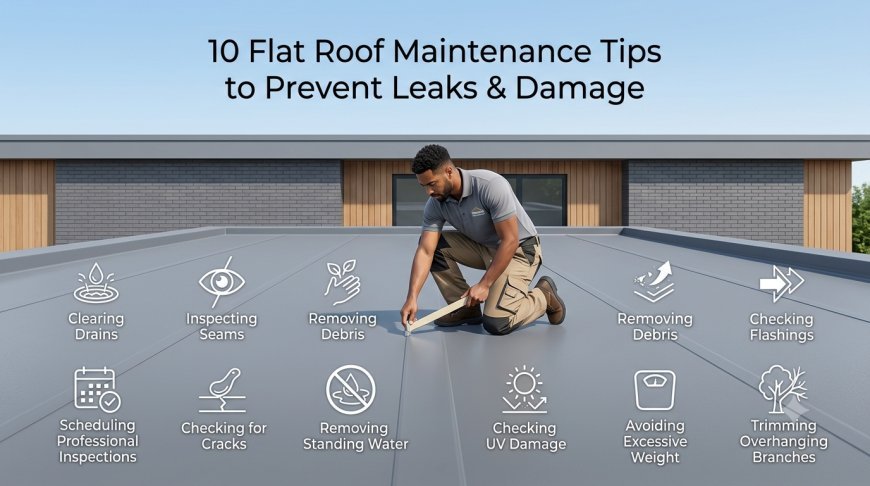
Flat roofs are a practical choice for homes, extensions, garages, offices and commercial buildings, but they need regular care to remain reliable. Because they have a lower slope than pitched roofs, water, leaves and debris can collect more easily if drainage is not working correctly.
Routine maintenance can help reduce the risk of leaks, surface deterioration and expensive repairs. For property owners considering flat roof maintenance in Kent, flat roof maintenance in London or flat roof maintenance in Essex, a proactive approach can make a significant difference to long-term roof performance.
Here are 10 practical flat roof maintenance tips that can help protect your property.
1. Inspect the Roof Regularly
Regular roof inspections are one of the simplest ways to prevent major problems.
Small defects can develop gradually and may not be visible from ground level. Cracks, loose flashing, worn joints and blocked drainage can all become more serious if they are ignored.
A routine inspection should look for:
-
Cracks or splits
-
Blistering
-
Loose seams
-
Damaged flashing
-
Standing water
-
Debris
-
Worn roof edges
-
Blocked drainage points
For properties requiring flat roof maintenance in Kent, periodic inspections can help identify problems before they result in active leaks.
2. Keep Gutters and Drainage Outlets Clear
Good drainage is essential for flat roofs.
Leaves, moss, dirt and other debris can block outlets and prevent rainwater from draining efficiently.
When water remains on the roof for too long, it may create ponding and place additional stress on the roofing system.
Property owners should regularly check:
-
Gutters
-
Downpipes
-
Roof outlets
-
Drainage channels
-
Areas around parapet walls
Keeping these areas clear can help reduce the risk of water build-up and leakage.
3. Remove Leaves and Debris
Even when drainage outlets are clear, loose debris should not be allowed to build up on the roof.
Leaves and branches can trap moisture and hide small areas of damage.
They can also move during strong winds and block drainage points later.
Properties surrounded by trees may need more frequent cleaning, especially during autumn.
Removing debris regularly keeps the roofing surface visible and easier to inspect.
4. Check for Standing Water
Standing water is one of the most common warning signs on a flat roof.
Some water may remain temporarily after heavy rain, but persistent pooling should be investigated.
It may be caused by:
-
Blocked outlets
-
Poor roof falls
-
Structural movement
-
Damaged drainage
-
Surface settlement
Repeated ponding can increase the risk of deterioration.
Professional flat roof maintenance in London may include checking whether drainage improvements or local repairs are needed.
5. Inspect Flashing and Roof Edges
Many leaks start around roof details rather than in the centre of the roofing surface.
Flashing, upstands and roof edges should be checked carefully because they help keep water away from vulnerable joints.
Inspect areas around:
-
Rooflights
-
Skylights
-
Vents
-
Parapet walls
-
Chimneys
-
Roof edges
-
Pipe penetrations
If flashing becomes loose or damaged, water may enter the roofing system.
Early repair can help prevent internal damp and more extensive damage.
6. Look for Cracks, Blisters and Surface Damage
Flat roofing materials can gradually deteriorate due to weather exposure and age.
Common warning signs include cracking, splitting, blistering and surface wear.
Small defects do not always require complete roof replacement.
In many cases, localised repair may be possible if the problem is discovered early.
Property owners arranging flat roof maintenance in Essex should pay particular attention to older roof coverings and previously repaired areas.
Regular monitoring can help determine whether the damage is stable or getting worse.
7. Check the Roof After Severe Weather
Strong winds, heavy rain, frost and storms can all affect flat roofs.
After severe weather, it is useful to check for signs of new damage.
Look for:
-
Loose materials
-
Blocked drainage
-
Fallen branches
-
Damaged flashing
-
New cracks
-
Water pooling
-
Interior water stains
Storm damage is not always immediately obvious.
A professional inspection can help identify defects before the next period of heavy rainfall.
8. Avoid Unnecessary Foot Traffic
Flat roofs may appear easy to walk on, but not every roofing system is designed for regular foot traffic.
Repeated walking can damage roofing materials, especially around vulnerable joints and edges.
If access is necessary for maintenance, equipment servicing or roof-mounted installations, designated walkways may be appropriate.
Avoid dragging tools or heavy objects across the roof surface.
Reducing unnecessary traffic can help protect the roofing material and extend its service life.
9. Repair Small Problems Quickly
Delaying repairs is one of the easiest ways for a minor roof defect to become a larger problem.
A small crack may allow water into the roofing system. Once moisture reaches insulation or decking, the repair can become more complicated.
Prompt repairs may help prevent:
-
Damaged insulation
-
Ceiling stains
-
Wet roof decking
-
Mould
-
Interior decoration damage
-
Larger areas of roof deterioration
Regular flat roof maintenance in Kent gives property owners the opportunity to deal with these problems before they become urgent.
10. Schedule Professional Roof Maintenance
DIY visual checks are useful, but professional inspections provide a more detailed assessment.
An experienced flat roofing contractor can identify problems that may not be obvious to the property owner.
Professional maintenance may include:
-
Detailed surface inspection
-
Drainage assessment
-
Flashing checks
-
Rooflight inspection
-
Seam and joint inspection
-
Debris removal
-
Identification of localised damage
-
Advice on repairs and replacement
Professional maintenance can be particularly valuable for older roofs, commercial buildings and properties that have previously experienced leaks.
Why Preventative Flat Roof Maintenance Matters
Waiting until a leak appears can lead to more expensive repairs.
By the time water is visible inside the building, moisture may already have travelled through insulation or roof decking.
Preventative maintenance aims to identify problems earlier.
This can reduce the risk of:
-
Emergency repairs
-
Interior water damage
-
Structural deterioration
-
Premature roof replacement
-
Business disruption
For homeowners, landlords and commercial property managers, regular maintenance is a practical way to protect the building and manage long-term costs.
Flat Roof Maintenance in Kent
Properties across Kent are exposed to changing weather conditions throughout the year.
Professional flat roof maintenance in Kent can help homeowners and businesses monitor roofing materials, keep drainage systems clear and identify early signs of damage.
Spring and autumn are often useful times for inspections because they allow the roof to be checked before and after challenging weather conditions.
Older flat roofs may require more frequent attention.
Flat Roof Maintenance in London
Flat roofs in London are commonly found on extensions, apartment blocks, offices and commercial buildings.
Professional flat roof maintenance in London can help reduce the likelihood of leaks in busy urban properties.
Planned maintenance can also be less disruptive than emergency repairs.
For landlords and businesses, scheduled inspections make it easier to manage access, tenants and ongoing operations.
Flat Roof Maintenance in Essex
Property owners in Essex can benefit from the same preventative approach.
Routine flat roof maintenance in Essex can help protect roofs from drainage problems, surface wear and weather-related damage.
Previously repaired roofs should also be monitored to make sure those areas remain watertight.
A professional contractor can recommend an appropriate maintenance schedule based on the roof's age, material and condition.
How Often Should a Flat Roof Be Checked?
A practical maintenance plan often includes at least two inspections each year.
Spring and autumn are common choices.
Additional inspections may be useful after:
-
Strong storms
-
Heavy rainfall
-
Snow
-
Freezing weather
-
Nearby construction work
-
Installation of new rooftop equipment
Commercial buildings or older roofs may need more frequent monitoring.
When Should You Call a Professional?
Professional attention is recommended if you notice:
-
Active leaks
-
Persistent standing water
-
Large cracks or splits
-
Repeated damp patches
-
Loose flashing
-
Significant blistering
-
Damaged roof edges
-
Recurring drainage problems
These signs may indicate that routine cleaning is no longer enough.
A professional assessment can determine whether the roof needs local repair, more extensive maintenance or replacement.
Final Thoughts
Regular flat roof maintenance can help prevent leaks, reduce repair costs and extend the useful life of the roofing system.
Simple tasks such as clearing drainage, removing debris, inspecting flashing and responding quickly to small defects can make a significant difference.
For property owners considering flat roof maintenance in Kent, flat roof maintenance in London or flat roof maintenance in Essex, professional inspections can provide additional reassurance and help identify problems before they become expensive.
Whether the property is residential or commercial, preventative maintenance is one of the best ways to protect a flat roof and the building underneath it.
Arrange regular flat roof maintenance to keep drainage clear, identify defects early and reduce the risk of leaks and costly damage.
What's Your Reaction?
 Like
0
 Dislike
0
 Love
0
 Funny
0
 Angry
0
 Sad
0
 Wow
0



