













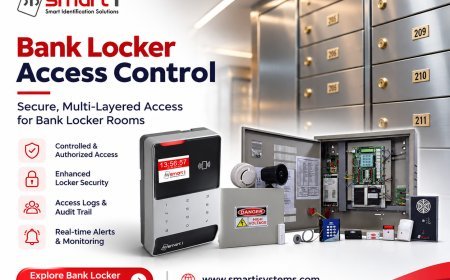






Bank Locker Access Control: A Smarter Approach to Bank Locker Room Security
This is where bank locker access control becomes an important part of a bank’s overall security infrastructure.

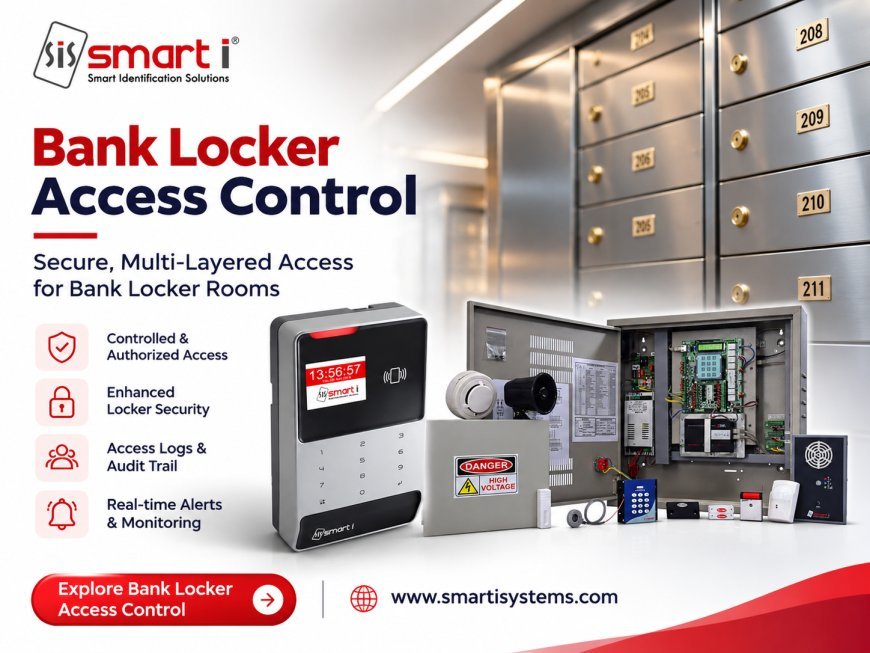
Banks have always understood the importance of protecting valuables. From important documents and jewellery to confidential assets, a bank locker holds items that customers trust the institution to keep safe. But protecting these valuables requires more than a strong locker door or a traditional key.
Modern banking demands a more organised approach to security. Banks need to know who enters the locker room, when access takes place and whether every visit follows the authorised procedure. This is where bank locker access control becomes an important part of a bank’s overall security infrastructure.
An effective access control system helps banks manage entry to sensitive areas, maintain digital records and reduce the chances of unauthorised access. It also supports better security management by giving authorised personnel greater visibility into locker room activity.
Smart-i Systems provides access control and security solutions designed to help organisations manage restricted areas more effectively. For banks, the right system can support a more secure, controlled and accountable locker environment.
What Is Bank Locker Access Control?
Bank locker access control is a security system designed to regulate entry into bank locker rooms, strong rooms and other restricted banking areas.
Instead of relying entirely on physical keys or manual supervision, the system uses electronic credentials to verify whether a person is permitted to enter a particular area.
Depending on the security requirements, access may be managed through biometric authentication, RFID cards, PIN-based credentials or a combination of multiple verification methods.
The main purpose of bank locker access control is straightforward: only authorised individuals should be able to enter the locker area, and every access event should be recorded accurately.
This becomes especially important in banks where multiple customers, locker custodians and authorised employees may need access at different times.
A properly designed system helps establish a clear access procedure while reducing dependence on manual recordkeeping.
Why Banks Need an Advanced Locker Access Control System
A bank locker room is a highly sensitive area. Even a small security gap can create serious concerns for the bank, its customers and its internal security team.
Traditional security arrangements may include physical keys, security guards and visitor registers. While these measures remain useful, they can become difficult to manage consistently when several people are involved in daily operations.
A modern bank locker access control system offers a more structured approach.
1. Prevent Unauthorised Entry
The system verifies credentials before allowing access to a restricted area. If a person does not have the required authorisation, entry can be denied.
This helps banks strengthen their control over locker rooms and other sensitive areas.
2. Maintain Digital Access Records
Every authorised access event can be recorded with relevant details such as the user identity, date and time.
These records help security teams review locker room activity and investigate unusual access patterns when required.
3. Improve Accountability
When access is assigned to specific individuals, responsibility becomes clearer.
Banks can manage employee permissions according to their roles and ensure that access is granted only to people who genuinely require it.
4. Reduce Manual Security Work
Electronic access management reduces the need to depend entirely on handwritten registers.
Security personnel can review digital records more efficiently, while administrators can manage access permissions through a centralised interface.
Key Features of a Bank Locker Access Control System
Every bank has different security requirements. The ideal system should therefore be selected according to the layout of the locker room, the number of authorised users and the bank’s existing security infrastructure.
Biometric Authentication
Biometric access control uses unique physical characteristics, such as fingerprints or facial features, to verify a person's identity.
For sensitive banking areas, biometric authentication can provide an additional layer of identity verification.
Banks may consider biometric access control where stronger identity checks are required. The selection of biometric technology should also account for privacy, reliability and the secure handling of biometric information.
RFID Card Access
RFID-based access control allows authorised personnel to enter restricted areas using an assigned access card.
Cards can be issued, managed and deactivated according to employee roles or operational requirements.
This approach is useful in banking environments where access permissions need to be updated regularly.
Multi-Factor Authentication
For areas with higher security requirements, banks may choose to combine two or more authentication methods.
For example, a user may need to present an access card and complete biometric verification before entry is permitted.
Using multiple credentials can strengthen the verification process and make unauthorised access more difficult.
Access Logs and Audit Trails
A reliable bank locker access control system should maintain accurate records of access activity.
These records can help banks identify who entered a restricted area and when the access event occurred.
Digital audit trails also support internal reviews, security investigations and the monitoring of access procedures.
Centralised Access Management
Banks operating multiple restricted areas may benefit from centralised access management.
An administrator can manage permissions, review access activity and make changes according to the bank’s security policy.
Centralised management helps maintain consistency across different departments and controlled areas.
How Bank Locker Access Control Supports Strong-Room Security
A strong room or vault requires a carefully planned security arrangement. Access control should be considered as part of a wider security framework rather than as an isolated device installed at the entrance.
The system can be integrated with other security measures, depending on the bank’s requirements.
For example, access control may work alongside CCTV surveillance, alarm systems and security monitoring procedures.
When these systems are planned together, the bank can create a more complete view of activity around sensitive areas.
An access control system can help regulate entry, while CCTV footage provides visual information about activity near the entrance. Alarm systems may alert authorised personnel when an access attempt violates configured security rules.
This combination supports a more organised approach to bank locker room security.
The system should also be designed around a clearly defined entry and exit procedure. Banks need to consider how authorised customers, locker custodians and employees move through the facility without creating unnecessary security gaps.
RBI Guidelines and Bank Locker Security
Bank locker security in India is influenced by the Reserve Bank of India’s directions concerning safe deposit locker facilities.
The RBI's locker security requirements address the protection of locker areas, controlled entry and exit, security records and the need for banks to assess risks associated with their locker facilities.
Access control systems can support these objectives by restricting unauthorised entry and maintaining digital records of access to locker rooms or vaults.
Banks should also pay attention to the protection of electronic locker systems against cybersecurity threats. Customer information, including biometric data, must be handled carefully and in accordance with applicable requirements.
It is important to remember that installing an access control system alone does not establish complete regulatory compliance. Banks must follow their applicable security policies, operating procedures and regulatory obligations.
A suitable system should therefore be selected as part of a broader security assessment.
Choosing the Right Bank Locker Access Control Solution
Selecting a suitable solution requires more than comparing the specifications of different access control devices.
Banks should first understand their existing security challenges and identify the areas where access management needs improvement.
The following factors deserve attention.
Security requirements: Determine whether card-based access, biometric verification or multi-factor authentication is appropriate for the restricted area.
User management: Consider how easily the system can assign, modify and revoke access permissions when employees change roles.
Recordkeeping: Ensure that access logs are accurate, accessible to authorised personnel and retained according to the bank’s policy.
Integration: Check whether the system can work with the bank’s existing CCTV, alarm or security management infrastructure.
Reliability: Choose equipment suitable for continuous operation in a banking environment.
Data protection: Review how the system stores and protects credentials, personal information and biometric data.
Technical support: Consider installation quality, maintenance requirements and the availability of technical assistance.
A well-planned bank locker access control installation should be easy for authorised personnel to operate while maintaining strict security over restricted areas.
Why Choose Smart-i Systems for Bank Locker Access Control?
Smart-i Systems understands that banking environments require dependable security solutions and carefully managed access procedures.
A suitable access control solution should help banks establish clear entry permissions, improve visibility into access activity and support their existing security practices.
Smart-i Systems offers security and access control solutions that can be considered for restricted banking areas, subject to the bank’s technical and operational requirements.
Whether a bank is upgrading an existing security arrangement or planning access control for a new facility, the system should be designed around the actual needs of the location.
The objective is not simply to install an access control device. It is to create a practical security arrangement that supports authorised movement, reliable recordkeeping and better control over sensitive areas.
Frequently Asked Questions
1. What is bank locker access control?
Bank locker access control is an electronic security system that regulates entry into bank locker rooms and other restricted areas. It verifies authorised credentials and can maintain digital records of access activity.
2. Which access control technology is suitable for bank locker rooms?
The appropriate technology depends on the bank’s security requirements. RFID cards, biometric authentication and multi-factor access control are commonly considered for restricted areas.
3. Can bank locker access control maintain digital access records?
Yes. A suitable system can record access events with details such as user identity, date and time. These records help banks review activity and support internal security investigations.
4. Is biometric access control necessary for bank locker security?
Biometric access control is not automatically necessary for every bank locker facility. Banks should select authentication methods based on their risk assessment, operational needs and applicable security requirements.
5. How does Smart-i Systems help with bank locker access control?
Smart-i Systems provides access control and security solutions that can help banks manage authorised entry, strengthen access monitoring and improve security management in restricted areas.
Conclusion
Protecting a bank locker facility requires a combination of physical security, controlled access and reliable monitoring. As banking operations become more technology-driven, electronic access management has an increasingly important role in helping banks maintain secure and organised locker environments.
A well-designed bank locker access control solution can help prevent unauthorised entry, maintain digital access records and improve accountability among authorised users.
For banks planning to upgrade their security infrastructure, choosing the right access control technology is an important step towards stronger locker room protection.
Smart-i Systems can help banks explore suitable access control solutions based on their security requirements, facility layout and operational needs. The right approach brings together reliable technology and clear security procedures to help protect sensitive banking areas with greater confidence.
What's Your Reaction?
 Like
0
 Dislike
0
 Love
0
 Funny
0
 Angry
0
 Sad
0
 Wow
0