




















Stock Your Kitchen Smarter With Restaurant Supply Know-How
Learn how to plan purchases with restaurant supply in Orem UT: map categories, choose equipment, handle sanitation, set par levels, compare vendors, and stay ready.

Running out of gloves during the dinner rush or discovering that half your sheet pans are warped can ruin an otherwise great service. Most supply emergencies are not bad luck at all, but the predictable result of ordering without a plan. Whether you are opening a cafe, running a catering kitchen, or managing an established dining room, smart restaurant supply in Orem UT starts with a few simple habits. Many local owners turn to Janitorial & Restaurant Supply when they want help covering both the kitchen and the cleaning side in one place. This guide walks you through each step, from your menu to your inspection records.
Start With Your Menu and Your Volume
Everything you buy should trace back to what you actually cook and how many guests you expect. A pizza shop needs different tools from a bakery or a sandwich counter. Write down your menu, estimate weekly covers, and note which items require special equipment, so you do not pay for gear you will never use.
Map Out Your Supply Categories
Breaking your needs into categories makes ordering less overwhelming and helps you spot gaps. The table below shows common groups, typical items, and a practical tip for each.
| Category | Typical Items | Ordering Tip |
|---|---|---|
| Cooking and prep equipment | Pans, knives, mixers, thermometers | Invest in durable core pieces first and add specialty items as the menu grows |
| Smallwares | Ladles, tongs, containers, cutting boards | Keep spares, since these wear out fastest |
| Tableware and serving | Plates, glasses, flatware, napkins | Plan for extra to cover breakage and busy shifts |
| Disposables and packaging | Takeout boxes, cups, gloves, liners | Track usage weekly, because takeout demand swings |
| Cleaning and sanitation | Sanitizer, degreaser, dish chemicals, mops | Buy in bulk when storage allows and check concentrations |
| Restroom and paper goods | Soap, towels, tissue, trash bags | Keep high reorder levels, since shortages are very noticeable |
Choose Equipment and Smallwares Wisely
Cookware and Prep Tools
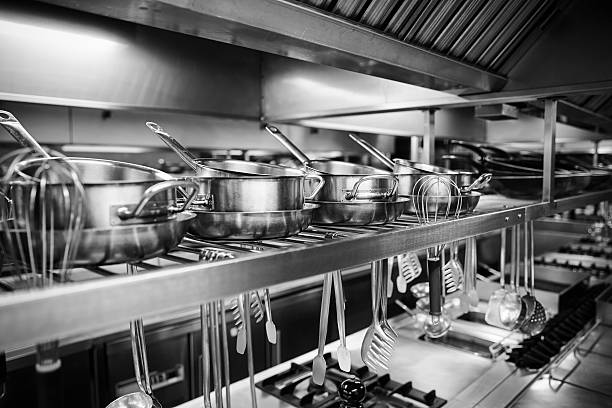
Quality matters most for the items you use every hour. Heavy-gauge pans heat evenly, sharp knives reduce injuries, and reliable thermometers protect food safety. Buying a few strong pieces often costs less over time than replacing cheap ones repeatedly.
Serving and Tableware
Choose plates, glasses, and flatware that match your style and stand up to a commercial dishwasher. Stackable items save space, and consistent patterns make it easier to replace broken pieces later without clashing.
Storage and Organization
Clear containers, labeled bins, and shelving keep ingredients and tools easy to find. Good organization speeds up prep, reduces waste, and makes inventory counts far simpler. Color-coded tools help prevent cross-contamination.
Do Not Forget Cleaning and Sanitation
Dish and Surface Sanitizing
A clean kitchen depends on the right chemicals, correct concentrations, and proper training. Test strips help confirm that sanitizer solutions are at the right strength, and clear labeling prevents mix-ups. Check your local health requirements so your products and procedures match the rules.
Restrooms and Dining Areas
Guests judge a restaurant by its restrooms and dining room almost as much as by the food. Keep soap, paper goods, and trash liners well stocked, and use products suited to the surfaces you clean. Pairing food service supplies with janitorial items from one provider can simplify ordering.
Set Par Levels and Reorder Points
A par level is the amount of each item you want on hand at the start of a service period. Set it by looking at past usage and delivery times, then choose a reorder point that gives you a safety cushion. Reviewing these numbers every month keeps them realistic as your business grows or slows.
Compare Vendors and Delivery Options
Pricing and Minimums
Compare prices on your most-used items, and ask about volume discounts and order minimums. The cheapest unit price is not always the best deal if you have to buy more than you can store. A fair vendor explains pricing openly and helps you find a balance.
Delivery and Service
Ask how fast orders arrive, what happens in an emergency, and whether the vendor offers returns or substitutions. Reliable restaurant supply in Orem UT includes helpful service, because a missing delivery on a Friday can cost you far more than a small price difference.
Prepare for Utah Valley Seasons
Demand changes with the calendar, and so should your ordering. University schedules, holiday gatherings, summer events, and winter weather all affect traffic. Review last year’s busy and slow periods, and increase stock of popular items before the rush so you are never scrambling.
Cold winters can also affect deliveries and storage, while summer heat raises the need for ice, cold storage, and extra cleaning. Plan ahead for seasonal shifts, and keep a few emergency basics, such as gloves, sanitizer, and cleaning supplies, in reserve.
Keep Records and Stay Inspection-Ready
Save invoices, track what you order and use, and keep sanitizer logs and cleaning schedules if your local health department expects them. Good records show where money is going and help you spot waste. They also make inspections far less stressful, since everything is organized and easy to show.
Conclusion
With a clear plan, Restaurant supply in Orem UT becomes predictable instead of stressful. Start with your menu, organize categories, set par levels, compare vendors, and prepare for the seasons. A well-stocked kitchen lets your team focus on what matters most, which is great food and happy guests.
Frequently Asked Questions
How much stock should I keep on hand?
It depends on your usage, storage space, and delivery schedule, but many owners aim for enough to cover several days of normal service plus a buffer. Review past orders to set realistic par levels. Adjust them as your menu or customer traffic changes.
Should I buy new or used restaurant equipment?
Used equipment can save money for items like prep tables and shelving, while safety-critical or high-use items are often worth buying new. Inspect used pieces carefully and ask about warranties. Consider repair costs and energy use when comparing prices.
How often should I review my supplier?
A yearly review is a good habit, along with quick checks whenever prices change or service slips. Compare pricing, delivery reliability, and product quality. Do not hesitate to ask other suppliers for quotes so you know you are getting a fair deal.
What cleaning supplies does a restaurant need?
Typical needs include sanitizer, degreaser, dish chemicals, glass and surface cleaners, mops, trash liners, and restroom supplies. The right products depend on your equipment and local rules. Ask your supplier to recommend items that fit your setup and train staff on safe use.
How can I reduce supply waste?
Track usage, rotate stock so older items are used first, and train staff on portioning and proper storage. Avoid over-ordering items with short shelf lives. Regular inventory checks reveal problems early and keep costs under control.
What's Your Reaction?
 Like
0
 Dislike
0
 Love
0
 Funny
0
 Angry
0
 Sad
0
 Wow
0