





















Recycled Plastic Regrind & PCR Solutions | GreenPath Recovery
Discover how Recycled Plastic Regrind, Recycled PP Plastic, and Recycled HDPE Plastic support sustainable manufacturing and efficient commercial recycling solutions.

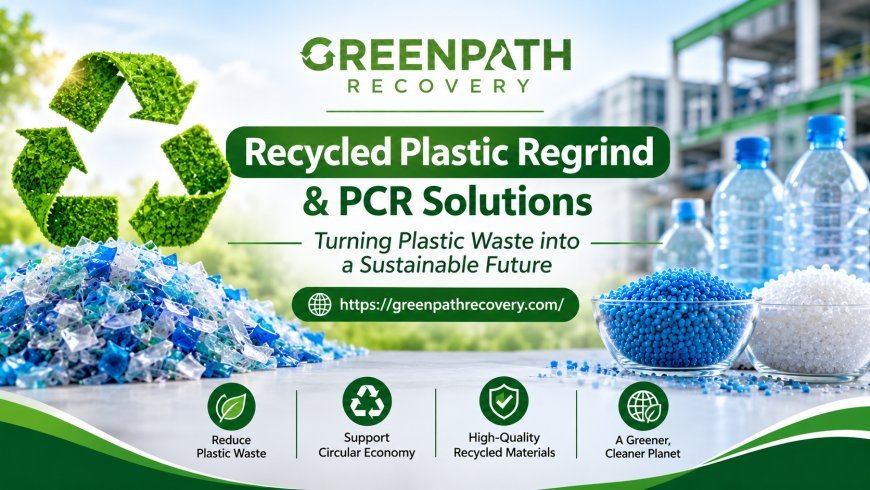
Plastic waste is one of the biggest challenges facing modern businesses and manufacturing industries. From packaging facilities to product manufacturers, organizations generate large quantities of plastic waste that could otherwise become valuable resources. Instead of sending recoverable materials for disposal, businesses can adopt more responsible recycling practices that turn discarded plastics into reusable manufacturing materials.
Recycled Plastic Regrind is an important part of this process. It allows recovered plastic materials to be processed into smaller, reusable pieces that can serve as raw material for various industrial applications. When combined with post-consumer recycled (PCR) solutions, it helps businesses reduce waste, improve resource efficiency, and support a more circular approach to manufacturing.
At GreenPath Recovery, commercial recycling solutions help businesses identify opportunities to recover valuable plastic materials and support more sustainable material management practices.
What Is Recycled Plastic Regrind?
Recycled Plastic Regrind refers to plastic material that has been mechanically processed into smaller particles, flakes, or granules through grinding or shredding. These materials generally come from recovered plastic products, manufacturing scrap, or other suitable plastic waste streams.
The regrinding process reduces larger plastic items into manageable pieces that can be sorted, cleaned, processed, and potentially reused in manufacturing.
Unlike finished recycled plastic pellets, regrind is typically an intermediate material that may require additional processing before it is suitable for a particular manufacturing application.
Common plastic materials used for regrinding include:
-
High-density polyethylene (HDPE)
-
Polypropylene (PP)
-
Polyethylene terephthalate (PET)
-
Low-density polyethylene (LDPE)
-
Other recoverable thermoplastic materials
The quality and usability of the resulting material depend on polymer type, contamination levels, color consistency, and processing requirements.
How Does the Plastic Regrinding Process Work?
Understanding the recycling process helps businesses recognize how discarded plastic can become a valuable resource. Although processing methods vary depending on the material and recycling facility, the general process includes several important stages.
1. Plastic Collection
The process begins with collecting plastic waste from commercial facilities, manufacturing operations, packaging operations, and other suitable sources.
2. Sorting and Material Identification
Collected plastics are separated according to polymer type, color, and material characteristics. Proper sorting is essential because mixing incompatible plastics can affect the quality of the recycled output.
3. Cleaning and Contamination Removal
Plastic materials are cleaned to remove dirt, labels, adhesives, and other unwanted substances. Effective cleaning helps improve the quality of the recovered material.
4. Grinding and Shredding
The sorted plastic is processed through industrial grinding or shredding equipment. This reduces larger plastic products into smaller pieces, creating Recycled Plastic Regrind that can be prepared for further processing.
5. Quality Inspection and Further Processing
The resulting material is evaluated for consistency, contamination, and suitability. Depending on the intended application, it may undergo additional washing, separation, extrusion, or pelletizing.
This structured approach helps transform suitable plastic waste into materials that can re-enter manufacturing supply chains.
Understanding Recycled PP Plastic and Its Applications
Polypropylene (PP) is a widely used thermoplastic found in packaging, automotive components, household products, containers, and industrial applications.
Recycled PP Plastic is produced by recovering and processing used polypropylene products or suitable manufacturing waste. After sorting and processing, the material can potentially be used to manufacture new products.
Some common applications include:
-
Automotive interior components
-
Storage containers and household products
-
Industrial packaging
-
Plastic pallets and crates
-
Certain construction and utility products
The suitability of Recycled PP Plastic depends on its mechanical properties, contamination levels, color, and intended end use.
For manufacturers, incorporating recycled polypropylene can help reduce reliance on virgin plastic while supporting more responsible material sourcing.
Why Recycled HDPE Plastic Is Important
High-density polyethylene (HDPE) is valued for its durability, strength, chemical resistance, and versatility. It is commonly used in bottles, containers, industrial packaging, and various consumer products.
Recycled HDPE Plastic is created by recovering suitable HDPE products and processing them into reusable material. Depending on the recycling method, the output may be available as flakes, regrind, or recycled pellets.
One important category is PCR rHDPE, which refers to recycled high-density polyethylene derived from post-consumer sources.
PCR rHDPE can support manufacturers looking to incorporate post-consumer recycled content into suitable products. Its quality depends on factors such as material identification, sorting, cleaning, and processing standards.
Businesses considering Recycled HDPE Plastic should evaluate the technical requirements of their products before selecting a recycled material. This helps ensure that the material meets the necessary performance and manufacturing specifications.
Key Benefits of Using Recycled Plastic Materials
Recycling plastic offers several potential advantages for businesses when implemented through an effective recovery and material management strategy.
1. Reduces Plastic Waste
Recovering suitable plastic materials helps divert waste from disposal facilities and creates opportunities for reuse. Processing Recycled Plastic Regrind can give discarded plastic another potential purpose in the manufacturing cycle.
2. Supports Circular Manufacturing
A circular economy focuses on keeping resources in use for as long as possible. Recycling materials such as PP and HDPE helps businesses move away from the traditional take-make-dispose model.
3. Reduces Dependence on Virgin Materials
Using recycled materials in appropriate applications can reduce the need for newly manufactured plastic resin. This provides manufacturers with another material sourcing option.
4. Creates Opportunities for Material Recovery
Plastic waste generated during commercial and industrial operations may contain valuable recoverable materials. Proper sorting and processing can help businesses recover more of this material instead of treating it as unwanted waste.
5. Supports Corporate Sustainability Goals
Businesses increasingly include waste reduction and recycled-content initiatives in their environmental strategies. Working with reliable recycling partners can help organizations develop more structured and measurable recycling programs.
PCR Solutions and the Future of Sustainable Manufacturing
Post-consumer recycled materials are becoming increasingly relevant as manufacturers look for ways to improve the sustainability of their supply chains.
PCR rHDPE and other PCR materials are produced from plastic products that have already served their original purpose. Through collection, sorting, cleaning, and mechanical processing, these materials can be prepared for suitable new applications.
For businesses, selecting the right PCR material requires evaluating its origin, quality, consistency, and compatibility with manufacturing equipment.
Combining PCR solutions with Recycled Plastic Regrind can help create a more organized approach to plastic recovery. However, regrind and finished recycled resin are not interchangeable. Each material has different processing requirements and potential applications.
Manufacturers should also consider product safety, regulatory requirements, and performance testing before introducing recycled content into their production processes.
How Businesses Can Build an Effective Plastic Recycling Program
A successful commercial recycling program requires proper planning, material identification, and consistent processes.
Businesses can begin by evaluating the types of plastic waste generated throughout their operations. Separating materials according to polymer type helps prevent contamination and improves recovery opportunities.
Organizations should also establish clear collection procedures, train employees on waste separation, and work with experienced recycling partners.
When selecting a recycling provider, consider its material processing capabilities, quality-control procedures, collection arrangements, and ability to handle specific plastic types.
For example, businesses generating polypropylene or HDPE waste may benefit from dedicated recovery streams that make it easier to process Recycled PP Plastic and Recycled HDPE Plastic.
GreenPath Recovery supports businesses seeking practical commercial recycling solutions and opportunities to recover valuable plastic materials.
Conclusion
Plastic recycling is an important part of building more responsible and resource-efficient manufacturing operations. By recovering suitable materials, businesses can reduce unnecessary waste and create opportunities for plastic to re-enter the manufacturing supply chain.
From Recycled Plastic Regrind to Recycled PP Plastic, Recycled HDPE Plastic, and PCR rHDPE, different recycling solutions serve different material recovery and manufacturing requirements.
The key is choosing the right processes, maintaining material quality, and partnering with a recycling provider that understands commercial requirements.
GreenPath Recovery helps businesses move toward more effective plastic recovery practices through commercial recycling solutions designed to support material reuse and a more sustainable future.
What's Your Reaction?
 Like
0
 Dislike
0
 Love
0
 Funny
0
 Angry
0
 Sad
0
 Wow
0