




















Traditional Islamic Clothing for Men: Thobes, Kurtas, and Their Cultural Origins
Explore the origins of thobes and kurtas, their cultural differences, traditional designs, and how to choose the right style for different occasions.
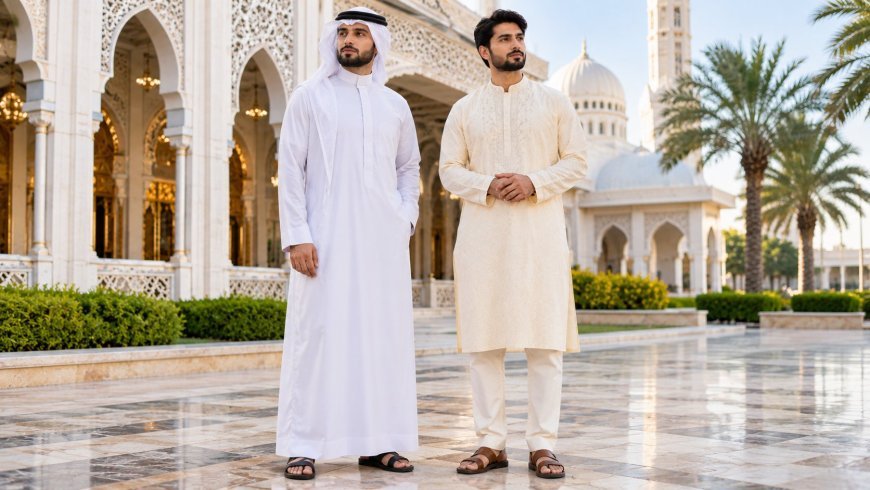
A man wearing a long white thobe in Saudi Arabia and another wearing a kurta in Pakistan may appear to follow a similar approach to traditional dressing. Both outfits are modest, comfortable, and closely connected to local clothing traditions. However, their origins, designs, and the way they are worn are quite different.
Traditional men's clothing has developed over centuries, shaped by regional climates, cultural practices, available fabrics, and everyday lifestyles. The thobe is strongly associated with the Arabian Peninsula and other parts of the Middle East, while the kurta has a long history across South Asia. Both are worn by Muslim men, but neither garment belongs exclusively to one religious community.
Today, these styles are also popular among Muslim communities in the USA, Canada, and other countries. Some men prefer a classic thobe for men for daily wear and prayers, while others choose an embroidered eid kurta for men for family gatherings and celebrations.
Understanding where these garments come from and what makes them different can help you appreciate their history and choose the style that suits your needs.
The History Behind Traditional Men's Clothing
Clothing traditions often develop in response to the environment and lifestyle of the people who wear them. This is particularly noticeable when comparing garments from the Middle East and South Asia.
In the Arabian Peninsula, long, loose-fitting garments became a practical choice for daily life in a generally hot and dry climate. Their simple construction allows comfortable movement and provides coverage while remaining suitable for everyday activities.
Across South Asia, clothing developed differently. Kurtas became a familiar part of men's wardrobes, usually worn with separate garments such as shalwar, churidar, or pajama. The availability of cotton, regional textile traditions, and local tailoring influenced the many styles seen across the region.
Religion also influences clothing choices, particularly the preference for modest dress among many Muslim men. However, it is important to understand that a thobe or kurta is not a religious uniform. These garments have cultural histories that extend beyond religious use.
Thobe: A Traditional Garment from the Arab World
The thobe, also written as thawb, is a long garment commonly worn by men in Saudi Arabia and several other Arab countries. It usually has a loose, straight silhouette and extends towards the ankles.
Although the basic shape is familiar, thobes are not identical across the region. Saudi-style designs often feature a structured collar, buttoned front, and defined cuffs. Other regional versions may have different necklines, sleeve details, or decorative elements.
White is particularly common in many Gulf countries, especially during warmer months. Black, beige, grey, navy, and other colours are also worn, depending on the country, season, and personal preference.
A thobe for men can be worn for everyday activities, work, Friday prayers, Ramadan, Eid, and formal gatherings. Its versatility is one reason it remains an important part of men's wardrobes across the Middle East.
The garment is also known by different regional names. In the UAE, the similar traditional garment is commonly called a kandura, while dishdasha is widely used in Kuwait and Oman. Although these garments share similarities with the thobe, their details and local traditions can differ.
Kurta: A Longstanding South Asian Clothing Tradition
The kurta has a different cultural background. It is widely worn across South Asia, particularly in Pakistan, India, and Bangladesh, and is part of the everyday and festive clothing traditions of people from different religious communities.
Unlike the typical full-length Gulf thobe, a kurta is generally a long shirt worn with separate trousers. Depending on the region and style, it may be paired with shalwar, pajama, churidar, or straight-cut trousers.
Its design can be simple or decorative. Everyday kurtas often have a relaxed fit, a round or band-style neckline, and a short button opening. Formal versions may include embroidery, patterned fabrics, decorative buttons, or more detailed collars.
Fabric choice also varies according to the occasion and weather. Cotton kurtas are common for everyday wear, while more decorative fabrics are often selected for weddings, festivals, and religious celebrations.
For Muslim men in South Asia, the kurta is a familiar choice for Friday prayers, Eid, and family gatherings. However, its popularity extends beyond these occasions because it is also practical for everyday dressing.
Eid Kurta for Men: Why It Remains a Popular Choice
Eid is an occasion when many people choose to wear new or special clothing. In South Asian communities, the kurta is one of the familiar choices for men celebrating Eid al-Fitr and Eid al-Adha.
An eid kurta for men does not have to be heavily decorated to look appropriate for the occasion. Some men prefer a classic white or cream kurta, while others choose navy, black, green, or pastel shades. Subtle embroidery around the neckline or front opening can add detail without making the outfit look overly elaborate.
The choice of fabric depends on the weather and the formality of the gathering. Cotton and lightweight blends are practical for warmer days, while more structured fabrics can create a dressier appearance.
Kurtas are commonly paired with shalwar or trousers. Some men complete the outfit with traditional footwear, a waistcoat, or a cap. These combinations vary according to family customs, regional preferences, and individual style.
For men who prefer Middle Eastern clothing, a thobe is another popular Eid option. The choice between a kurta and thobe often reflects personal preference and cultural background rather than any difference in religious significance.
Thobe vs. Kurta: What Are the Actual Differences?
At first glance, both garments may look like long shirts, but their construction and styling are different.
A traditional thobe is usually a full-length garment designed to be worn as a single outer garment. It often has a straight silhouette and may feature a collar, buttoned front, or regional neckline details.
A kurta is generally shorter and is designed to be worn with separate trousers. It offers considerable variation in length, neckline, sleeve design, and decoration.
Their cultural associations are also different. The thobe is strongly connected with Arab clothing traditions, while the kurta has a long-standing place in South Asian dress.
Neither garment is limited to religious occasions. Both are worn for everyday activities, social gatherings, prayers, and celebrations.
How Modern Designs Have Changed Traditional Clothing
Traditional clothing has not remained unchanged. As lifestyles and fashion preferences have evolved, designers and clothing brands have introduced new variations while retaining familiar elements.
Modern thobes are available in different colours, fabrics, collar styles, and fits. Some designs maintain the classic appearance, while others introduce subtle decorative details or contemporary tailoring.
Kurtas have also changed over time. Modern collections include different lengths, minimal designs, embroidered styles, and combinations with contemporary trousers or waistcoats.
These changes have made traditional clothing accessible to a wider audience. Muslim men living in Western countries can now explore garments that connect with their cultural backgrounds while choosing designs suitable for their daily routines.
However, modern styling does not mean every traditional garment needs to be redesigned. Many men continue to prefer simple, classic clothing because it is familiar, practical, and easy to wear.
How to Choose Between a Thobe and a Kurta
The best choice depends on your personal style, daily routine, and the occasions for which you need the garment.
If you prefer a long, simple garment with a classic Middle Eastern appearance, a thobe may be the right option. It can be worn on its own and is available in different colours and regional designs.
If you prefer South Asian styling, a kurta offers more flexibility in how you combine your outfit. You can pair it with shalwar, pajama, or trousers and choose between simple everyday designs and more detailed festive options.
Weather should also influence your decision. Lightweight fabrics are useful for warmer conditions, while the overall cut and material should allow comfortable movement.
When shopping online, check the fabric description, actual measurements, product photographs, and return policy. These details are especially important because garment sizing and construction can vary between sellers.
Whether you are searching for a thobe for men for everyday use or an eid kurta for men for an upcoming celebration, focus on comfort, fit, and the type of design you genuinely enjoy wearing.
Explore Traditional Men's Clothing at Shannoh
Finding traditional clothing that fits your preferences is easier when you know which style you are looking for. Some men prefer the clean appearance of a classic thobe, while others enjoy the versatility of South Asian clothing.
At Shannoh, you can explore men's thobe styles in different colours and designs, with options for everyday wear, Friday prayers, Ramadan, and Eid. Whether you prefer a traditional white design, a black thobe, or another style, you can explore the collection to find something that suits your wardrobe.
If you are looking for comfortable traditional clothing for regular use or a special occasion, visit Shannoh and discover its collection of men's Islamic clothing.
Final Thoughts
Thobes and kurtas may serve similar purposes, but their histories and designs reflect different cultural traditions. The thobe has strong roots in the Arab world, while the kurta is closely associated with South Asian clothing.
Both garments have continued to evolve while remaining familiar choices for men who value modesty, comfort, and traditional style.
Whether you prefer a thobe for men or an eid kurta for men, understanding the cultural background of each garment gives you a better appreciation of what you are wearing. The best choice is ultimately the one that feels comfortable, suits the occasion, and reflects your personal preferences.
What's Your Reaction?
 Like
0
 Dislike
0
 Love
0
 Funny
0
 Angry
0
 Sad
0
 Wow
0