





















How Can an AI-Powered Security Camera Predict Risks Before They Escalate? Exploring Proactive Surveillance
An AI-powered security camera can analyse video feeds, recognise changes in movement and generate alerts when activity appears inconsistent with predefined security expectations
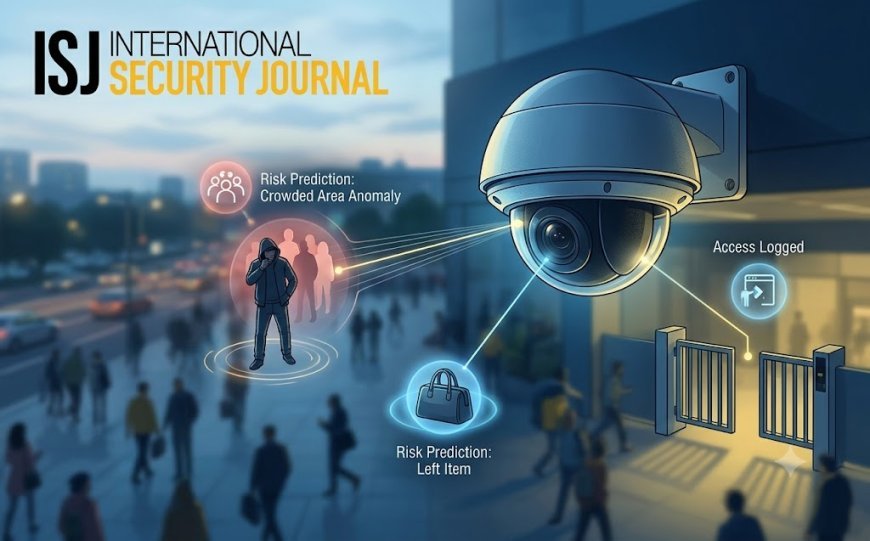
Security incidents rarely develop without warning. Unusual movement, repeated access attempts, unexpected crowd behaviour and activity around restricted locations can sometimes indicate potential risks before an incident occurs. Identifying these early warning signs is an important part of effective security management.
Traditional surveillance systems generally focus on recording events and allowing personnel to review footage when necessary. However, advances in artificial intelligence are creating opportunities to identify unusual patterns while activities are taking place. An AI-powered security camera can analyse video feeds, recognise changes in movement and generate alerts when activity appears inconsistent with predefined security expectations. Although these systems cannot predict every incident, they can help security professionals identify potential concerns earlier and take preventive action.
Understanding Predictive Security Analytics
Predictive security analytics involves examining information to identify patterns that may indicate emerging risks. In surveillance environments, this can include analysing movement, activity frequency, crowd density and access behaviour.
Machine learning allows intelligent systems to process visual information and identify patterns that might otherwise require extensive manual observation.
For example, repeated attempts to enter a restricted area may indicate a potential access concern. Similarly, unusual activity around a perimeter during normally quiet periods may deserve further investigation.
An AI-powered security camera can help highlight these patterns and provide security personnel with information that supports faster assessment.
However, identifying an unusual pattern does not automatically mean an incident will happen. Predictive analytics should be treated as a decision-support capability rather than a guarantee of future outcomes.
How AI Identifies Potential Security Risks
Several technologies contribute to proactive surveillance and early risk identification.
1. Behavioural Pattern Analysis
AI systems can examine movement patterns and compare them with expected activity within a monitored environment.
For example, repeated movement around an entrance, unusual gathering near sensitive equipment or extended presence in restricted locations may generate an alert.
Security teams can review these observations to determine whether further action is required.
2. Anomaly Detection
Anomaly detection identifies activities that differ from established patterns.
A warehouse may experience regular vehicle movement during operational hours. If unexpected movement occurs outside those periods, an intelligent monitoring system may flag the activity.
This capability helps security personnel focus on events that differ from normal operational behaviour.
3. Crowd Movement Monitoring
Large gatherings can create challenges for security teams, particularly in transport facilities, public venues and commercial buildings.
AI-based analytics can monitor crowd density, identify unusual movement patterns and highlight areas where congestion is increasing.
These insights can support decisions about personnel deployment and crowd management.
4. Perimeter Risk Identification
Perimeter protection requires continuous attention because unauthorised access can occur at different locations and times.
Intelligent video monitoring can identify movement near designated boundaries and generate notifications when activity meets configured alert conditions.
This can help security teams investigate potential intrusion attempts before they develop into more serious situations.
The Importance of Real-Time Video Analysis
The speed at which security information becomes available can influence the effectiveness of incident response.
Manual footage reviews may take considerable time, particularly when multiple cameras operate across large facilities. Automated analysis helps reduce this burden by identifying relevant events as they occur.
An AI-powered security camera can support real-time monitoring by analysing video feeds and communicating alerts to authorised personnel.
For example, if someone enters a restricted operational area, the system may generate an immediate notification. Security staff can then review the footage, assess the circumstances and follow established response procedures.
This approach can improve situational awareness without requiring operators to monitor every camera continuously.
Applications Across High-Risk Environments
Proactive surveillance can support security operations in several environments.
Critical infrastructure: Intelligent monitoring can help identify unusual movement around sensitive operational areas, access points and external boundaries.
Airports and transport facilities: Crowd analytics and movement monitoring can support operational awareness in busy public environments.
Industrial sites: AI surveillance can identify unexpected activity near machinery, storage areas and restricted operational zones.
Commercial properties: Intelligent analytics can help security teams identify unusual access patterns and monitor entrances outside normal working hours.
Logistics facilities: Vehicle recognition and movement analysis can support monitoring around loading bays, storage facilities and delivery areas.
Each environment requires different monitoring rules based on its operational risks and security requirements.
Reducing False Alerts Through Better Configuration
One challenge associated with intelligent surveillance is the possibility of false alerts.
Environmental changes, lighting variations, weather conditions and ordinary human movement can sometimes be interpreted incorrectly by automated systems.
An AI-powered security camera must therefore be configured according to the environment in which it operates.
Security teams should establish appropriate detection zones, review alert sensitivity and regularly assess system performance.
Combining multiple sources of information can also improve decision-making. For example, video analytics may be reviewed alongside access control records or alarm notifications to establish a clearer understanding of an event.
Human verification remains essential, particularly when alerts could result in security interventions involving employees, visitors or members of the public.
Privacy and Responsible Predictive Monitoring
Proactive surveillance must operate within clear privacy and governance boundaries.
Monitoring systems should focus on legitimate security requirements rather than unnecessary observation of individuals. Organisations should establish transparent policies covering footage collection, access permissions and information retention.
Important considerations include:
-
Limiting monitoring to clearly defined security purposes.
-
Restricting access to authorised personnel.
-
Reviewing automated detection rules regularly.
-
Maintaining appropriate data protection safeguards.
-
Ensuring alerts are assessed before further action.
-
Providing staff with suitable training.
Responsible implementation helps maintain confidence in intelligent security systems while supporting operational protection.
Why Security Professionals Remain Essential
Technology can identify unusual patterns, but professional judgement is required to understand their meaning.
A person standing near an entrance may be waiting for assistance rather than attempting unauthorised access. Similarly, an unusual vehicle movement may have a legitimate operational explanation.
AI-generated alerts should therefore initiate assessment rather than automatically determine that a security incident has occurred.
That effective security management requires a balance between technological innovation, operational awareness and experienced human decision-making.
What Comes Next for Proactive Surveillance?
Future surveillance systems may offer more advanced anomaly detection, improved contextual analysis and stronger integration with security management platforms. Edge-based processing could enable faster analysis directly within cameras, while improved analytics may help distinguish between ordinary activity and situations requiring attention. Integration with access control, perimeter alarms and incident management systems could also provide security teams with a more complete operational picture. As highlighted by International Security Journal, predictive surveillance will continue to depend on reliable data, appropriate configuration and responsible use to deliver effective and trustworthy security outcomes.
Conclusion
Proactive surveillance is becoming an important part of modern security planning. By analysing movement patterns, identifying anomalies and generating real-time alerts, intelligent cameras can help security professionals recognise potential concerns earlier.
An AI-powered security camera cannot guarantee that an incident will be prevented, but it can provide valuable information that supports timely investigation and informed decisions.
The future of security will depend on combining predictive analytics with human oversight, privacy safeguards and well-established response procedures.
Frequently Asked Questions
1. What is predictive security surveillance?
Predictive security surveillance uses data analysis and pattern recognition to identify activities that may indicate emerging security risks.
2. Can AI cameras predict criminal activity?
AI cameras cannot reliably predict criminal behaviour. They can identify unusual patterns or activities that may require further investigation.
3. What is anomaly detection in security cameras?
Anomaly detection identifies activity that differs from established patterns, such as unexpected movement in restricted areas or unusual activity outside normal operating hours.
4. How does real-time video analysis help security teams?
It helps identify relevant events quickly, generate alerts and reduce the amount of footage personnel must manually review.
5. Is proactive AI surveillance suitable for large facilities?
Yes. It can support monitoring across large facilities by analysing multiple video feeds and highlighting activities that require attention.
What's Your Reaction?
 Like
0
 Dislike
0
 Love
0
 Funny
0
 Angry
0
 Sad
0
 Wow
0