

























Private Equity Is Entering a New Era—Tokenization Is Changing the Game
Private equity tokenization involves representing eligible ownership interests or investment rights through digital tokens recorded on a blockchain.

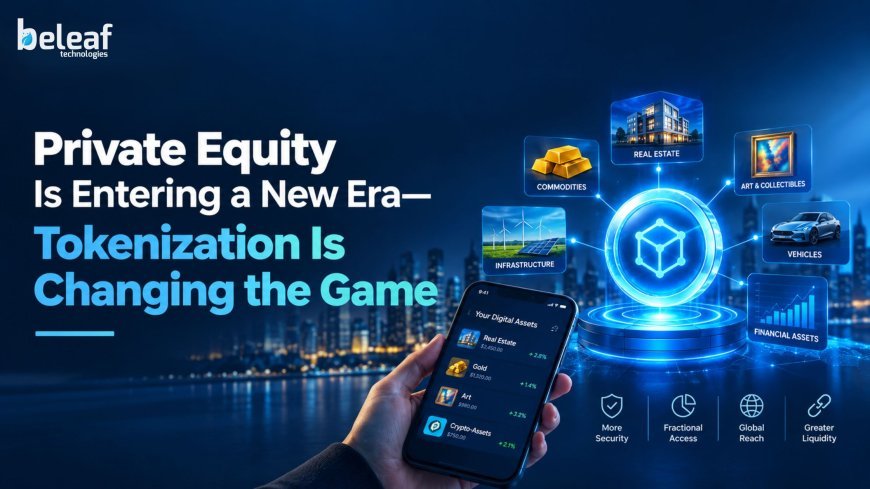
Investment strategies are evolving as businesses explore new ways to manage assets, connect with investors, and create digital financial opportunities. Private equity has traditionally operated through structured investment arrangements that often involve lengthy processes and significant capital commitments. However, blockchain technology is introducing another approach that could reshape how private investment interests are represented and managed. This development is known as private equity tokenization.
Rather than replacing every traditional investment method, tokenization introduces a digital framework that can make certain investment processes more organised, transparent, and accessible to eligible participants. For businesses exploring financial technology, understanding this shift could open the door to new possibilities.
Why Is Traditional Private Equity Exploring Digital Transformation?
Private equity tokenization investments generally involve capital being invested in privately held companies that are not publicly traded on stock exchanges. These investments may support business expansion, acquisitions, operational improvements, or long-term development. Although this investment model has created opportunities for companies and investors, managing private equity interests can involve considerable administrative work. Documentation, ownership records, investor communication, reporting, and transfer procedures may require coordination between multiple parties.
This is where digital infrastructure becomes relevant. Businesses are increasingly examining whether technology can simplify certain activities without removing the legal and financial structures that protect investors. Private equity tokenization offers one possible direction by introducing blockchain-based representations of investment interests.
What Makes Private Equity Tokenization Different?
Private equity tokenization involves representing eligible ownership interests or investment rights through digital tokens recorded on a blockchain. These tokens are connected to an underlying legal and financial arrangement. For example, consider a privately owned company planning to raise capital for expansion. Instead of managing every investor record through disconnected systems, the company may explore a tokenization structure that represents eligible investment interests digitally.
Depending on the legal structure, these tokens may represent economic rights, ownership interests, or other contractual entitlements. They do not automatically provide identical rights to ordinary company shares. The important difference is the way investment records and related processes can be organised through digital infrastructure. Tokenization can support more structured recordkeeping while allowing authorised participants to interact with the investment platform.
How Does the Tokenization Process Work?
A private equity tokenization project requires more than creating digital tokens. It involves financial planning, legal structuring, technical development, and investor management.
1. Asset and investment evaluation
The first step is identifying the company, fund, or eligible investment interest that will be represented digitally. Its valuation, ownership structure, and investment objectives need to be reviewed.
2. Legal structuring
Before issuing tokens, the business must establish what rights the tokens represent. Investor eligibility, applicable securities regulations, ownership documentation, and transfer restrictions should be clearly defined.
3. Blockchain infrastructure selection
The development team selects an appropriate blockchain environment based on the project's technical requirements, security considerations, and integration needs.
4. Smart contract development
Smart contracts can be designed to manage specific functions such as token issuance, ownership records, and permitted transfers. Their behaviour should be tested and independently reviewed before deployment.
5. Investor onboarding and management
Eligible investors can be onboarded through appropriate verification procedures. A digital platform may provide access to investment information, transaction records, and relevant account activities.
Business Benefits of Private Equity Tokenization
The growing interest in tokenization is connected to several potential advantages. However, the actual benefits depend on the asset, platform design, legal framework, and implementation quality.
Improved record management: Blockchain-based records can help organise ownership information and provide a consistent transaction history.
Greater operational efficiency: Suitable automation can reduce certain manual administrative activities associated with investor records and transaction processing.
Flexible investment structures: Digital tokens can represent different types of legally defined investment interests, depending on the underlying arrangement.
Better information access: An appropriately designed investor platform can provide authorised participants with relevant investment documents, updates, and records.
Potential for broader participation: Tokenization may support investment structures with lower participation thresholds, where legally permitted. It does not automatically make private equity available to every investor.
The Role of Blockchain and Smart Contracts
Blockchain technology provides the underlying environment for recording digital token activity. Instead of depending entirely on separate internal databases, a properly designed tokenization platform can use blockchain records to support ownership tracking and transaction verification. Smart contracts add another technical layer. They can automate predefined rules, including permitted transfers, issuance conditions, and other programmed activities.
However, smart contracts cannot independently guarantee the legal validity of an investment or verify every real-world event associated with an asset. Legal agreements, compliance procedures, and reliable information systems remain essential. For private equity projects, combining appropriate blockchain infrastructure with professional legal and financial oversight is particularly important.
What Could the Future Hold for Private Equity Tokenization?
Tokenization is creating new discussions around how private investment interests can be represented and managed. As blockchain infrastructure develops, businesses may explore more advanced investor portals, automated reporting, digital ownership management, and compliant transfer systems. However, widespread adoption will depend on more than technological improvements. Regulatory clarity, investor confidence, interoperability, asset verification, and strong security practices will all influence how these platforms develop. Companies that understand both the financial structure and the technical requirements will be better positioned to evaluate opportunities in this changing environment.
Final Thoughts
Private equity tokenization represents an evolving connection between traditional investment structures and blockchain technology. By converting eligible investment interests into digital representations, businesses can explore new approaches to ownership records, investor management, and operational processes. The real opportunity is not simply creating digital tokens. It is building a secure, transparent, and legally structured investment environment that serves both businesses and eligible investors. As the financial industry continues to explore digital transformation, private equity tokenization could become an important area of innovation for companies looking beyond conventional investment infrastructure.
What's Your Reaction?
 Like
0
 Dislike
0
 Love
0
 Funny
0
 Angry
0
 Sad
0
 Wow
0