
























Aspadol Tablet Uses: Questions to Ask Your Doctor
Aspadol is marketed as a tapentadol-containing prescription pain medicine. It may be prescribed for certain moderate to severe pain conditions following medical assessment.
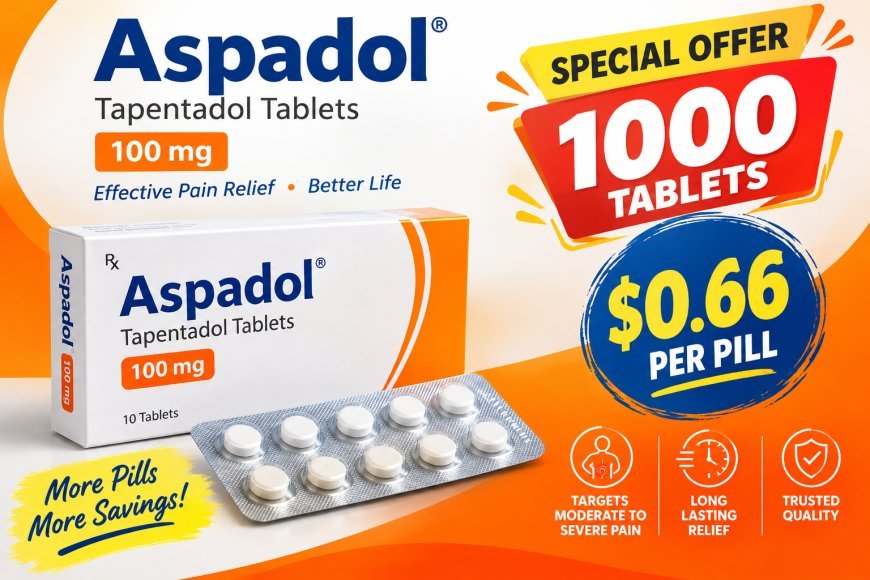
Aspadol Tablet contains tapentadol, a prescription opioid used to manage certain types of moderate to severe pain. Before treatment begins, patients should understand its benefits, risks, dosage and precautions. Asking the right questions can help make pain management safer and more effective.
1. What Is Aspadol Tablet and How Does It Work?
Aspadol Tablet is a brand of medicine marketed with tapentadol as its active ingredient. Tapentadol is a centrally acting opioid analgesic. It works through two main mechanisms. First, it activates mu-opioid receptors in the central nervous system. Second, it inhibits the reuptake of norepinephrine, a chemical involved in the body's pain-control pathways.
Through these actions, pain signals can be reduced. Consequently, tapentadol may be prescribed for selected patients experiencing moderate to severe acute pain or certain forms of chronic pain.
However, it is not suitable for every type of discomfort. A healthcare professional must assess the cause, severity and duration of pain before treatment is considered.
Patients researching an Aspadol Tablet or Tapentadol Tablet should also understand that brand names and formulations may differ between markets. The active ingredient, strength, release formulation and regulatory approval must be verified before any medicine is prescribed.
2. What Are the Main Uses of Aspadol Tablet?
Tapentadol may be prescribed for certain moderate to severe pain conditions when alternative treatments are inadequate or unsuitable.
Its recognised medical applications depend on the formulation and the regulatory approval in the relevant country.
For example, immediate-release tapentadol may be prescribed for acute pain requiring an opioid analgesic. Extended-release formulations may be used for selected patients who require ongoing management of severe chronic pain.
Some conditions that may require a doctor's assessment include:
Postoperative pain: Pain following surgery can sometimes require prescription opioid treatment. The duration and strength of treatment are determined by the treating clinician.
Musculoskeletal pain: Severe pain involving muscles, joints or other tissues may require a comprehensive treatment plan. The underlying cause should always be investigated.
Nerve-related pain: Certain chronic pain conditions involve changes in nerve signalling. Tapentadol's dual mechanism may be considered in selected cases.
Injury-related pain: Serious injuries can produce significant discomfort. Treatment depends on the injury, its severity and the patient's overall health.
Importantly, Aspadol should not be used for ordinary headaches, minor muscle soreness or other mild discomfort without an appropriate medical assessment.
3. Important Questions to Ask Your Doctor Before Treatment
A consultation should be used to understand both the expected benefits and possible risks of tapentadol.
Rather than focusing only on pain relief, patients should ask how the medicine fits into their overall treatment plan.
Question 1: Is tapentadol suitable for my medical condition?
The first question should concern the cause of the pain. Similar symptoms can develop from very different conditions. A doctor may recommend an examination, medical tests or alternative treatments before prescribing an opioid.
Question 2: Why have you recommended Aspadol instead of another pain medicine?
Several treatments may be available for pain management. Depending on the diagnosis, options may include non-opioid painkillers, physical therapy, rehabilitation or other prescription medicines.
The doctor should explain why tapentadol has been selected and what benefits are expected.
Question 3: Is Tapentadol 100mg appropriate for me?
A 100mg tablet is not automatically appropriate for every patient. The correct strength depends on the formulation, previous opioid exposure, medical history and treatment requirements.
Patients should never select a strength based on online descriptions or another person's experience.
Question 4: How long should I take this medicine?
Treatment duration should be established before therapy begins. Opioid medicines should generally be used for the shortest appropriate period at the lowest effective prescribed dose.
Patients receiving ongoing treatment should have their response and continued need reviewed regularly.
Question 5: What should I do if my pain does not improve?
Pain that continues despite treatment requires reassessment. Increasing the dose without medical advice can cause serious harm.
A doctor may need to investigate the underlying condition or reconsider the treatment plan.
4. Understanding Tapentadol 100mg and Dosage Precautions
Tapentadol is available in different strengths and formulations. Immediate-release and extended-release tablets have different prescribing instructions.
Therefore, the strength printed on the package should never be used as the only guide to treatment.
Tapentadol 100mg may be prescribed in certain circumstances. However, it is not a universal starting dose.
The doctor should explain:
-
The exact prescribed formulation.
-
The strength and frequency of administration.
-
Whether the tablet can be taken with food.
-
Whether it must be swallowed whole.
-
What to do after a missed dose.
-
How long treatment is expected to continue.
-
Whether other medicines should be avoided.
Extended-release tablets must not be crushed, chewed or broken unless the specific product instructions expressly permit it. Altering an extended-release formulation can release too much medicine too quickly and increase overdose risk.
Patients should also avoid taking additional doses to compensate for missed medication.
5. What Are the Common Side Effects of Aspadol?
Like other opioid medicines, tapentadol can cause side effects. Their severity varies between patients.
Commonly reported effects include nausea, vomiting, dizziness, constipation, headache and drowsiness.
Some patients may experience dry mouth, sweating or reduced appetite.
These effects should be discussed with a healthcare professional, particularly when they interfere with normal activities.
Serious side effects
More serious reactions may include:
Respiratory depression: Breathing may become dangerously slow or shallow. This is a medical emergency.
Severe allergic reactions: Swelling, difficulty breathing or a serious skin reaction requires immediate medical attention.
Severe confusion: Significant changes in awareness or alertness should be assessed promptly.
Seizures: Tapentadol may increase seizure risk in susceptible individuals.
Dependence: Continued opioid exposure can lead to physical dependence and, in some cases, addiction.
Patients should know the warning signs before starting treatment. Emergency help should be obtained if breathing becomes difficult, the person cannot be awakened or an overdose is suspected.
6. Can Aspadol Cause Dependence or Addiction?
Yes. Tapentadol is an opioid and can cause physical dependence, tolerance and addiction.
Physical dependence means the body adapts to regular exposure. If treatment is suddenly stopped, withdrawal symptoms may develop.
Possible withdrawal symptoms include restlessness, sweating, anxiety, sleep disturbances, muscle aches, abdominal discomfort and diarrhoea.
Tolerance means that the same dose may produce less effect after repeated exposure. However, increasing the dose independently is dangerous.
Patients should ask their doctor about:
-
Their personal risk of dependence.
-
Warning signs of problematic medication use.
-
Safe treatment duration.
-
Regular medical reviews.
-
A gradual reduction plan when treatment is no longer needed.
Tapentadol should never be shared with family members or friends, even when they report similar pain.
7. Which Medicines Should Not Be Combined With Tapentadol?
Drug interactions are an important part of an opioid safety assessment.
Tapentadol can interact with several medicines and substances. Some combinations may increase sedation, respiratory depression or other serious complications.
Particular caution is required with:
Alcohol: Alcohol can increase drowsiness and breathing-related risks.
Benzodiazepines: Medicines used for anxiety or sleep may increase the risk of severe sedation and respiratory depression.
Other opioids: Combining opioid medicines can increase overdose risk.
Sedating antihistamines: Some allergy medicines can increase drowsiness.
Antidepressants: Certain antidepressants may increase the risk of serotonin syndrome or other interactions.
Sleep medicines: Sedative medicines can increase central nervous system depression.
Patients should provide their doctor with a complete list of prescription medicines, non-prescription products and supplements.
They should not stop existing treatment without professional advice.
8. What Should Patients Know About Aspadol in the USA?
In the United States, tapentadol is a Schedule II controlled substance under federal law.
Its prescription and dispensing are subject to strict requirements. Treatment should be arranged through an appropriately licensed healthcare professional.
Patients in New York, Los Angeles, Chicago, Houston, Phoenix, Dallas and other American cities should use legitimate healthcare and pharmacy services.
Before treatment, useful questions include:
-
Is tapentadol appropriate for my diagnosis?
-
What monitoring will be required?
-
How should unused medication be disposed of?
-
What should I do if I experience severe drowsiness?
-
Are there non-opioid alternatives?
Prescription requirements should be followed. Medicines should only be obtained through legally authorised channels.
9. Understanding Tapentadol Regulations in the UK
In the United Kingdom, tapentadol is a controlled prescription medicine. It is subject to controlled-drug requirements.
Patients in London, Manchester, Birmingham, Leeds, Liverpool, Glasgow, Edinburgh and Bristol should consult an appropriately qualified healthcare professional.
A doctor or specialist should assess the patient's symptoms, medical history and current medication.
The following questions can be useful during a UK consultation:
-
Is an opioid necessary for my pain?
-
Are there suitable non-opioid alternatives?
-
How frequently will my treatment be reviewed?
-
What precautions should I follow at work?
-
How should unused tablets be returned or disposed of?
A prescription does not remove the need for monitoring. Treatment should be reviewed according to the patient's response and safety.
10. Aspadol and Tapentadol in Australia
Australia regulates tapentadol through its medicines and controlled-drug framework.
Patients in Sydney, Melbourne, Brisbane, Perth, Adelaide, Canberra and the Gold Coast should obtain treatment through authorised healthcare providers.
A doctor may assess whether an opioid is necessary and whether other pain-management options are more suitable.
Australian patients should ask about prescription monitoring, safe storage and the risks of combining tapentadol with alcohol or sedating medicines.
The medicine should be stored securely, particularly in households with children or other people who may accidentally access it.
11. Tapentadol Treatment in Europe
European medicine regulations differ between individual countries. Prescription requirements and controlled-drug arrangements should therefore be checked locally.
Patients in Berlin, Munich, Paris, Lyon, Rome, Milan, Madrid, Barcelona, Amsterdam, Brussels, Lisbon and Dublin should consult their local healthcare providers.
A doctor should establish whether tapentadol is authorised and clinically suitable for the particular condition.
Important discussion points include the approved formulation, treatment duration, possible interactions and follow-up requirements.
Patients travelling between European countries should also ask about carrying prescribed controlled medicines and the necessary documentation.
Modafinil Tablet
Zopiclone Tablets
12. Can Tapentadol Be Taken for Long-Term Pain?
Long-term opioid treatment requires careful consideration.
Some patients with severe chronic pain may receive ongoing opioid therapy. However, the benefits and risks must be reviewed regularly.
A doctor should assess whether treatment improves meaningful daily activities, sleep and overall functioning.
Pain scores alone may not provide a complete picture.
For example, a patient may report a reduction in pain but continue to experience poor mobility or difficulty performing ordinary tasks. The treatment plan may need to be adjusted.
Non-opioid approaches can also be included. Depending on the diagnosis, these may involve physical rehabilitation, psychological support, exercise programmes and other appropriate medicines.
Long-term treatment should never be continued automatically without reviewing its effectiveness.
13. What Should You Do If You Miss a Dose?
The correct response depends on the prescribed formulation and instructions.
Patients should follow the medication guide and contact their pharmacist or doctor if they are uncertain.
A missed dose should not automatically be replaced with an additional tablet.
Taking extra medication can increase the risk of excessive sedation and respiratory depression.
If an extended-release formulation has been prescribed, the dosing schedule must be followed particularly carefully.
14. What Are the Warning Signs of an Aspadol Overdose?
An overdose can be life-threatening.
Warning signs may include:
-
Extremely slow or shallow breathing.
-
Unusual snoring or gurgling sounds.
-
Severe drowsiness.
-
Pinpoint pupils.
-
Confusion or inability to respond.
-
Loss of consciousness.
-
Blue or grey lips and fingertips.
Emergency assistance should be requested immediately if an overdose is suspected.
Naloxone can reverse opioid overdose effects temporarily. However, emergency medical treatment is still essential because symptoms may return.
Family members and caregivers should be informed about overdose warning signs when opioid treatment is prescribed.
15. Safe Storage and Disposal of Tapentadol
Prescription opioid medicines should be stored securely and kept away from children, visitors and other household members.
They should remain in their original packaging whenever possible.
Unused tablets should not be shared or sold. They should be returned through an appropriate pharmacy or medicine disposal programme.
Patients should avoid keeping unused opioid medicines indefinitely. Safe disposal helps reduce accidental exposure, misuse and diversion.
16. Frequently Asked Questions About Aspadol Tablet
What is Aspadol Tablet used for?
Aspadol is marketed as a tapentadol-containing prescription pain medicine. It may be prescribed for certain moderate to severe pain conditions following medical assessment.
Is Aspadol 100mg suitable for everyone?
No. The appropriate strength depends on the patient's condition, formulation, medical history and previous opioid exposure. It must be prescribed individually.
Can I take Aspadol for back pain?
Some severe pain conditions involving the back may require prescription treatment. However, the cause of back pain should first be assessed. Non-opioid treatments may be more appropriate.
Can Aspadol be taken with alcohol?
No. Alcohol should be avoided because it can increase sedation and the risk of dangerous respiratory depression.
Does tapentadol cause sleepiness?
Yes. Drowsiness and dizziness are recognised side effects. Patients should avoid driving or operating machinery until they understand how the medicine affects them.
Can Aspadol cause withdrawal symptoms?
Yes. Physical dependence can develop with repeated opioid exposure. Treatment should not be stopped suddenly without medical guidance.
Is Tapentadol an opioid?
Yes. Tapentadol is a centrally acting opioid analgesic with an additional norepinephrine reuptake inhibition mechanism.
Can Aspadol be used for nerve pain?
Tapentadol may be considered for certain neuropathic pain conditions, depending on the formulation and local approval. A specialist should determine whether it is suitable.
Can I change from another opioid to tapentadol?
Opioid switching requires professional assessment. Differences in potency, tolerance and formulation make self-directed conversion unsafe.
How should I discuss alternative pain treatments?
Ask your doctor whether physiotherapy, rehabilitation, non-opioid medicines or other condition-specific treatments could provide adequate relief.
Aspadol Tablet and its active ingredient, tapentadol, may play a role in treating selected moderate to severe pain conditions. However, opioid treatment requires careful medical supervision.
Before starting Tapentadol 100mg or another prescribed strength, patients should understand the expected benefits, possible side effects, drug interactions and dependence risks.
The right questions can make a meaningful difference. Patients should discuss their medical history, treatment goals and alternative options openly with their healthcare professional.
Whether treatment is being considered in the USA, UK, Australia or Europe, responsible prescribing and authorised pharmacy services should remain priorities.
Effective pain management is not simply about reducing discomfort. It is about improving daily functioning while protecting long-term health and safety.
What's Your Reaction?
 Like
0
 Dislike
0
 Love
0
 Funny
0
 Angry
0
 Sad
0
 Wow
0