
























AWS Managed Services: Turning Cloud Complexity Into Predictable Operations
AWS Managed Services: Turning Cloud Complexity Into Predictable Operations

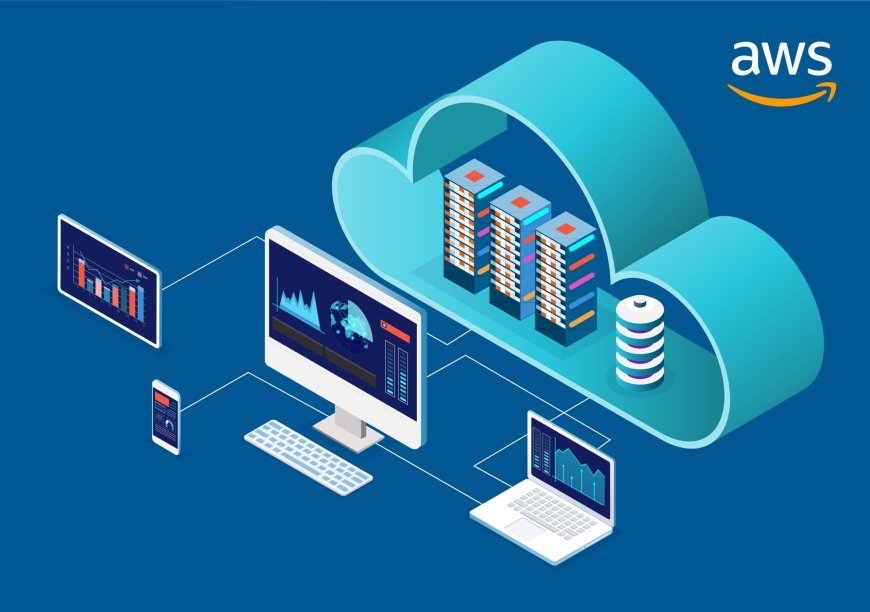
The AWS environment often becomes more complicated long before a business realizes it. An application starts with a few EC2 instances, a database, and basic monitoring. Then workloads grow, teams add services, security requirements increase, and monthly cloud bills become harder to explain. Eventually, internal engineers are spending valuable hours responding to alerts, reviewing permissions, managing backups, and troubleshooting infrastructure instead of improving the products customers actually use.
That is where aws managed services can change the operating model. Rather than expecting an internal team to handle every aspect of cloud administration, managed services provide ongoing expertise for monitoring, security, optimization, maintenance, and incident response. The objective is not simply to outsource technical tasks. It is to create a more predictable AWS environment while giving internal teams room to focus on strategic priorities.
Why AWS Operations Become Difficult to Manage
AWS provides an extensive collection of cloud services, but flexibility also creates operational responsibility. An organization might use EC2 for compute, RDS or Aurora for databases, S3 for storage, CloudFront for content delivery, and EKS or ECS for containers.
Each service introduces configuration decisions, monitoring requirements, security considerations, and opportunities for optimization.
The challenge becomes particularly visible as infrastructure expands. An EC2 instance may remain larger than necessary because nobody has reviewed its utilization recently. Unused snapshots can accumulate. Auto Scaling thresholds may no longer reflect actual traffic patterns. IAM permissions can become broader than intended as employees, applications, and services are added.
These issues rarely create an immediate crisis. Instead, they gradually increase cost and operational risk. AWS managed services address this accumulation by making infrastructure management continuous rather than occasional.
Cost Optimization Beyond the Monthly Bill
Cloud cost optimization is often reactive. A business receives an unexpectedly high invoice, investigates the major line items, makes a few changes, and moves on.
A more structured approach treats optimization as an ongoing operational process.
A managed AWS team can review resource utilization, identify oversized workloads, examine storage consumption, and evaluate purchasing options such as Reserved Instances or Savings Plans where appropriate. AWS Cost Explorer and Compute Optimizer data can support these decisions by revealing usage patterns and potential efficiency improvements.
The important point is consistency. Rightsizing an instance once does not guarantee that it will remain appropriately sized six months later. Application traffic changes, new features are introduced, and workloads evolve.
With regular reviews, optimization becomes part of cloud operations instead of an emergency response to an unexpected invoice.
24/7 Monitoring and Faster Incident Response
Infrastructure problems do not follow office hours. A production database can experience performance degradation at midnight, an application can encounter an unexpected traffic spike over the weekend, or a certificate can approach expiration when nobody from the infrastructure team is online.
AWS managed services can provide continuous monitoring and defined escalation procedures for these situations.
Tools such as Amazon CloudWatch can provide visibility into application and infrastructure performance, while additional observability platforms can help teams identify trends and anomalies. The goal is to detect degradation before it becomes a customer-facing outage whenever possible.
Just as importantly, clear ownership reduces confusion during incidents. Instead of asking which engineer should investigate an alert, organizations can rely on an established response process with defined responsibilities and escalation paths.
For businesses operating revenue-generating applications around the clock, that operational structure can be particularly valuable.
Security Needs Continuous Attention
Cloud security is not something that can be completed once and then forgotten.
User accounts change. Applications gain new permissions. Infrastructure is modified. New vulnerabilities emerge. Meanwhile, compliance expectations can become increasingly demanding.
A capable aws managed services provider can incorporate security practices into routine operations. IAM reviews, security configuration checks, patch management, WAF administration, and threat monitoring can become scheduled activities rather than tasks performed only after an incident.
AWS services such as GuardDuty, AWS WAF, and AWS Shield can contribute to a broader defensive strategy. However, simply enabling security services does not automatically create a secure environment. Alerts need to be interpreted, configurations need to be maintained, and appropriate responses need to be defined.
This is where managed operational expertise becomes important: security controls need to remain connected to everyday infrastructure management.
Managing Databases, Containers, and Scaling
AWS workloads often involve more than basic virtual machines.
Amazon RDS and Aurora databases require monitoring and performance management. Poorly configured database resources can become bottlenecks as application demand increases. Similarly, containerized environments running on Amazon EKS or ECS require ongoing attention as clusters, workloads, and deployment patterns evolve.
Auto Scaling also requires practical tuning. Default thresholds may not accurately represent an application's real traffic behavior. A managed team can review historical usage and adjust scaling policies to better match actual requirements.
These responsibilities demonstrate why effective managed services go beyond answering support tickets. Operational ownership involves understanding how individual AWS services interact and how infrastructure behavior affects application performance.
Backup Is Only Valuable When Recovery Works
Many businesses have backup policies but have never thoroughly tested whether those backups can actually support recovery under pressure.
AWS Backup, EBS snapshots, database backups, and related mechanisms can provide important protection, but recovery procedures need to be validated.
A managed AWS operation can establish backup schedules, monitor their status, retain appropriate recovery points, and conduct recovery testing. Testing matters because a successful backup job does not necessarily guarantee a successful restoration.
When an outage or data-loss event occurs, the organization should not be discovering its recovery limitations for the first time.
Infrastructure as Code Creates Greater Consistency
As environments become larger, manually changing infrastructure becomes increasingly difficult to control.
Infrastructure-as-code tools such as Terraform and AWS CloudFormation allow organizations to define infrastructure in repeatable configurations. Managed teams can use these approaches to improve consistency between environments and create clearer records of infrastructure changes.
This also helps reduce configuration drift. If development, staging, and production environments are created through controlled definitions, teams can more easily understand how they differ and reproduce infrastructure when necessary.
For organizations operating multiple AWS environments, this consistency can simplify both troubleshooting and auditing.
The Business Value of Managed AWS Operations
The strongest argument for aws managed services is not simply that someone else can manage cloud infrastructure. It is that effective operational management can connect technical improvements with measurable business outcomes.
Lower infrastructure waste can improve cloud economics. Faster incident response can reduce disruption. Continuous security management can reduce operational exposure. Better monitoring can provide earlier visibility into performance problems.
At the same time, internal engineers regain hours that might otherwise be consumed by routine infrastructure administration.
That reclaimed capacity can be significant. Developers can concentrate on product improvements, engineering leaders can focus on architecture and strategy, and business teams can pursue growth without constantly worrying about whether an infrastructure problem is waiting around the corner.
Choosing an Operational Model That Fits
Not every organization needs the same level of managed AWS support. A small application with limited traffic may require a different model from a global SaaS platform running multiple production environments.
The right approach depends on workload criticality, compliance requirements, internal expertise, architecture, budget, and expected growth.
Businesses should therefore look beyond simple service lists. Questions about response times, monitoring coverage, security responsibilities, escalation procedures, reporting, backup testing, and cost optimization reveal much more about how a provider actually operates.
Looking Ahead
AWS infrastructure will likely continue becoming more capable—and more complex. As organizations adopt containers, serverless architectures, automation, AI workloads, and increasingly distributed applications, the operational challenge will not disappear.
The businesses that manage this complexity effectively will not necessarily be those with the largest infrastructure teams. They will be the ones that create clear ownership, continuous visibility, disciplined security, and consistent cost governance.
AWS managed services offer one way to build that operational foundation. The bigger question is what organizations can accomplish once infrastructure stops consuming attention that belongs elsewhere. As cloud environments become central to modern business, treating operations as a continuous strategic capability rather than a collection of emergency tasks may become one of the most important decisions a growing company makes.
What's Your Reaction?
 Like
0
Like
0
 Dislike
0
Dislike
0
 Love
0
Love
0
 Funny
0
Funny
0
 Angry
0
Angry
0
 Sad
0
Sad
0
 Wow
0
Wow
0