
























Benzo Drug Testing: Important Facts for Beginners
Learn how a benzo test kit works, which benzodiazepines it may identify, and why understanding drug testing limitations matters.
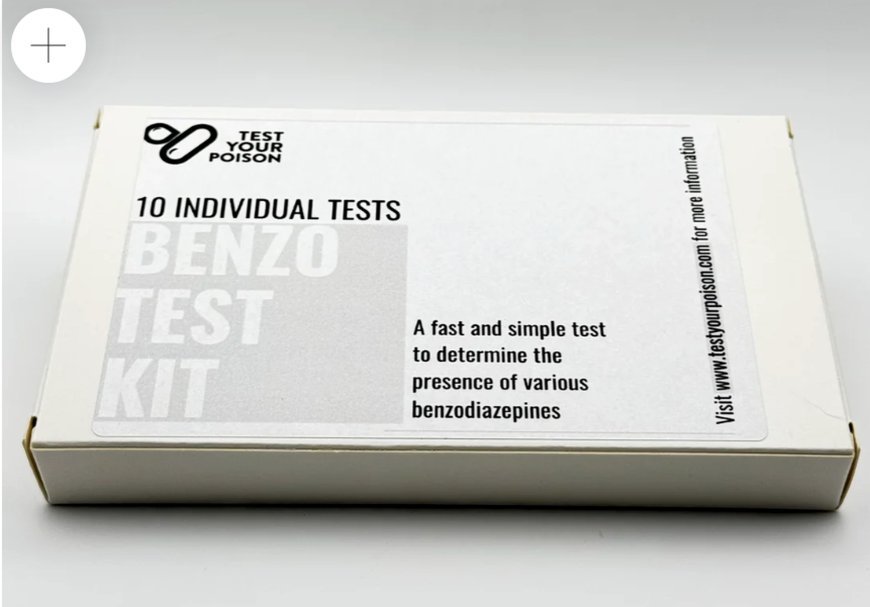
Benzodiazepines, often called benzos, are a group of medications that affect the central nervous system. However, substances sold as benzodiazepines may not always contain the compound they claim to contain. Understanding this uncertainty is important for drug awareness, and a benzo test kit may offer preliminary information about the possible contents of an unknown sample.
What Are Benzodiazepines?
Benzodiazepines are a class of medications commonly prescribed for conditions such as anxiety, insomnia, and certain seizure disorders. Examples include diazepam, alprazolam, and clonazepam. They work by enhancing the activity of a brain chemical called GABA, which helps regulate nervous system activity.
Although these medications have legitimate medical uses, they can cause drowsiness, impaired coordination, dependence, and other side effects. Combining benzodiazepines with alcohol, opioids, or other sedatives can increase the risk of severe respiratory depression and overdose.
What Is a Benzo Test Kit?
A benzo test kit is a drug-checking product designed to screen for certain benzodiazepines or related compounds, depending on its testing method. Its purpose is to provide information about a sample rather than establish that the substance is safe.
Different products may use different testing technologies and have different detection capabilities. Some tests provide preliminary indications through chemical reactions, while other screening methods may be designed to detect specific compounds.
It is important to check the manufacturer's product information to understand which substances a particular test is intended to identify.
How Does Benzo Drug Testing Work?
A benzo drug test kit may use a screening method that responds to selected chemical compounds. For example, some reagent-based tests produce a visible colour change when they react with certain substances. The observed reaction is compared with the manufacturer's reference information.
However, a visible reaction does not always provide definitive identification. Different compounds can sometimes produce similar results, and mixtures may complicate interpretation.
Laboratory techniques, including chromatography and mass spectrometry, can provide more detailed information about a sample's chemical composition. Depending on the method, they may also help determine the concentration of specific compounds.
What Can a Benzo Test Kit Identify?
The substances a test can identify depend on its design and stated detection range. A product may screen for particular benzodiazepines without detecting every medication or emerging synthetic compound in the same category.
This is an important consideration because substances sold under familiar names may contain unexpected ingredients. A test that screens for one benzodiazepine should not automatically be assumed to detect all others.
A preliminary result also cannot establish the complete composition, strength, or purity of a sample. A negative result does not guarantee that benzodiazepines or other potentially harmful substances are absent.
Why Understanding Testing Limitations Matters
Drug checking is most useful when its results are interpreted carefully. A screening test can provide one piece of information, but it cannot replace comprehensive laboratory analysis.
Benzodiazepines can cause serious harm, particularly when combined with other central nervous system depressants. Unexpected compounds may introduce additional risks. Testing does not make an unknown substance safe or eliminate the possibility of adverse effects.
For this reason, understanding the test's limitations is just as important as understanding its intended purpose. Product instructions and detection information should always be reviewed before drawing conclusions.
Conclusion
Benzo drug testing can support substance awareness by providing preliminary information about selected benzodiazepines. However, a benzo test kit cannot identify every compound, confirm purity, or guarantee safety. Understanding the testing method and its limitations is essential when interpreting results.
At Test Your Poison, the focus is on making drug-checking information accessible through practical education and harm reduction awareness. Learning about testing methods and their limitations can help people better understand the risks associated with unknown substances.
Frequently Asked Questions
Can a benzo test kit identify every benzodiazepine?
No. Detection depends on the specific testing method and the compounds included within its detection range. Some benzodiazepines may not be detected by a particular product.
Does a benzo test kit confirm the purity of a sample?
Not necessarily. A screening test may indicate the possible presence of selected compounds, but it does not automatically measure purity, concentration, or every ingredient.
Can a negative result guarantee that a sample is safe?
No. A negative result cannot rule out all benzodiazepines, other drugs, or harmful contaminants.
Why is laboratory testing useful for benzodiazepines?
Laboratory analysis can provide more detailed information about chemical identity and, depending on the method, concentration. It is generally more comprehensive than preliminary screening.
Why is benzo testing important for drug awareness?
It highlights the uncertainty that can exist in unknown substances and helps people understand the difference between a claimed identity and a tested result.
What's Your Reaction?
 Like
0
 Dislike
0
 Love
0
 Funny
0
 Angry
0
 Sad
0
 Wow
0