






















Can Paid Social Campaigns Create Search Demand That Last-Click Reports Fail to Recognize?
Paid social can influence search behavior in ways last-click attribution may miss. Learn how social campaigns create search demand and why attribution models matter.
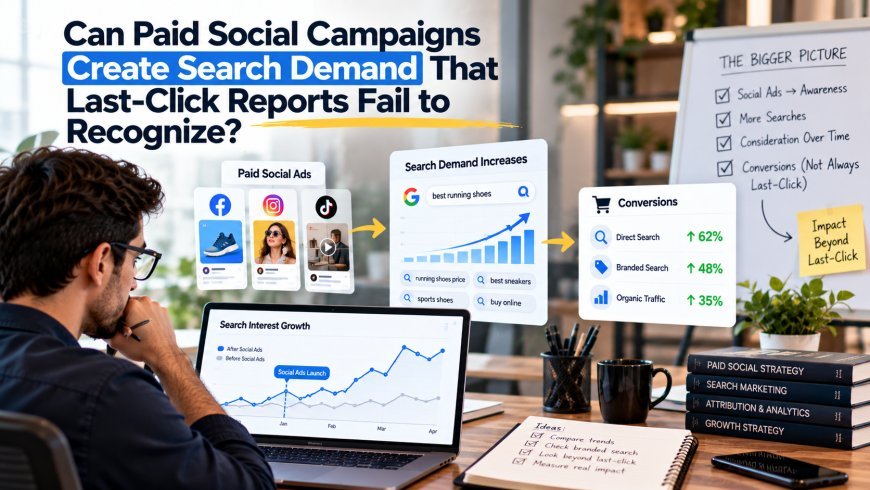
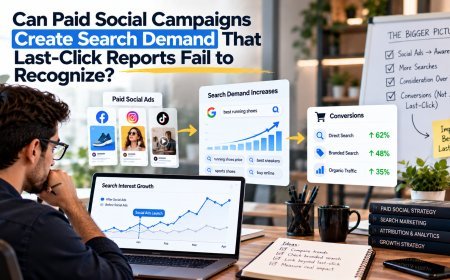
A potential customer sees a paid social advertisement but does not click it. Several hours later, that person searches for the company’s name on Google, visits the website, and completes a purchase. A last-click report may credit the conversion to organic or paid search, even though the social advertisement introduced the brand.
This journey is common because customers do not always respond immediately to an advertisement. They may remember the brand, discuss it with someone, compare alternatives, or return through another channel when they are ready.
Brand search lift helps marketers investigate whether advertising is increasing the number of people actively searching for a company or product. It provides additional context that standard platform reports may overlook.
A well-planned digital marketing strategy should therefore consider both direct conversions and the wider demand that campaigns may create.
What Is Brand Search Lift?
Brand search lift is the increase in searches for a company name, product name, or another branded term after advertising activity begins.
Suppose a business normally receives 1,000 searches for its brand each month. After launching a major paid social campaign, branded searches rise to 1,500. The additional activity may indicate that more people have become aware of the company and are actively looking for it.
However, an increase does not automatically prove that the campaign caused every additional search. Other factors may also contribute, including:
· Public relations coverage
· Influencer activity
· Seasonal demand
· Email marketing
· Offline promotions
· Customer recommendations
· A new product launch
· Competitor activity
· General market growth
Brand search lift should therefore be evaluated alongside campaign dates, geographic data, historical patterns, and other marketing activity.
Why Do People Search Instead of Clicking an Advertisement?
Users may avoid clicking an advertisement for several reasons.
Some people prefer to search for the company independently because it feels safer. Others want to read reviews, compare prices, check the official website, or confirm that the brand is legitimate before sharing personal information.
The advertisement may also appear at an inconvenient moment. A person scrolling during a break might notice the message but postpone further research until later.
In other cases, the user moves between devices. Someone may see a video on a mobile phone and later search for the company on a desktop computer. Standard tracking may fail to connect these actions to the same person.
The absence of an immediate click does not always mean that the advertisement had no effect.
How Can Last-Click Attribution Hide Paid Social Influence?
Last-click attribution assigns the conversion to the final recorded channel before the customer takes action. It is simple to understand, but it can undervalue earlier interactions.
Consider this journey:
1. A prospect watches a social media video.
2. The prospect later searches for the company name.
3. The person clicks a search result.
4. The person reads a case study.
5. The purchase is completed two days later.
A last-click model may credit search or direct traffic. The social advertisement that introduced the business may receive no recognition.
This can lead marketers to reduce the budget for campaigns that create awareness and increase spending on channels that capture existing demand. Search is important, but it may sometimes complete a journey that another channel started.
Which Signs Suggest That Advertising Is Creating Search Demand?
No single metric provides perfect proof. Marketers should look for several related changes that begin during or shortly after the campaign.
Useful indicators include:
· Growth in searches containing the brand name
· Increased organic traffic to the homepage
· More direct website visits
· Higher branded paid-search impressions
· More visits to review and comparison pages
· An increase in new users mentioning the brand
· Improved direct and assisted conversion volume
· Growth concentrated in advertised locations
· Search increases following periods of higher media exposure
Campaign comments can also provide useful clues. People may ask where they can buy the product, whether the company serves their area, or how the service compares with an alternative. These questions suggest that the advertisement is creating consideration, even when a conversion has not yet occurred.
How Can Businesses Measure Brand Search Lift?
The process begins by establishing a reliable baseline. Marketers should review branded search activity before the campaign and account for normal weekly, monthly, or seasonal changes.
They can then compare the baseline with activity during and after the advertising period.
Several sources may contribute to the analysis:
Search Console Data
Search Console can show impressions and clicks for branded queries. An increase in impressions indicates that the website appeared more frequently when users searched for brand-related terms.
Paid Search Data
A branded search campaign can reveal changes in impressions, clicks, and search volume. However, marketers must separate increases in demand from changes caused by budgets, bids, or keyword settings.
Website Analytics
Growth in direct traffic, homepage visits, and new users may support the search-lift analysis. These metrics should be interpreted carefully because analytics platforms can classify traffic imperfectly.
Geographic Comparisons
If advertising runs heavily in selected locations, the business can compare branded search trends in exposed areas with locations receiving little or no campaign activity.
Controlled Tests
Larger advertisers may use holdout groups or regional tests. One audience or location receives the campaign while another comparable group does not. Differences between them can provide stronger evidence of incremental impact.
A knowledgeable paid social strategist can help design measurement around the actual customer journey instead of depending on one attribution report.
Why Should Businesses Separate Branded and Non-Branded Search?
Branded searches include the company name, product names, or distinctive terms associated with the business. Non-branded searches describe the customer’s need without naming a specific provider.
This distinction is important because each type reflects a different level of awareness.
A person searching “accounting software for small businesses” is exploring possible solutions. Someone searching for a specific software brand already knows what they want to investigate.
If branded searches rise during a paid social campaign, the campaign may be increasing familiarity or consideration. If non-branded searches also grow, broader market demand or search visibility may be changing.
Combining both categories can hide the pattern.
Can Creative Strategy Affect Brand Search Lift?
Yes. An advertisement cannot create useful branded demand if viewers do not remember who delivered the message.
Some advertisements generate attention through humour, emotion, or an unusual visual but fail to connect that attention to the company. Viewers may remember the concept while forgetting the brand.
Effective brand-building creative should make important elements easy to recall:
· The brand name
· The main customer problem
· The product or service category
· The core benefit
· A distinctive visual or verbal cue
· A clear reason to investigate further
Branding does not need to dominate every second of the advertisement. However, it should be integrated naturally enough that the message and the company remain connected in the viewer’s memory.
Examining a specialist’s creative portfolio can help businesses understand how campaign ideas, visual direction, and performance goals can work together.
What Mistakes Can Distort Brand Search Analysis?
The first mistake is assuming that correlation proves causation. Branded searches may increase at the same time as advertising for reasons unrelated to the campaign.
The second is comparing different periods without considering seasonality. A retailer may naturally receive more searches before a major shopping period.
Another mistake is changing several marketing channels at once. If paid social, influencer partnerships, email, public relations, and search activity all increase together, it becomes difficult to identify the contribution of each channel.
Businesses should also avoid judging performance too early. Some campaigns influence awareness before they affect enquiries or sales. The appropriate evaluation period depends on the normal buying cycle.
Finally, search lift should not replace commercial metrics. Additional searches are useful only when they contribute to qualified traffic, customers, or long-term business growth.
How Should Brand Search Lift Influence Budget Decisions?
Brand search lift can provide evidence that a campaign contributes beyond platform-reported conversions. However, it should be considered together with customer acquisition cost, revenue, lead quality, conversion rates, and incremental sales.
If paid social activity consistently increases branded demand in exposed audiences, cutting the campaign based only on last-click results may weaken the entire acquisition system.
On the other hand, increased search volume without meaningful engagement or sales may indicate that the campaign is creating curiosity rather than valuable demand.
The objective is to understand how different channels work together. Social advertising may introduce the brand, search may capture existing interest, and the website may complete the conversion.
Final Thoughts
Paid social campaigns can influence customer behaviour even when users do not click immediately. Some people remember the message and search for the brand later, causing another channel to receive credit for a journey that social advertising helped begin.
Brand search lift gives marketers another way to evaluate this hidden influence. By comparing branded search trends, campaign exposure, locations, website behaviour, and sales outcomes, businesses can develop a more complete view of performance.
It is not a perfect standalone measurement, but it can prevent useful demand-creation campaigns from being judged only through last-click conversions. The strongest decisions come from combining multiple forms of evidence with genuine commercial results.
Frequently Asked Questions
What does brand search lift mean?
Brand search lift is an increase in searches for a company, product, or other branded term following advertising or promotional activity.
Does an increase in branded searches prove that an advertisement worked?
Not by itself. Other marketing activity, seasonality, publicity, and market conditions may also affect searches. The increase should be analysed alongside other evidence.
Can small businesses measure brand search lift?
Yes. Small businesses can compare branded Search Console impressions, paid-search data, direct traffic, and campaign dates. They should avoid drawing strong conclusions from very small data samples.
How long does brand search lift take to appear?
It depends on campaign reach, customer buying behaviour, advertising frequency, and brand familiarity. Some changes may appear quickly, while others develop over several weeks.
Should brand search lift replace conversion tracking?
No. It should complement conversion, revenue, customer acquisition, and lead-quality data. It provides additional context rather than replacing core performance measurements.
What's Your Reaction?
 Like
0
Like
0
 Dislike
0
Dislike
0
 Love
0
Love
0
 Funny
0
Funny
0
 Angry
0
Angry
0
 Sad
0
Sad
0
 Wow
0
Wow
0