

















Car Losing Coolant but No Visible Leak? Causes & Fixes
Is your car losing coolant without a visible leak? Discover possible causes, warning signs, and repair solutions for drivers in Dubai.
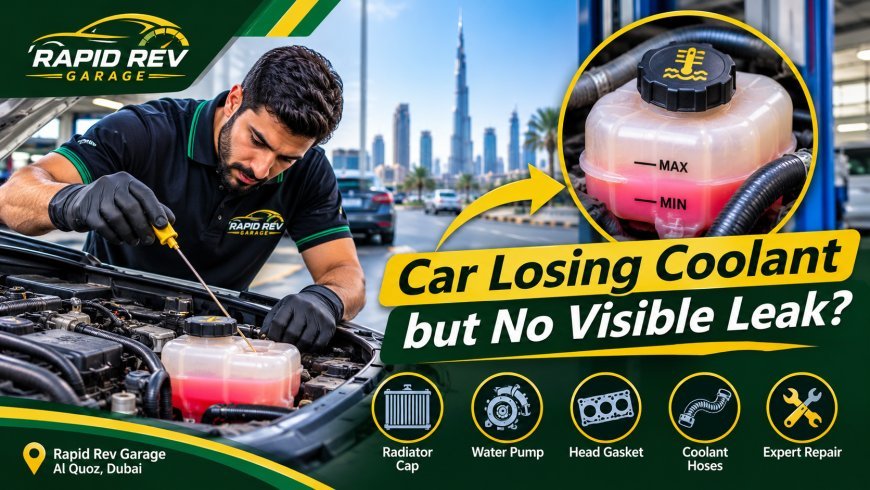
If your car is losing coolant but no visible leak appears, the problem may be caused by a small leak that evaporates on hot engine parts, a faulty radiator cap, a damaged water pump, or an internal engine leak. A leaking heater core or head gasket can also cause coolant loss without leaving a puddle under your vehicle. Do not ignore a falling coolant level, even if the engine seems normal. A professional cooling system inspection can identify the cause and help prevent overheating and expensive engine damage.
Why Is Your Car Losing Coolant Without a Visible Leak?
Coolant keeps your engine within a safe operating temperature. It circulates through the engine, radiator, and other cooling system components to remove excess heat.
Normally, the coolant level should remain fairly stable between services. If you keep adding coolant but cannot find a puddle under your car, something may be allowing it to escape or enter another part of the vehicle.
A car can lose coolant with no visible leak due to an external leak that only appears when the engine is hot, or an internal problem that requires further testing.
Common Causes of Coolant Loss Without Visible Leaks
1. Faulty Radiator Cap
The radiator cap maintains pressure inside the cooling system. If its seal weakens, coolant may escape as vapor instead of forming a visible puddle.
A damaged cap can also affect the system's pressure control and cause coolant loss. Replacing it with the correct specification may solve the problem.
2. Small Water Pump Leak
The water pump circulates coolant through engine. Its seals can wear out and allow small amounts of coolant to escape.
When coolant reaches hot engine surfaces, it may evaporate before you notice a leak on the ground. A mechanic should inspect the pump and its surrounding area.
3. Blown Head Gasket
A damaged head gasket allow coolant to enter the engine cylinders or mix with engine oil.
Possible warning signs include:
- White smoke or persistent white vapor from the exhaust
- Milky or creamy engine oil
- Engine overheating
- Rough engine operation
- Unexplained coolant loss
Not every white exhaust cloud means a head gasket failure. Proper testing is necessary before confirming the problem.
4. Leaking Heater Core
The heater core transfers heat into the vehicle's cabin. If it develops a leak, coolant may escape inside the dashboard area.
You might notice:
- A sweet smell inside the cabin
- Foggy windows
- Damp carpets
- Weak cabin heating
A heater core inspection can help identify the source.
5. Cracked Coolant Reservoir
The coolant reservoir stores excess coolant as the engine heats up and cools down. Small cracks or damaged connections may allow coolant to escape.
Heat can make small cracks harder to notice. A pressure test can help reveal the problem.
6. Damaged Radiator or Coolant Hoses
Small cracks in the radiator, hose connections, or clamps may release coolant only when the system is hot and pressurized.
The coolant may evaporate quickly, leaving little or no visible evidence. A technician should inspect the radiator, hoses, joints, and clamps.
7. Internal Engine or EGR Cooler Leak
Some vehicles, particularly certain diesel models, use an EGR cooler that transfers heat from exhaust gases. A damaged cooler may allow coolant to enter the exhaust system.
Internal engine leaks can also cause unexplained coolant loss. These faults require specialized testing.
Warning Signs Your Car Is Losing Coolant
Watch for these symptoms:
- Coolant level keeps dropping.
- Engine temperature rises above normal.
- Temperature warning light appears.
- White exhaust smoke continues after the engine warms up.
- Sweet smell around the vehicle.
- Cabin heater stops working properly.
- Engine runs roughly or loses performance.
If you notice several symptoms together, arrange an inspection promptly.
How Do Mechanics Diagnose Coolant Loss?
Finding the cause requires more than checking underneath the vehicle. A mechanic may perform several tests:
- Cooling system pressure test: Checks whether the system loses pressure.
- Radiator cap test: Checks whether the cap maintains the correct pressure.
- Visual inspection: Examines hoses, the radiator, the water pump, and the reservoir.
- Combustion gas test: Checks for signs of combustion gases entering the coolant.
- Engine oil inspection: Looks for possible coolant contamination.
- Diagnostic scan: Checks for relevant engine faults and temperature-related codes.
These tests help identify whether the coolant is escaping externally or through an internal fault.
Repair Process
The correct repair depends on the inspection results. It may involve replacing a radiator cap, repairing a hose connection, replacing a water pump, fixing a radiator, or repairing a damaged heater core.
If testing confirms a head gasket or internal engine problem, more extensive repairs may be necessary.
A professional mechanic should explain the fault and repair options before starting work.
Risks of Ignoring Coolant Loss
Ignoring a falling coolant level can lead to serious problems, including:
- Engine overheating
- Cylinder head damage
- Head gasket failure
- Internal engine wear
- Expensive engine repairs
- Unexpected roadside breakdowns
A small cooling system fault can become a major repair if you continue driving without addressing it.
Can You Continue Driving?
It is not advisable to continue driving if the coolant level keeps falling or the engine temperature rises.
If the temperature warning appears, pull over somewhere safe and switch off the engine. Never remove radiator cap while engine is hot, as pressurized coolant can cause severe burns.
If coolant loss is significant or the engine overheats, arrange roadside assistance instead of risking further damage.
Repair Time and Cost Factors
Repair time and cost depend on the damaged component, vehicle model, parts availability, and labor required.
Repair type Typical work involved
Radiator cap Inspection and replacement
Coolant hose Leak inspection and hose replacement
Water pump Pump and seal replacement
Radiator Leak testing and repair or replacement
Head gasket Engine inspection and extensive repair
Heater core Dashboard-area inspection and repair
A simple cap or hose replacement may take much less time than an internal engine repair. A proper diagnosis is needed before estimating the final cost.
Prevention Tips
You can reduce the risk of cooling system problems with regular maintenance:
- Check coolant levels when engine is cold.
- Use coolant recommended by your car manufacturer.
- Inspect hoses and connections during servicing.
- Check the radiator and reservoir for damage.
- Pay attention to temperature warnings.
- Arrange repairs when coolant levels start dropping.
- Follow your vehicle's recommended service schedule.
Never mix different coolant types unless the manufacturer confirms they are compatible.
Dubai-Specific Advice
Dubai's high temperatures place extra demands on vehicle cooling systems. Long highway journeys, heavy traffic, and extended idling can make existing cooling system problems more noticeable.
Check coolant level regularly, especially before long summer journeys. Keep the radiator and cooling system properly maintained, and do not ignore repeated coolant top-ups.
If you are searching for a reliable garage near me in Dubai, choose a workshop that can pressure-test the cooling system and inspect internal engine components when necessary.
Why Choose Rapid Rev Garage?
Finding the reason behind coolant loss requires careful inspection and accurate diagnosis. Rapid Rev Garage serves motorists near Al Quoz, Dubai, and can help investigate vehicle cooling and engine concerns.
Explore car garage services for inspection and repair support. If your vehicle overheats or becomes unsafe to drive, you can also arrange roadside assistance in Dubai.
Contact Rapid Rev Garage on WhatsApp or find the workshop on Google Maps.
Frequently Asked Questions
1. Why Is My Car Losing Coolant but No Leak?
A faulty radiator cap, a small water pump leak, a damaged hose, a heater core issue, or an internal engine problem may cause coolant loss without a visible puddle.
2. Can a Blown Head Gasket Cause Coolant Loss?
Yes. A damaged head gasket allow coolant to enter the engine cylinders or mix with engine oil.
3. Is It Normal to Add Coolant Regularly?
No. Repeated coolant loss usually indicates a cooling system problem that needs inspection.
4. Can Dubai Heat Cause Coolant Loss?
High temperatures can increase cooling system stress and make existing leaks or weak components more noticeable.
5. Can I Drive With Low Coolant?
Driving with low coolant can cause overheating and serious engine damage. Stop safely if the temperature rises and arrange professional assistance.
Final Thoughts
A car losing coolant without a visible leak can have several causes, from a faulty radiator cap to a serious internal engine problem. Do not rely on regular coolant top-ups to hide the issue.
Arrange a cooling system inspection as soon as you notice repeated coolant loss. Early diagnosis can protect your engine, reduce repair costs, and help keep your vehicle reliable on Dubai roads.
Need help with unexplained coolant loss? Contact Rapid Rev Garage near Al Quoz, Dubai, for professional inspection and repair assistance.
What's Your Reaction?
 Like
0
 Dislike
0
 Love
0
 Funny
0
 Angry
0
 Sad
0
 Wow
0