





















How Accurate Are Online IQ Tests? Comparing Free and Paid Tests
Online IQ tests have become increasingly popular among people who want to learn more about their reasoning skills, cognitive abilities, or general intellectual performance. A quick search can reveal hundreds of free quizzes and paid assessments that promise to calculate an IQ score within minutes. However, the wide range of available options raises an important question: how accurate are online IQ tests?

Online IQ tests have become increasingly popular among people who want to learn more about their reasoning skills, cognitive abilities, or general intellectual performance. A quick search can reveal hundreds of free quizzes and paid assessments that promise to calculate an IQ score within minutes. However, the wide range of available options raises an important question: how accurate are online IQ tests?
The answer is not as simple as saying that free tests are inaccurate and paid tests are reliable. Price alone does not determine the scientific quality of an assessment. Some free tests can provide an interesting estimate of performance, while some paid tests may offer little more than an entertaining collection of puzzles.
Understanding the differences between free and paid IQ tests can help you decide what a score actually means and when it is worth taking a more formal assessment.
What Is an IQ Test?
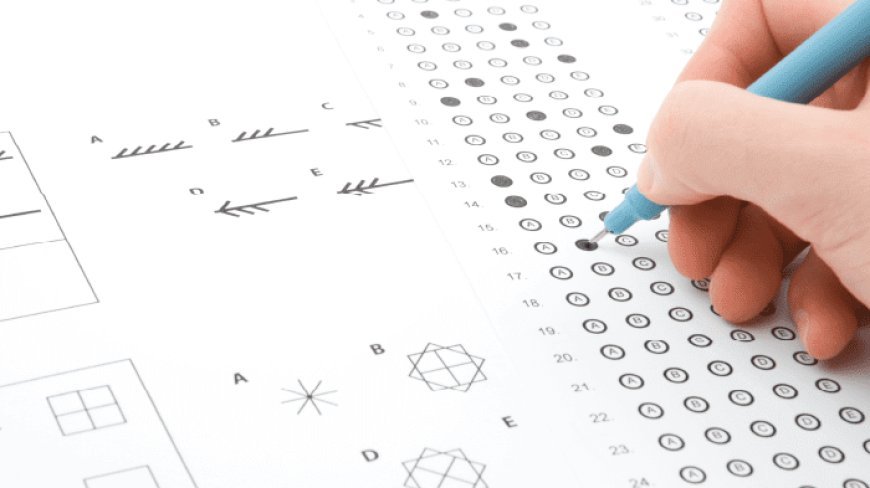
An IQ test is designed to measure certain cognitive abilities through standardized tasks. Depending on the assessment, these tasks can examine areas such as logical reasoning, pattern recognition, working memory, verbal reasoning, visual processing, and problem solving.
Traditional intelligence tests are developed using psychological measurement principles. They are typically standardized on groups of people so that individual performance can be compared with an appropriate reference population.
An online IQ test may use similar types of questions, but simply presenting puzzles online does not automatically make the test a scientifically valid IQ assessment.
This distinction is essential when considering how accurate are online iq tests
Free IQ Tests: What Can You Expect?
Free IQ tests are attractive because they allow users to try an assessment without paying anything. They can be useful for entertainment, curiosity, or practicing different types of reasoning problems.
However, the quality of free tests varies significantly.
Some free assessments are created by organizations that explain their methodology and provide information about scoring. Others are designed primarily to attract visitors, collect email addresses, promote subscriptions, or encourage users to purchase a detailed report.
A free test may therefore provide an interesting result without necessarily providing a scientifically established IQ measurement.
This does not mean every free IQ test is poor quality. Instead, users should examine the test itself rather than assuming that its lack of a fee makes it unreliable.
Paid IQ Tests: Are They More Accurate?
Paid tests may offer additional features, including detailed reports, explanations of answers, additional question sets, progress tracking, or more extensive assessments.
Some paid assessments may also be developed with greater attention to psychometric principles. However, payment alone does not guarantee accuracy.
A website can charge money for a test that has not been adequately validated. A professional-looking interface and an expensive report do not prove that the underlying assessment is scientifically sound.
Before paying, look for information about the test's development, standardization, reliability, validity, and intended purpose.
The most important question is not "How much does the test cost?" but "What evidence supports the score?"
Accuracy Depends on Standardization
One of the most important features of a credible intelligence assessment is standardization.
Standardization means that the test has been administered to an appropriate group of people and that the results have been analyzed to establish how scores should be interpreted.
For example, traditional IQ scales generally use an average score of 100. Individual scores are interpreted in relation to the performance of a relevant reference population.
If an online test simply creates a score based on the number of questions you answered correctly without explaining how that score relates to a standardized population, the result may not have the same meaning as a professionally developed IQ score.
When comparing free and paid tests, investigate whether either test provides meaningful information about its normative sample.
Reliability Matters Too
Reliability refers to the consistency of a measurement.
Suppose you take the same type of test twice under similar conditions. A reliable assessment should generally produce reasonably consistent results, although some variation is normal.
An online test with poorly constructed questions may produce substantially different results depending on which questions happen to appear. A more carefully designed assessment will generally have a stronger basis for producing consistent measurements.
When asking how accurate are online IQ tests, reliability is therefore just as important as the appearance of the test or the price of the final report.
Validity Is Different From Reliability
A test can be consistent without actually measuring what it claims to measure.
This is where validity becomes important.
Validity concerns whether an assessment actually measures the construct it claims to measure. If a website calls a collection of simple trivia questions an IQ test, a high level of consistency would not necessarily make it a valid measure of general cognitive ability.
A credible assessment should have evidence supporting its intended interpretation.
For users comparing free and paid options, this is one of the most important distinctions to understand. A reliable test is not automatically a valid IQ test.
Why Scores Can Differ Between Online Tests
It is normal for different IQ tests to produce different results.
Different assessments may emphasize different cognitive skills. One test might focus heavily on visual patterns, while another may include more verbal reasoning or working memory tasks.
The scoring systems and reference populations can also differ.
Your personal circumstances can affect results as well. Sleep, stress, distractions, motivation, familiarity with similar questions, and the environment in which you take the test can all influence performance.
Consequently, receiving a score of 115 on one online test and 125 on another does not necessarily mean that one test has discovered your "real" score.
The difference may reflect differences in test construction and testing conditions.
Free Versus Paid: A Practical Comparison
When comparing free and paid online IQ tests, consider several factors rather than focusing on price.
Cost: Free tests do not require payment, while paid tests may charge for access, scoring, or detailed reports.
Test length: Some free tests are extremely short. Paid assessments may provide more questions, although length alone does not determine quality.
Methodology: Look for clear information about how the assessment was developed and tested.
Standardization: Check whether the test uses an appropriate normative sample.
Scoring: A transparent scoring system is generally preferable to an unexplained number.
Purpose: Some tests are intended for entertainment, while others may attempt to provide a more serious cognitive estimate.
Privacy: Consider what information the website collects and how it uses your data.
Professional use: Neither a random free quiz nor an unvalidated paid test should automatically be treated as equivalent to a professionally administered psychological assessment.
Watch Out for Marketing Claims
Online IQ testing websites sometimes make strong claims about what their scores can tell you.
Be cautious if a website promises to reveal your exact intelligence level after only a few questions. A precise-looking score does not necessarily represent precise measurement.
Similarly, claims that a test can definitively identify genius-level intelligence, predict career success, or determine your overall potential should be treated carefully.
An IQ score is not a complete description of a person's abilities. Intelligence tests generally focus on particular cognitive functions and do not measure every factor that contributes to learning or achievement.
When a Free Test May Be Enough
A free online test may be perfectly suitable if your goal is entertainment or curiosity.
For example, you might enjoy solving pattern-recognition problems and want to see how you perform. In that situation, the experience can be valuable even if the resulting score is not a formal measurement.
Free tests can also help you become familiar with common reasoning question formats.
The important thing is to understand the limitations of the result and avoid treating it as an official psychological assessment.
When a Paid or Professional Assessment Makes More Sense
If you need an IQ score for an important decision, a professionally administered assessment is generally more appropriate than relying on an arbitrary online quiz.
Educational evaluations, psychological assessments, and other formal situations may require standardized instruments administered and interpreted by appropriately qualified professionals.
A professional can also consider factors that an automated website cannot easily evaluate, including testing conditions, behavioral observations, relevant background information, and the context in which the assessment is being used.
In these situations, the goal is not simply to obtain a number. The goal is to obtain a measurement that can be interpreted appropriately.
How to Choose an Online IQ Test
If you decide to take an online test, look beyond whether it is free or paid.
First, find out who developed the assessment. Then check whether the website explains its methodology. Look for information about reliability, validity, standardization, and the population used to establish scores.
You should also consider the number and variety of questions. A very short quiz may not provide enough information to support a precise estimate.
Finally, examine the website's claims. If it clearly explains the limitations of the test, that can be a positive sign. If it makes extraordinary claims without providing evidence, be cautious.
Final Thoughts
So, how accurate are online IQ tests when comparing free and paid options?
The answer depends on the individual test, not simply on whether you have to pay for it. Free tests can be entertaining and may provide a rough indication of performance on certain reasoning tasks. Paid tests may offer more detailed assessments and reports, but payment does not automatically make a test scientifically valid.
The strongest indicators of quality are factors such as standardization, reliability, validity, appropriate scoring, and transparent methodology.
If you are simply curious about your reasoning abilities, a free or inexpensive online assessment can be an enjoyable experience. If you need a dependable psychological measurement for an important purpose, however, a professionally developed and administered assessment is a more appropriate option.
Most importantly, treat an online IQ score as one piece of information rather than a complete definition of your intelligence. A single number cannot capture every skill, experience, or ability that contributes to how a person learns, solves problems, creates ideas, and navigates the world.
What's Your Reaction?
 Like
0
Like
0
 Dislike
0
Dislike
0
 Love
0
Love
0
 Funny
0
Funny
0
 Angry
0
Angry
0
 Sad
0
Sad
0
 Wow
0
Wow
0