























Hyaluronic Acid for Skin: Benefits, Uses & How to Use It (2026 Guide)
Learn how hyaluronic acid hydrates skin, its benefits, and how to use a hyaluronic acid serum for dry skin, step by step. Includes FAQs and tips.
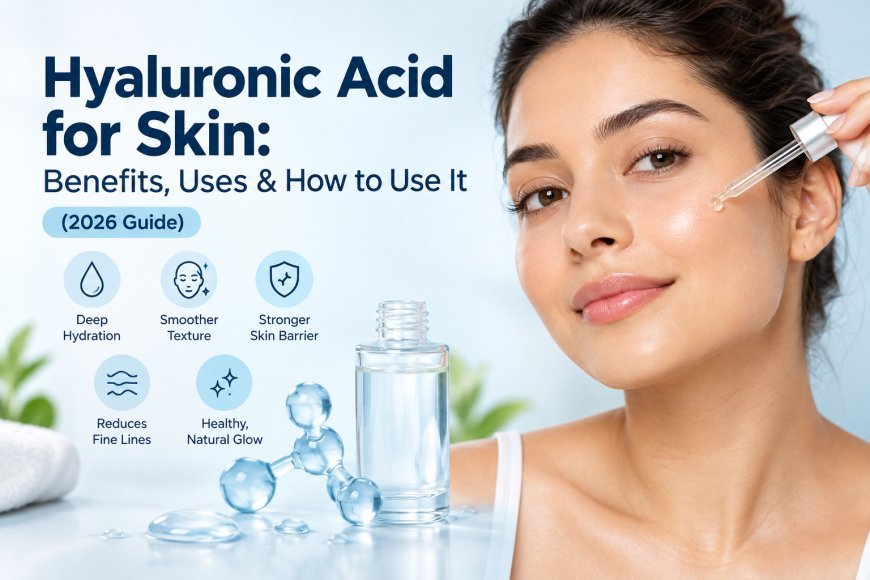
Hyaluronic acid is a humectant that attracts water and holds it in the outer layers of your skin, making it look plumper, smoother and more comfortable. It works best when applied to slightly damp skin after cleansing and sealed in with a moisturizer. If your skin often feels tight or flaky, a hyaluronic acid serum for dry skin is one of the simplest and gentlest ways to bring hydration back.
What Is Hyaluronic Acid?
Hyaluronic acid (HA) is a substance your body already makes. It is found in the skin, joints and eyes, where it helps tissues hold water. Natural levels fall with age, and sun exposure, pollution, dry air and harsh cleansers can further weaken your skin's ability to hold moisture.
On ingredient lists, HA often appears as sodium hyaluronate, a stable salt form that skin absorbs easily. It is often cited as able to bind up to 1,000 times its weight in water.
How Hyaluronic Acid Works on Skin
HA does not add oil. It adds water. Good hydration depends on two things: how much water reaches the stratum corneum (the outermost skin layer) and how well your skin barrier keeps it there.
HA handles the first job by drawing water in. Barrier lipids such as ceramides handle the second by limiting water loss. This is why HA alone can disappoint in air-conditioned or dry environments, and why a hyaluronic acid serum for dry skin works best when paired with barrier-supporting ingredients and a moisturizer.
Key Benefits of Hyaluronic Acid for Skin
- Instant hydration: Skin feels softer and looks plumper within minutes.
- Smoother texture: Hydrated skin reflects light more evenly, so it looks fresher.
- Softer-looking fine lines: Dehydration lines can look less obvious. The effect is temporary and needs consistent use.
- Lightweight feel: Serums are non-greasy and layer easily under moisturizer and sunscreen.
- Broad suitability: HA is generally well tolerated by dry, combination, normal and oily skin.
Dry Skin vs Dehydrated Skin
Dry skin lacks oil and is a skin type. Dehydrated skin lacks water and is a temporary condition, so even oily skin can be dehydrated. Signs include tightness, dullness and fine lines that show when you pinch the skin. HA helps both, but very dry skin also needs ceramides and a richer moisturizer.
How to Use Hyaluronic Acid Serum
- Cleanse gently with a mild, non-stripping cleanser.
- Leave skin slightly damp. HA needs water to hold.
- Apply 2–3 drops to the face and neck.
- Pat, don't rub, until absorbed.
- Seal with moisturizer to lock in hydration.
- Add sunscreen in the morning. Hydrated skin still needs UV protection.
Use it once or twice daily. Patch test first if your skin is sensitive.
Common Mistakes to Avoid
- Applying HA to bone-dry skin in dry weather.
- Skipping moisturizer after the serum.
- Layering too many products, which can irritate skin.
- Expecting HA alone to repair a damaged barrier.
What Pairs Well With Hyaluronic Acid?
- Ceramides: rebuild the barrier that keeps water in.
- Panthenol (vitamin B5): soothes and supports moisture retention.
- Vitamin C: can be layered with HA, in the recommended order.
- Retinol: HA can help offset dryness, but introduce retinol slowly.
Repair First, Then Treat
More products do not mean better skin. A Repair First approach rebuilds the barrier, calms sensitivity and restores comfort before stronger treatments are added. The Power of Less builds on this: a few essential actives in precise ratios, rather than a crowded shelf, to avoid over-treatment.
Personalization makes this easier. Skin PAL uses AI skin analysis to generate a Skin Score and a personalized routine. Its report explains your skin condition, the likely causes, suggested ingredients, your routine and lifestyle advice, and it tracks your progress over time instead of giving a one-time snapshot.
H20 Ultra Hydration Serum: Benefits and Uses
Skin PAL H20 Ultra Hydration Serum (20ml) is a hyaluronic acid and ceramide serum designed for dry, rough and dull-looking skin. Rather than relying on HA alone, it combines hydration with barrier support.
What's inside
- Hyaluronic acid (sodium hyaluronate): draws water into the skin for instant hydration.
- 1% Ceramide NP: replenishes lipids to help skin hold moisture longer.
- Provitamin B5 (panthenol): soothes and supports moisture retention.
- 3% AcquaCell™ Moisturizing Factor: helps replenish the skin's natural hydrating elements.
- Supporting ingredients: sodium PCA, glycerin, allantoin and dipotassium glycyrrhizinate.
Benefits
- Instant and lasting hydration for dehydrated skin
- Softer, smoother, plumper-looking skin
- Support for the skin barrier, not only surface moisture
- Lightweight, non-greasy texture for daily use
- A simple formula with no added alcohol, silicone, mineral oil, parabens or SLS/SLES
Best suited for
- Dry, tight or rough skin
- Dehydrated or dull-looking skin
- Sensitive skin needing a simple routine (patch test first)
- Oily or combination skin that still feels dehydrated
How to use H20
- Cleanse your face.
- Apply 2–3 drops to slightly damp skin.
- Pat gently over face and neck.
- Follow with moisturizer.
- Use morning and evening, and add sunscreen by day.
Unopened, the serum lasts up to 3 years. Once opened, use it within 6 months and store it away from heat and direct sunlight. It is formulated as dermatologist-reviewed skincare and made in Taiwan.
When to See a Dermatologist
Hyaluronic acid supports everyday hydration but does not treat skin disease. If you have severe dryness, persistent redness, itching, cracking or eczema-like patches, or a reaction that does not settle, consult a dermatologist.
Frequently Asked Questions
What does hyaluronic acid do for the face?
It attracts and holds water in the outer skin layers, helping skin feel softer, smoother and more hydrated. It can also make dryness-related fine lines look less noticeable.
Can I use hyaluronic acid every day?
Yes. It is generally suitable for daily use, morning and night, after cleansing and before moisturizer.
Should I apply hyaluronic acid on wet or dry skin?
Apply it to slightly damp skin, then seal with moisturizer. On fully dry skin in dry air, it may feel less comfortable.
Can oily or acne-prone skin use hyaluronic acid?
Yes. Oily skin can still be dehydrated. A lightweight serum adds water without heaviness, though it does not treat acne.
Is H20 Ultra Hydration Serum suitable for sensitive skin?
Its formula is simple and free of added alcohol and silicone, but reactions vary. Patch test first and introduce it gradually.
How often should I use H20 Ultra Hydration Serum?
Use it twice daily, after cleansing and before moisturizer.
The Bottom Line
Hyaluronic acid is one of the most reliable hydrating ingredients, but it works best in a simple routine: cleanse, apply to damp skin, moisturize and protect from the sun. Look for formulas that support the barrier as well as hydrate, as H20 does with ceramide NP and panthenol.
What's Your Reaction?
 Like
0
Like
0
 Dislike
0
Dislike
0
 Love
0
Love
0
 Funny
0
Funny
0
 Angry
0
Angry
0
 Sad
0
Sad
0
 Wow
0
Wow
0