























How Can Poor Lead Routing Waste Paid Enquiries Before the Right Salesperson Sees Them?
Learn how poor lead routing can waste paid enquiries before the right salesperson sees them and how faster assignment, clear rules, lead scoring, and follow-up processes can improve conversions.
Paid advertising can generate a qualified enquiry at the right cost, but the opportunity may still be lost before a meaningful sales conversation begins.
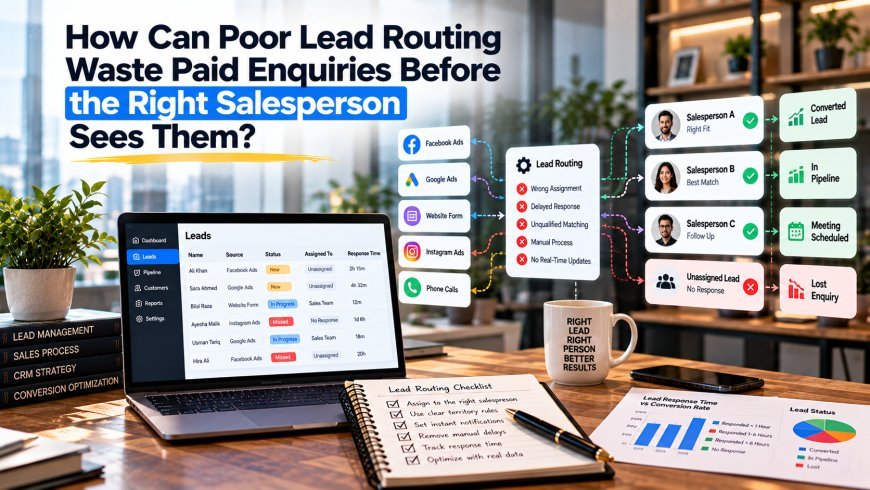
The form is submitted successfully, yet the lead enters a shared inbox that nobody checks regularly. It may be assigned to an unavailable representative, sent to the wrong department, or left inside a CRM without a clear owner. By the time the correct person sees it, the prospect may have contacted a competitor or lost interest.
Lead routing for paid campaigns is the process of sending each new enquiry to the appropriate salesperson, team, location, or follow-up system. It connects marketing activity with the people responsible for turning that interest into revenue.
A complete customer acquisition strategy should therefore consider what happens immediately after the advertising conversion.
What Is Lead Routing for Paid Campaigns?
Lead routing uses predetermined rules to decide where a new enquiry should go and who should respond.
The routing decision may be based on:
· Required product or service
· Prospect location
· Available budget
· Company size
· Industry
· Preferred language
· Lead source
· Purchase timeline
· Existing customer status
· Sales representative availability
For example, an enquiry about a business service may be directed to a B2B specialist, while a consumer enquiry is assigned to another team. A prospect from Karachi may go to one branch and a customer from Lahore to another.
The objective is simple: every suitable lead should reach someone capable of providing a relevant and timely response.
Why Do Paid Leads Get Lost After Form Submission?
Many businesses invest heavily in advertising but depend on an informal process after the form is completed.
Notifications may be sent to one manager who manually forwards each enquiry. Leads may remain in a spreadsheet until someone reviews them. Several salespeople may assume that another colleague has responded.
Common routing failures include:
· No assigned lead owner
· Notifications sent to inactive email accounts
· Duplicate leads delivered to several representatives
· Enquiries assigned outside working hours
· Leads sent to the wrong location
· Missing contact information
· CRM integrations that stop working
· No process for unresponsive sales representatives
These failures are difficult to see inside an advertising dashboard. The platform records a completed form and reports a successful conversion, even when nobody contacts the prospect.
How Does Poor Routing Affect Lead Quality Reports?
Poor routing can make good advertising appear ineffective.
Suppose a campaign produces 100 relevant enquiries. If 30 are never contacted and another 20 receive late or unsuitable responses, the sales team may report that the leads are weak.
However, the actual problem is not necessarily the audience or advertisement. Half of the opportunities were never given an effective sales experience.
This creates a harmful cycle:
1. Marketing generates leads.
2. Routing failures reduce contact and conversion rates.
3. Sales reports poor lead quality.
4. Marketing changes targeting or creative.
5. The routing problem remains unchanged.
6. The new campaign produces the same disappointing outcome.
Businesses should examine response and assignment data before deciding that a paid campaign is attracting the wrong audience.
Which Information Should Be Used for Routing?
Lead forms should collect enough information to support useful assignment without becoming unnecessarily long.
Service or Product Required
This is often the most important routing field. It ensures that the lead reaches someone who understands the relevant offer.
Geographic Location
Location matters when the business has branches, territories, service areas, or local sales representatives.
Customer Type
A company may handle individual customers, small businesses, and enterprise accounts differently. Identifying the customer type can improve the relevance of the first conversation.
Budget or Project Size
Higher-value opportunities may require a senior representative. Smaller enquiries may be managed through another process or service package.
Purchase Timeline
A prospect planning to begin immediately may require faster contact than someone researching a project for next year.
The form should explain why important information is being requested. Clear questions can also help prospects provide more accurate answers.
Should Leads Be Assigned Automatically?
Automation can improve speed and consistency, particularly when the business receives enquiries throughout the day.
Automated routing can:
· Assign leads instantly
· Balance workload across representatives
· Match locations or services
· Notify the correct salesperson
· Create CRM tasks
· Trigger confirmation messages
· Escalate leads that remain untouched
However, automated routing depends on accurate rules and reliable data.
If a form field is unclear or a territory rule is outdated, leads may be assigned incorrectly at scale. Businesses should monitor the system rather than assuming that every automation continues working properly.
A knowledgeable paid advertising specialist should also verify that campaign tracking and downstream lead processes support the same business objective.
What Is Round-Robin Lead Distribution?
Round-robin routing assigns new leads to sales representatives in sequence. The first lead goes to one person, the second to another, and the process continues through the team.
This method can distribute volume evenly, but equal distribution is not always the same as effective distribution.
Representatives may have different skills, schedules, territories, and workloads. One salesperson may be handling several complex opportunities while another has more availability.
A stronger system may combine round-robin distribution with qualification rules. For example, normal enquiries can be distributed evenly, while high-value opportunities are assigned to a specialist.
How Can Businesses Route Leads Outside Working Hours?
Paid campaigns may generate enquiries at any time, including evenings, weekends, and holidays.
A prospect submitting a form outside business hours should receive an immediate confirmation that explains:
· The enquiry was received
· When a response can be expected
· What will happen next
· How to provide additional information
· Whether urgent support is available
The lead should also be assigned automatically for follow-up when the team becomes available.
If the business advertises an immediate consultation or urgent service, it must have the operational capacity to support that promise. Otherwise, the advertisement creates expectations the sales process cannot meet.
What Should Happen When a Salesperson Does Not Respond?
Every routing system needs an escalation rule.
If the assigned representative does not review or contact the lead within a defined period, the opportunity should be reassigned or brought to a manager’s attention.
Useful escalation rules may include:
· Alert after 15 minutes
· Reassignment after one hour
· Priority notification for high-value enquiries
· Daily report of untouched leads
· Manager review of overdue tasks
The appropriate timing depends on the business and the urgency of the enquiry.
Escalation is not designed to punish employees. It protects opportunities when someone is unavailable, overloaded, or facing a technical problem.
Which Metrics Reveal Lead Routing Problems?
Businesses should track what happens between form submission and the first meaningful conversation.
Important measurements include:
· Time to lead assignment
· Time to first response
· Percentage of leads contacted
· Number of contact attempts
· Leads assigned incorrectly
· Leads without an owner
· Appointments booked
· Qualified opportunities
· Sales conversion rate
· Revenue by lead source
These metrics should be compared by campaign, service, representative, location, and time of day.
Reviewing complete campaign results and customer outcomes can help businesses understand why advertising performance should be connected with downstream sales results.
How Can Marketing and Sales Improve Routing Together?
Marketing understands the advertisement, audience, and offer that generated the enquiry. Sales understands the information required to have a productive conversation.
Both teams should agree on:
· What defines a qualified lead
· Which form fields are necessary
· Who owns each lead type
· How quickly leads should be contacted
· When leads should be reassigned
· How outcomes should be recorded
· How sales feedback reaches marketing
This shared process prevents marketing from optimizing for conversions that sales cannot use.
It also helps sales distinguish between genuine audience problems and failures caused by delayed or incorrect assignment.
How Often Should Routing Rules Be Reviewed?
Routing rules should be checked whenever the business changes its services, sales territories, team structure, working hours, or qualification criteria.
Regular testing should confirm that:
· Forms submit correctly
· Contact details enter the CRM
· Notifications reach the correct people
· Assignment rules work as intended
· Duplicate enquiries are identified
· Escalation alerts are active
· Advertising source data remains attached
A simple test enquiry can reveal technical problems before they affect a large number of paid leads.
Final Thoughts
Paid advertising does not end when a prospect completes a form. The opportunity still needs to reach the right person at the right time.
Poor routing can waste qualified enquiries, reduce conversion rates, and make effective campaigns appear unsuccessful. It can also create an inconsistent customer experience when prospects are transferred repeatedly or contacted by someone who cannot address their needs.
Lead routing for paid campaigns connects advertising, CRM systems, sales ownership, and response standards. A clear routing process ensures that each enquiry has an owner, relevant context, and a defined next step.
Before increasing advertising spend, businesses should confirm that every new lead can move quickly from the campaign to the person most capable of helping them.
Frequently Asked Questions
What is lead routing?
Lead routing is the process of assigning a new enquiry to the correct salesperson, department, location, or automated follow-up system.
Should every lead be assigned instantly?
Where possible, assignment should happen immediately. The actual personal response time can depend on urgency, working hours, and lead priority.
Is round-robin routing suitable for every business?
No. It works well when representatives have similar skills and workloads, but specialised products, territories, or high-value leads may require rule-based assignment.
How can a company prevent leads from being ignored?
Assign a clear owner, set response-time expectations, monitor untouched leads, and create automatic escalation or reassignment rules.
Can poor lead routing increase customer acquisition cost?
Yes. If paid enquiries are not contacted or are assigned incorrectly, fewer leads become customers, increasing the effective cost of acquisition.
What's Your Reaction?
 Like
0
Like
0
 Dislike
0
Dislike
0
 Love
0
Love
0
 Funny
0
Funny
0
 Angry
0
Angry
0
 Sad
0
Sad
0
 Wow
0
Wow
0