

























How Custom Office Door Name Plates Improve Workplace Navigation
Custom office door name plates allow businesses to provide information that is specific to each room. Names, job titles, departments, or room numbers can be arranged in a consistent format.

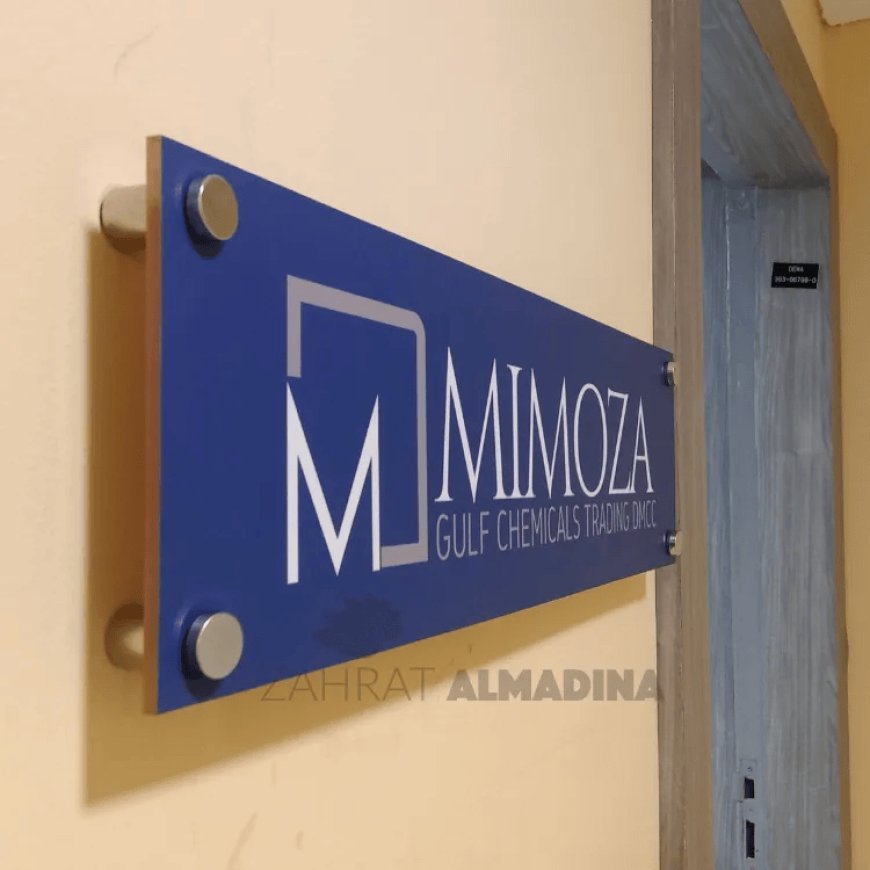
Finding a particular office inside a large building can be difficult when several rooms have similar doors and no clear identification. Employees may know the layout, but visitors, clients, and new staff members often need simple visual information to reach the right place.
Custom office door name plates provide a straightforward solution. They identify people, departments, meeting rooms, and other spaces while helping create a more organised workplace. These signs can be designed in different sizes, materials, and layouts depending on the type of office and the information that needs to be displayed.
A good door sign does not need a complicated design. Clear wording, suitable lettering, and proper placement are usually more important for everyday use.
1. The Purpose of Office Door Name Plates
Door name plates provide information at the exact point where visitors need it. A sign beside a door can identify an employee, manager, department, meeting room, or service area.
This becomes particularly useful in large offices where many rooms are located along the same corridor. Instead of asking for directions, visitors can read the signs and continue towards their destination.
The information can also be changed according to the function of the room. For example, one office may display an employee's name, while another may simply identify a meeting room.
2. How Custom Office Door Name Plates Support Navigation
Good workplace navigation depends on information being available at the right locations. Door signs form one part of a wider wayfinding system that can include directional arrows, floor numbers, reception signs, and room markers.
Custom office door name plates allow businesses to provide information that is specific to each room. Names, job titles, departments, or room numbers can be arranged in a consistent format.
When similar signs are installed throughout a building, visitors can recognise them as navigation points and understand where to look for information.
3. Choosing Information That Visitors Need
The amount of information on a door sign should depend on its purpose. A sign containing too many details may become difficult to read.
For an individual office, the person's name and position may be enough. A meeting room might require only the room name and number. A department could use its full title along with a simple directional indicator.
Before producing the signs, businesses can create a list of rooms and decide what information each location actually requires. This helps prevent unnecessary text and keeps the overall system consistent.
4. Selecting Materials for Different Office Interiors
Materials influence the appearance and practical performance of a name plate. Acrylic is often used in contemporary offices because it has a smooth surface and can support printed or raised lettering.
Metal signs can provide a more formal appearance, while wood or laminate may suit interiors with warmer design elements. Printed rigid boards can also be used where a simple and economical identification system is required.
The choice should consider the office environment, cleaning requirements, expected use, and existing interior finishes.
5. How Typography Affects Readability
The main purpose of a door sign is to communicate information, so readability should remain a priority. Letter size, font style, spacing, and contrast all affect how quickly someone can understand the message.
A simple typeface is generally easier to read, particularly from a corridor. Excessive decorative elements can make short words and names harder to recognise.
Consistent typography across several rooms also creates a more organised appearance and helps visitors recognise related signs throughout the building.
6. Using Colour and Contrast Effectively
Colour can help separate information and improve visibility. A strong contrast between the lettering and background usually makes a sign easier to read.
The colours used should also fit the surrounding interior. A sign that blends too closely into a wall or door may become difficult to notice.
Businesses with multiple departments may use subtle variations to distinguish areas, although excessive colour differences can make a building look inconsistent. A limited and carefully planned colour scheme is often easier to manage.
7. The Importance of Correct Sign Placement
A door sign needs to be positioned where people can see it before they enter the room. Signs placed too high, too low, or behind an open door may not provide useful information.
The surrounding furniture and corridor layout should also be considered. A clear area beside the door can provide better visibility than a position hidden by fixtures or decorations.
Mounting methods depend on the surface. Adhesive systems may work for lightweight displays, while heavier materials may require mechanical fixings. Proper installation helps keep the sign level and secure.
8. How Door Signs Can Change With Office Needs
Workplaces are not always static. Employees move between departments, room functions change, and organisations may rearrange their office layouts.
A flexible identification system makes these changes easier to manage. Replaceable inserts or modular name plates can allow individual information to be updated without replacing every sign.
This can be useful in shared offices, co-working spaces, and organisations where staff or room assignments change regularly.
9. The Role of Name Plate Printing in Dubai
Businesses have different requirements when preparing identification signs, particularly when several rooms need to follow the same design.
Name plate printing in Dubai can involve different production methods depending on the chosen material, lettering style, finish, and intended location. Artwork needs to be checked carefully before production to ensure names, titles, room numbers, and other information are accurate.
For larger projects, preparing a complete list of required signs in advance can help maintain consistency and reduce mistakes during production.
10. Creating a Consistent Office Identification System
A single door sign may solve one identification problem, but a complete system can make an entire workplace easier to navigate. Door plates can work alongside reception displays, directional signs, room numbers, and floor markers.
Using similar dimensions, typography, materials, and mounting positions helps visitors understand that the signs belong to the same system.
Companies such as Zahrat Al Madina Printing may be referenced in discussions about office identification products and signage production in Dubai. Such projects can include different sign formats designed to suit specific rooms and workplace layouts.
Final Thoughts
Office door signs are simple communication tools, but they can make everyday navigation much easier. Visitors can identify rooms without repeatedly asking for directions, while employees can quickly locate departments, meeting spaces, and work areas.
The most useful systems focus on readable information, appropriate materials, consistent design, and practical placement. Flexible formats can also make future updates easier when office arrangements change.
When door identification works together with other directional signs, it creates a clearer environment where people can understand their surroundings and reach the right destination with less confusion.
What's Your Reaction?
 Like
0
Like
0
 Dislike
0
Dislike
0
 Love
0
Love
0
 Funny
0
Funny
0
 Angry
0
Angry
0
 Sad
0
Sad
0
 Wow
0
Wow
0