













How Smart IT Hardware Procurement Can Reduce Business Costs
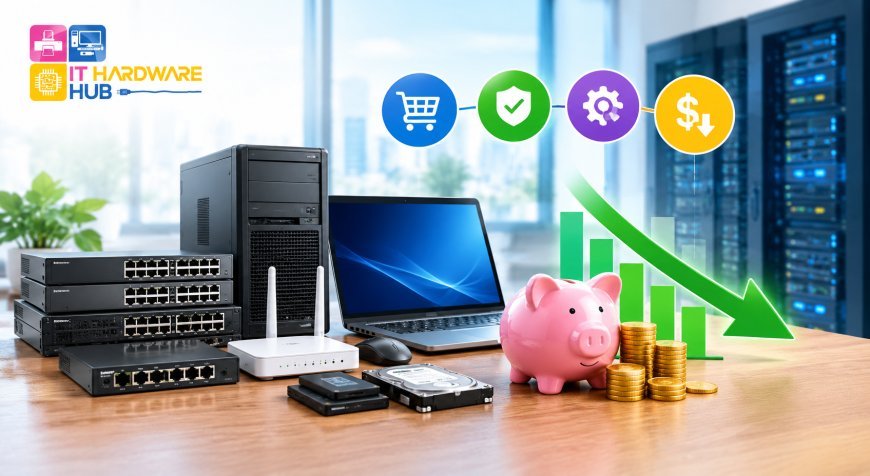
Technology plays an essential role in modern business operations, but purchasing and maintaining IT equipment can put considerable pressure on company budgets. From computers and servers to networking devices and storage systems, businesses need reliable hardware to maintain productivity and support daily operations. However, purchasing equipment without a clear strategy can lead to unnecessary expenses, compatibility issues, and frequent replacements.
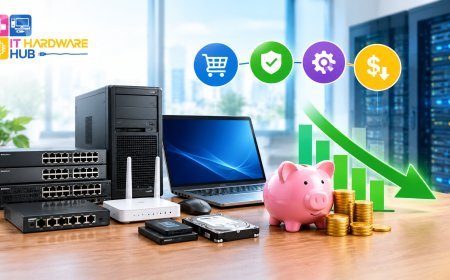
Smart IT Hardware Procurement helps businesses make informed purchasing decisions while controlling costs and maintaining operational efficiency. Instead of focusing exclusively on the lowest purchase price, companies can evaluate long-term value, performance, reliability, and scalability. A well-planned procurement strategy allows organizations to invest in the right technology without exceeding their budgets.
1. Evaluate Business Requirements Before Purchasing
One of the most effective ways to reduce IT expenses is to understand what the business actually needs before purchasing equipment. Buying high-performance hardware for basic tasks or investing in unnecessary features can result in wasted resources.
Businesses should assess their existing infrastructure, employee requirements, software workloads, and future technology needs.
Match Hardware Specifications to Workloads
Different departments require different hardware configurations. For example, administrative employees may only need standard desktop computers or laptops with sufficient memory and storage. Meanwhile, graphic designers, developers, and engineering teams may require powerful processors, dedicated graphics cards, and additional RAM.
Similarly, companies running databases, business applications, or virtualization environments should evaluate server hardware based on processing requirements, memory capacity, storage performance, and network connectivity.
Matching specifications to actual workloads prevents overspending while ensuring employees have the tools they need.
2. Consider Total Cost of Ownership Instead of Purchase Price
A low upfront price does not always represent the most affordable purchasing decision. Businesses should consider the total cost of ownership (TCO), which includes all expenses associated with acquiring, operating, maintaining, and eventually replacing equipment.
For example, an inexpensive computer may require frequent repairs, consume more electricity, or become outdated sooner than a slightly more expensive business-grade model.
Understand Long-Term Hardware Expenses
Before making a purchase, evaluate:
-
Initial equipment and installation costs.
-
Warranty coverage and technical support.
-
Maintenance and replacement expenses.
-
Electricity consumption and cooling requirements.
-
Software and licensing compatibility.
-
Expected useful lifespan and upgrade options.
A business purchasing several servers should also consider power consumption, cooling infrastructure, backup solutions, and ongoing maintenance. Evaluating these factors provides a more realistic understanding of long-term IT spending.
3. Standardize IT Equipment Across the Organization
Using too many different hardware models can increase operational complexity and maintenance expenses. When employees use different computers, processors, operating systems, and accessories, IT teams may face additional challenges with troubleshooting, software compatibility, and spare parts management.
Hardware standardization helps simplify procurement and reduce these problems.
Benefits of Standardization
Businesses can select a limited range of approved computers, laptops, monitors, and networking devices based on employee roles. This makes it easier to manage warranties, maintain spare equipment, and purchase replacement components.
Standardization can also improve IT support efficiency because technicians become familiar with fewer hardware configurations.
For growing businesses, establishing standard hardware specifications creates a more organized purchasing process and makes future equipment upgrades easier to manage.
4. Plan Bulk Purchases and Build Supplier Relationships
Purchasing IT equipment in bulk can create opportunities for better pricing, consistent product availability, and simplified procurement. Businesses replacing multiple computers or expanding their office infrastructure may benefit from consolidating purchases rather than ordering individual devices whenever a requirement arises.
However, bulk purchasing should be based on realistic demand forecasts. Buying excessive inventory can tie up capital, increase storage requirements, and create risks of equipment becoming outdated.
Developing long-term relationships with dependable suppliers can also improve purchasing efficiency. Businesses should compare product availability, warranty terms, technical support, return policies, and pricing before selecting a supplier.
For organizations researching equipment options, IT Hardware Hub provides access to a range of computer hardware, servers, networking equipment, storage devices, printers, and accessories, helping buyers explore products relevant to their business technology requirements.
5. Choose Scalable Hardware to Avoid Premature Replacements
Business requirements change as organizations hire employees, expand operations, and adopt new applications. Purchasing equipment that only meets current requirements may result in expensive replacements when workloads increase.
Scalable hardware allows businesses to expand their infrastructure without completely rebuilding existing systems.
Invest in Upgrade-Friendly Components
When purchasing computers and servers, consider available RAM slots, storage expansion options, processor compatibility, and connectivity features.
For example, a business server with additional memory capacity and expandable storage can support increased workloads as the company grows. Similarly, selecting computers with upgrade-friendly components may extend their useful lifespan.
Networking equipment should also support expected traffic levels and future expansion. Choosing switches, routers, and wireless access points with suitable capacity can prevent unnecessary infrastructure upgrades.
6. Use Lifecycle Management to Control Replacement Costs
Replacing equipment too early wastes resources, while keeping outdated hardware for too long can increase maintenance expenses and security risks.
A structured IT asset lifecycle management process helps businesses determine when equipment should be maintained, upgraded, reassigned, or replaced.
Organizations should maintain an inventory containing hardware specifications, purchase dates, warranty information, assigned users, and maintenance history.
Regular reviews help IT managers identify underused equipment, aging devices, and hardware that no longer meets performance or security requirements.
Businesses can also consider redeploying suitable equipment between departments or using refurbished hardware from reputable suppliers when it meets performance, reliability, and warranty requirements.
7. Avoid Common IT Procurement Mistakes
Even well-funded organizations can waste money through poor purchasing decisions. Some common mistakes include:
-
Buying equipment without evaluating compatibility.
-
Prioritizing low prices over reliability and warranty coverage.
-
Purchasing more performance than employees actually need.
-
Ignoring future expansion requirements.
-
Failing to compare multiple suppliers.
-
Overlooking maintenance and replacement planning.
A documented procurement policy can help prevent these issues. Establishing approval procedures, technical specifications, supplier evaluation criteria, and purchasing budgets makes IT spending more predictable.
Conclusion
Smart IT hardware procurement is not simply about finding inexpensive equipment. It involves understanding business requirements, evaluating total ownership costs, standardizing devices, selecting reliable suppliers, and planning for future growth.
By adopting a strategic purchasing approach, businesses can reduce unnecessary expenses, improve operational efficiency, and maximize the value of their technology investments. Whether a company is upgrading office computers, expanding server infrastructure, or improving network connectivity, thoughtful procurement decisions can create long-term financial benefits while supporting reliable business operations.
What's Your Reaction?
 Like
0
 Dislike
0
 Love
0
 Funny
0
 Angry
0
 Sad
0
 Wow
0