























Key Steps in the Bill Discounting Process to Unlock Business Finance
Explore the bill discounting process, from invoice verification to funding, and learn how businesses can unlock working capital and improve cash flow.

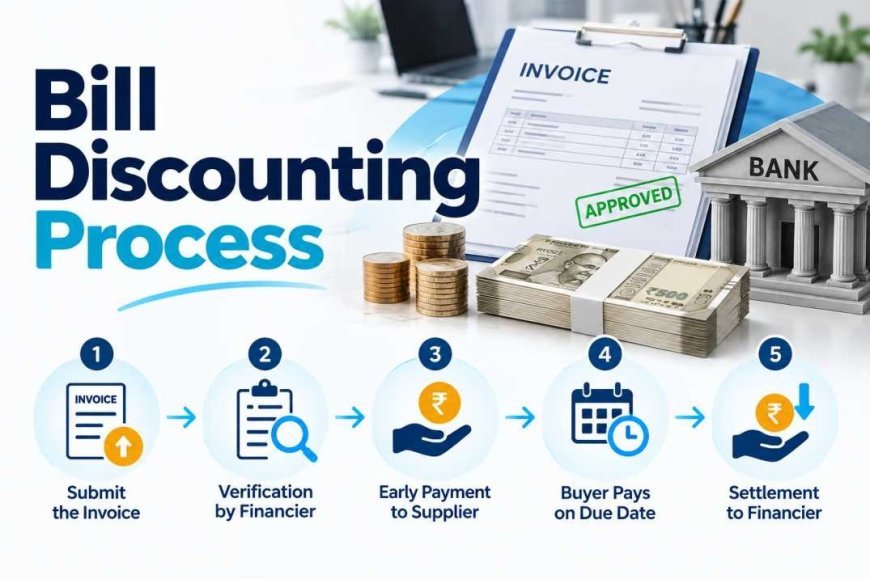
Access to timely finance is essential for businesses seeking to maintain stable operations, manage expenses, and achieve sustainable growth. However, delayed customer payments can create cash flow problems, particularly for Micro, Small, and Medium Enterprises (MSMEs). When money remains tied up in unpaid invoices, businesses may struggle to purchase inventory, pay suppliers, or fulfil new orders.
The bill discounting process offers a practical financing option that enables businesses to access funds against eligible unpaid bills or invoices before their due dates. By understanding the key steps involved, businesses can simplify financing applications, improve working capital management, and make informed financial decisions.
What Is the Bill Discounting Process?
Bill discounting is a short-term financing arrangement in which a business receives an advance against an eligible bill or invoice from a bank or financing provider. The provider deducts applicable discount charges and fees before releasing the funds.
For example, a business issues an invoice worth ₹4,00,000 to a customer with a payment term of 90 days. Rather than waiting three months for payment, the supplier may apply for bill discounting. If approved, the supplier receives an agreed amount after applicable deductions and can use the funds to meet immediate business requirements.
The financing amount, approval conditions, charges, and responsibilities depend on the provider and the agreement between the parties.
Key Steps in the Bill Discounting Process
1. Identify Eligible Outstanding Invoices
The first step is to identify unpaid invoices that may qualify for financing. Businesses should review their accounts receivable and select invoices supported by genuine commercial transactions.
Important details include the invoice amount, buyer information, payment terms, issue date, and maturity date. Accurate records help businesses identify suitable invoices and reduce delays during verification.
2. Verify the Buyer's Payment Obligation
The financing provider may require evidence that the buyer acknowledges the payment obligation. Depending on the arrangement, this could include an accepted bill of exchange, a verified invoice, a purchase order, proof of delivery, or written confirmation.
Verifying the underlying transaction helps reduce disputes and supports a smoother application process.
3. Choose the Right Financing Provider
Businesses can approach banks, financial institutions, or eligible digital financing platforms offering bill discounting or invoice financing.
Before selecting a provider, compare financing rates, processing fees, eligibility criteria, documentation requirements, and expected processing times. Businesses should also check whether the provider accepts invoices from their particular industry or buyer category.
Selecting a suitable provider can help balance the need for timely funding with the overall cost of financing.
4. Prepare the Required Documents
Complete documentation is essential for efficient verification. Depending on the provider, businesses may need to submit:
-
Business registration documents
-
PAN and applicable GST registration details
-
KYC documents of the business and authorised signatories
-
Outstanding invoices or bills
-
Purchase orders and proof of delivery, where applicable
-
Buyer acceptance or payment confirmation
-
Bank statements and financial records
Preparing these documents in advance can reduce administrative delays and help the provider assess the application more efficiently.
5. Submit the Financing Application
After identifying eligible invoices and preparing the required paperwork, the business submits its application through the provider's designated process.
The application typically includes details about the supplier, buyer, invoice value, payment due date, and requested financing amount. The provider may request additional information before proceeding with the assessment.
6. Complete Credit and Invoice Verification
The financing provider evaluates the authenticity of the invoice and assesses the associated financial risks. Depending on the product, this may involve reviewing the buyer's creditworthiness, the supplier's financial position, payment history, transaction details, and supporting documentation.
Approval depends on the provider's eligibility criteria and risk assessment. Businesses should ensure that all information submitted is accurate and consistent.
7. Review Financing Charges and Contractual Terms
Once the application has been assessed, the provider communicates the proposed advance amount and applicable charges.
Businesses should review the discount rate, processing fees, taxes, other applicable costs, and the net amount they will receive. They should also understand the settlement arrangements and whether the agreement is with recourse or without recourse.
In a with-recourse arrangement, the supplier may remain liable if the buyer fails to pay. A without-recourse arrangement may transfer certain buyer-default risks to the provider, subject to the contract's terms and exclusions.
8. Receive Funds and Manage Working Capital
After approval and completion of the required formalities, the provider releases the agreed funds to the business.
The money can be used to purchase raw materials, replenish inventory, pay suppliers, cover salaries, manage operating expenses, or fulfil new customer orders.
Businesses should allocate the funds according to their immediate priorities and monitor whether the financing improves cash flow enough to justify its cost.
9. Complete Settlement at Maturity
When the invoice reaches its due date, payment is settled according to the financing agreement. Depending on the arrangement, the buyer may pay the financing provider directly or follow another specified settlement process.
Businesses should monitor payment status, maintain transaction records, and understand their obligations if the buyer delays payment or defaults.
Benefits of Bill Discounting for Business Finance
Improved Cash Flow
Bill discounting helps businesses access funds tied up in eligible unpaid invoices without waiting until the original payment date. This can reduce short-term cash shortages and support uninterrupted operations.
Better Working Capital Management
Businesses can use the funds to pay suppliers, purchase inventory, manage payroll, and meet recurring expenses. This can help maintain a better balance between incoming payments and outgoing financial commitments.
Support for Business Expansion
Access to working capital can help businesses accept new orders, increase production, and meet growing customer demand without relying entirely on cash reserves.
Reduced Payment Cycle Pressure
Long customer payment cycles can create financial uncertainty. Bill discounting may help bridge the gap between completing a sale and receiving payment, making financial planning more manageable.
Stronger Supplier Relationships
Timely payments to suppliers can support business relationships, improve purchasing continuity, and potentially create opportunities for more favourable commercial terms.
Common Mistakes to Avoid
Businesses should avoid overlooking financing charges, submitting incomplete documents, or accepting contractual terms without understanding their obligations.
Other common mistakes include financing disputed invoices, relying on uncertain buyer payments, and using short-term funding without a clear repayment or settlement plan.
Comparing providers, maintaining accurate financial records, and evaluating the total financing cost can help businesses make more informed decisions.
Tips for Making the Process More Efficient
-
Maintain updated accounts receivable records.
-
Verify invoice details before submission.
-
Keep purchase orders and delivery documents organised.
-
Compare financing offers from reputable providers.
-
Calculate the net amount received after all applicable charges.
-
Review default, recourse, and settlement conditions carefully.
-
Use financing for clearly defined working capital needs.
-
Monitor invoice maturity dates and payment status.
These practices can help reduce administrative delays and support responsible business financing.
Conclusion
The bill discounting process can help businesses unlock finance from eligible unpaid invoices and improve access to working capital. From identifying suitable bills and preparing documents to completing verification and receiving funds, each step plays an important role in securing financing efficiently.
By choosing a suitable provider, understanding the total cost, and reviewing contractual responsibilities, businesses can determine whether bill discounting meets their financial requirements. When managed carefully, it can support daily operations, improve liquidity, and create a stronger foundation for sustainable business growth.
What's Your Reaction?
 Like
0
 Dislike
0
 Love
0
 Funny
0
 Angry
0
 Sad
0
 Wow
0