

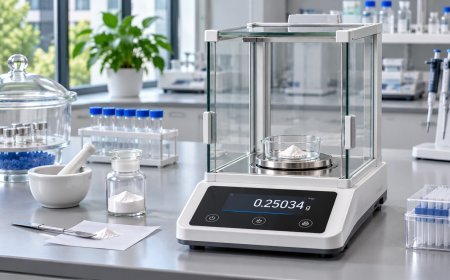






















Laboratory Balances: Accuracy, Features and Selection Criteria
Learn about laboratory balance types, accuracy factors and key features. Discover how to choose the right balance for your laboratory applications.

Laboratory balances are essential instruments for measuring the mass of samples, chemicals and other materials. They are widely used in research laboratories, educational institutions, pharmaceutical facilities and industrial testing environments.
Accurate weighing is important because even small measurement errors can affect test results, product quality and research outcomes. Choosing the right laboratory balance depends on the required accuracy, weighing capacity and intended application.
Types of Laboratory Balances
Different laboratory applications require different levels of weighing precision. The most common types include:
Analytical Balances
Analytical balances are designed for highly precise measurements, often with readability of 0.1 mg (0.0001 g). They are commonly used for chemical analysis, sample preparation and research applications.
Precision Balances
Precision balances are suitable for routine laboratory weighing where a higher capacity and practical readability are required. They are used for preparing samples, weighing materials and general laboratory work.
Microbalances
Microbalances measure very small sample quantities with extremely high precision. They are used in specialised research and applications where even minor mass differences matter.
What Affects Laboratory Balance Accuracy?
Several factors can influence the accuracy and repeatability of weighing results.
-
Environmental conditions: Air currents, temperature changes and humidity can affect measurements.
-
Vibrations: Nearby equipment, movement and unstable workbenches may cause fluctuating readings.
-
Balance calibration: Regular calibration helps maintain measurement reliability.
-
Correct placement: A stable, level surface supports consistent weighing results.
-
Sample handling: Incorrect handling, static electricity and temperature differences can influence readings.
For reliable results, balances should be installed in suitable environments and operated according to the manufacturer's instructions.
Important Features to Consider
Before selecting a laboratory balance, consider the following features:
Readability: This indicates the smallest displayed weight difference. Select a balance that meets the precision requirements of your application.
Maximum Capacity: Check the maximum load the balance can measure, including the weight of containers.
Calibration Options: Internal or external calibration options help maintain weighing accuracy.
Draft Shield: Analytical balances often include a draft shield to reduce the effect of air movement.
Display and Connectivity: Clear displays and data transfer options can make weighing and documentation easier.
Ease of Cleaning: A suitable weighing pan and accessible surfaces help maintain laboratory hygiene.
How to Choose the Right Laboratory Balance
Start by identifying the type of materials you need to weigh and the level of precision required. Consider the sample size, maximum weighing capacity and frequency of use.
For highly precise chemical measurements, an analytical balance may be appropriate. For routine weighing tasks involving larger quantities, a precision balance may be more practical.
You should also consider the laboratory environment, available workspace, calibration requirements and applicable quality procedures.
Maintenance and Proper Use
Regular maintenance helps keep laboratory balances reliable over time. Place the instrument on a stable surface, keep the weighing area clean and avoid exceeding its maximum capacity.
Allow the balance to stabilise before taking measurements. Follow the manufacturer's guidance for calibration, cleaning and servicing. Periodic performance checks can also help identify measurement problems.
Explore Laboratory Weighing Solutions
Selecting suitable weighing equipment helps laboratories maintain consistent measurements and efficient workflows. Ohaus is a manufacturer of weighing instruments and laboratory equipment used in different professional applications.
When selecting a laboratory balance, compare its specifications with your measurement requirements and consider the conditions in which it will be used.
What's Your Reaction?
 Like
0
 Dislike
0
 Love
0
 Funny
0
 Angry
0
 Sad
0
 Wow
0