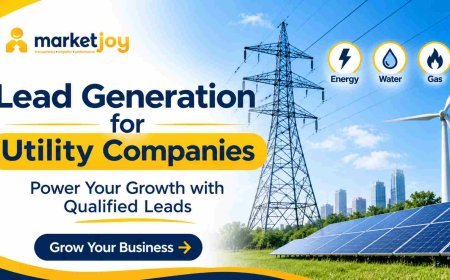



















Lead Generation for Utility Companies - How to Win Regulated Markets
Learn how lead generation for utility companies works, from targeting and persona-based messaging to qualification. Build a pipeline with MarketJoy.
Utility buyers do not behave like typical B2B customers. A water district, an electric co-op, or a city public works department answers to regulators, boards, and taxpayers, so every purchase is reviewed carefully and rarely rushed. For vendors, that means a great product is only half the battle. The other half is getting in front of the right people early and earning enough trust to be taken seriously.
That is the challenge behind Lead Generation for Utility Companies. In this article, we look at what makes utilities unique, the steps that build a reliable outbound pipeline, and the mistakes that cause many campaigns to fall flat.
What Makes Utility Sales Different
Four things set utility sales apart from other B2B markets:
- Regulation shapes buying. Rate cases, compliance rules, and public accountability mean buyers must justify every decision. Vendors who help them do that stand out.
- Many voices influence the outcome. Engineers, operations managers, procurement officers, finance teams, and executives may all weigh in, and no single person has full authority.
- Timelines are long. Budget cycles, pilots, and approvals can stretch a single deal over many months.
- Trust is earned slowly. Because failures affect whole communities, buyers prefer vendors they know and understand.
Together, these factors punish shortcuts. Mass email blasts and generic cold calls rarely work because they ignore how utilities actually decide.
Step 1: Define Who You Are Really Targeting
Strong lead generation starts with clarity. Which segments suit your solution: electric, water, gas, telecom, or municipal government? What size of organization, in which regions, using which systems? Answering these questions gives you an ideal customer profile (ICP) that guides every later decision.
Then map the buying group. Identify which roles feel the problem daily, which evaluate technical fit, and which approve spending. Companies that skip this step often reach only one contact and stall when others get involved.
Step 2: Build Lists With Real Data
Accurate lists drive results. Instead of relying on outdated directories, build contact lists from three types of data:
- Firmographic data describes the organization, including type, size, and location.
- Technographic data shows the technology already in use, which helps you judge compatibility.
- Intent data highlights organizations that are actively researching topics related to your solution.
When these sources are combined, you can prioritize accounts that are both a good fit and showing signs of readiness. This saves effort and improves response rates.
Step 3: Write Messages for Each Persona
Once the list is ready, messaging must match the reader. A plant operator thinks about reliability. A finance lead thinks about return. A city manager thinks about community impact and public scrutiny.
Persona-based outreach addresses these differences. Each message opens with a problem the reader recognizes, offers a clear and credible point of view, and asks for a modest next step, such as a short conversation. Avoid jargon and exaggerated claims, because utility buyers have heard them all. Specific, calm, relevant messages build trust faster than clever slogans.
Step 4: Keep Outreach Human and Multi-Channel
Automation helps with scale, but relationships still decide utility deals. Conversations led by experienced professionals allow for questions, context, and follow-up that feels natural. They also reveal useful details, such as budget timing or internal priorities, that no automated sequence can capture.
Combine email, phone, and professional networks so your message appears in more than one place. Because utility decision-makers are busy, several light touches over time usually outperform a single long message.
Step 5: Qualify, Hand Off, and Refine
A lead is only valuable if it can become a deal. Before passing prospects to sales, confirm that the organization fits your ICP, the contact has a real role in the decision, and there is a genuine need and a reasonable timeline. Leads that are not ready should be nurtured, not forced into your pipeline. This discipline protects your team’s time and makes forecasting more reliable.
Then keep learning. Track response rates by persona, message, and channel, and review which accounts turn into meetings and which stall. CRM integration and real-time dashboards keep all of this activity in one place, so messaging can improve with every round.
Mistakes That Hurt Utility Campaigns
Several errors appear again and again:
- Targeting too broadly, which dilutes relevance.
- Sending the same message to every role, which ignores differing priorities.
- Pushing for a demo in the first email, which feels aggressive in a careful market.
- Judging success only by lead volume, which hides quality problems.
- Giving up too early, which overlooks the length of utility sales cycles.
Avoiding these pitfalls is often the difference between a campaign that fails and one that builds steady momentum.
How MarketJoy Supports Utility Lead Generation
MarketJoy is a B2B outbound sales partner with a proven track record in the utility and municipality space. We manage prospecting, outreach, and qualification, combining hyper-targeted lists, custom messaging, and real human conversations. Our work has supported innovations such as smart city applications, gunshot detection systems, water monitoring technologies, and smart metering solutions.
Our workflows align with your CRM, campaign dashboards give you full visibility, and a performance guarantee backs the results. The goal is simple: sales-qualified leads that match your ICP, delivered consistently, so your team can focus on closing deals instead of chasing cold contacts.
Ready to Build a Stronger Utility Pipeline? Book Your Free Consultation Today
If you want to reach utilities, co-ops, and municipalities that are ready to talk, MarketJoy can help. Our approach to Lead Generation for Utility Companies combines precise targeting, trusted outreach, and clear reporting to build a pipeline that grows with measurable results.
Get a Free Strategy Call: https://meetings.hubspot.com/curtis-bendt/inbound-round-robin-for-discovery-calls
- Company Name: MarketJoy, Inc
- Email: hello@marketjoy.com
- Phone Number: +1 (484) 638-6389
- Address: 186 N Palafox Street, Pensacola, FL 32502
What's Your Reaction?
 Like
0
 Dislike
0
 Love
0
 Funny
0
 Angry
0
 Sad
0
 Wow
0

marketjoyinc
MarketJoy is a B2B lead generation company that helps businesses generate qualified sales opportunities through targeted prospecting, buyer intent data, B2B list building, personalized outreach, appointment setting, and outbound SDR services. MarketJoy connects businesses with relevant decision-makers using data-driven strategies designed to build consistent sales pipelines, improve prospect engagement, and support business growth across multiple industries.