

























A Medical Student’s Guide to Choosing a Stethoscope
Learn how to choose the right stethoscope for medical school. Explore sound quality, chestpiece design, comfort, acoustic and electronic options, budget, and maintenance tips for students.
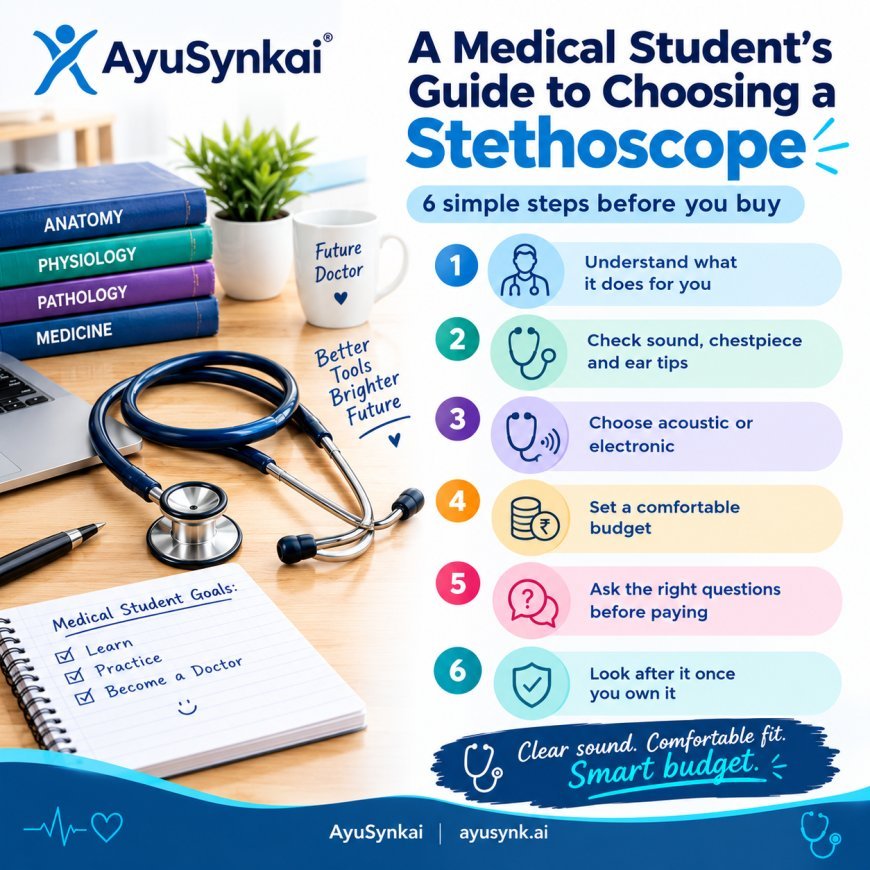
Few things feel as official in medical school as getting your own stethoscope. It marks the moment you stop reading about patients and start learning to listen to them. But the choice is rarely simple. Shops offer dozens of models, seniors give conflicting advice, and prices range from modest to surprisingly high.
This guide walks through the decision step by step, so you can buy with a clear head. If you are researching a medical student stethoscope, you will find a simple way to think about sound, comfort, durability and cost. It was prepared by the team at AyuSynkai as practical help, not a sales pitch.
Step One: Understand What a Stethoscope Does for You
A stethoscope carries sound from the chest or abdomen to your ears. In the early years, you use it to learn what normal sounds like: the rhythm of a healthy heart, the airflow in clear lungs, the gentle noises of the abdomen. Once you know normal, abnormal becomes easier to spot.
That means your first stethoscope does not need to be fancy. It needs to be clear, comfortable and reliable.
Step Two: Check the Basics That Never Go Out of Date
Sound Clarity
Clear sound is the foundation. A stethoscope that sounds hollow, muffled or noisy makes learning harder and more frustrating.
A Simple Way to Test It
-
Try it in a quiet room, not a busy shop
-
Listen to a friend’s heartbeat and breathing
-
Pay attention to rubbing or background noise
-
Ask a senior or faculty member to compare it with theirs
Chestpiece Design
The chestpiece is the part that touches the patient. Most student models have two sides.
Diaphragm
The larger, flat side. It picks up higher-pitched sounds such as normal heart sounds and breath sounds. Press it firmly against the skin.
Bell
The smaller, cup-shaped side. It picks up lower-pitched sounds. Use light pressure, because pressing hard can mute the very sounds you are trying to hear.
Some designs combine both functions on a single surface and rely on pressure changes. Either style works, provided you learn the technique.
Ear Tips and Headset
Poorly fitting ear tips are the most common complaint among students. If they leak, the room gets louder than the patient. If they press too hard, your ears hurt after an hour.
Look for soft tips that seal gently, point slightly forward to match your ear canals and come with spare sizes. The headset should hold the tips firmly without pinching.
Tubing and Weight
Tubing should be flexible, strong and not excessively long. A heavy chestpiece or stiff tubing becomes tiring during long postings. Wear it for a few minutes before buying.
Step Three: Decide Between Acoustic and Electronic
Acoustic Stethoscopes
Acoustic models need no battery, charging or software. They are simple, dependable and generally more affordable. For many students in the first years, a good acoustic stethoscope is the sensible starting point.
Electronic Stethoscopes
Electronic models amplify sound and may offer volume control, noise reduction, recording and other features. They can help students who struggle to hear faint sounds or who work in noisy places.
What About a Bluetooth Stethoscope?
A bluetooth stethoscope adds wireless connectivity. Depending on the model, this can allow listening through other devices, recording sounds, replaying them and sharing them with teachers or classmates. For active learners, replaying a murmur or breath sound can be far more useful than trying to recall it from memory.
Still, this is an extra, not a requirement. Ask yourself honestly whether you will use these features regularly. If the answer is “maybe later”, acoustic is a perfectly respectable choice for now.
Step Four: Think Carefully About Price
Price is where students feel the most pressure, so let’s make it simple.
Start With Your Budget
Decide what you can spend comfortably. A stethoscope should support your learning, not add financial stress.
Know What Drives the Price
Costs usually reflect build quality, acoustic design, replaceable parts, electronic features, brand and warranty support.
Compare Fairly
When you look at an electronic stethoscope price next to an acoustic one, ask what the extra cost buys you and whether you will use it. A higher price makes sense only when the added features match your real needs. Prices change over time, so confirm the current figure before you pay.
Consider Long-Term Value
A well-made stethoscope can last through your course and beyond. Replaceable ear tips and diaphragms extend its life further. Sometimes paying a little more for a durable model costs less than replacing a poor one.
Step Five: Ask the Right Questions Before You Pay
Questions for the Seller
-
What exactly are the features of this model?
-
Are replacement parts such as ear tips and diaphragms available?
-
What warranty comes with it?
-
Will I receive a proper bill?
-
For electronic models, how long does the battery last and how is it charged?
Questions for Yourself
-
Will I use it daily soon, or only occasionally for now?
-
Do I need amplification or recording today?
-
Is this within my budget without stress?
Questions for Seniors and Faculty
Ask what they use, what they like and what they would change. Their opinions are valuable, though remember that your needs and budget may differ from theirs.
Common Mistakes to Avoid
-
Buying on a friend’s advice alone without testing the stethoscope
-
Choosing only by brand name
-
Paying for advanced features you will not use in first year
-
Overlooking ear tip comfort
-
Purchasing from sources that offer no bill or warranty
-
Ignoring the availability of spare parts
A Quick Buying Checklist
-
Is the sound clear in a quiet room?
-
Is the chestpiece suitable for adult and basic pediatric use?
-
Do the ear tips fit comfortably?
-
Are the tubing and weight manageable?
-
Are spare parts available?
-
Do I truly need electronic or Bluetooth features right now?
-
Is the price comfortable?
-
Is there a proper warranty and bill?
Step Six: Look After What You Buy
Clean It Regularly
Wipe the chestpiece and ear tips with a suitable cleaning wipe, especially after clinical postings.
Store It Properly
Avoid sharp bends in the tubing. Keep it away from heat, direct sunlight and sharp objects.
Replace Worn Parts Early
Cracked ear tips and tired diaphragms reduce sound quality. Replacing them is easier and cheaper than replacing the whole stethoscope.
Final Thoughts
Choosing a stethoscope is a personal decision, and there is no single right answer for every student. Focus on clear sound, a comfortable fit, a durable build and a price you are comfortable with. Add electronic or Bluetooth features when they genuinely support your learning.
If you want a straightforward comparison to help you decide, AyuSynkai is happy to help. Do speak to your seniors and faculty too, since their experience adds real value to any buying decision.
Contact Us
Call Now: 08047191146
Website: https://ayusynk.ai
Follow AyuSynkai: Facebook | Instagram | LinkedIn | YouTube.
What's Your Reaction?
 Like
0
 Dislike
0
 Love
0
 Funny
0
 Angry
0
 Sad
0
 Wow
0