




















Playinmatch: Old School RuneScape Guide for Classic MMORPG Fans
Explore Old School RuneScape with beginner tips on skills, quests, combat, training, money management and classic MMORPG gameplay.
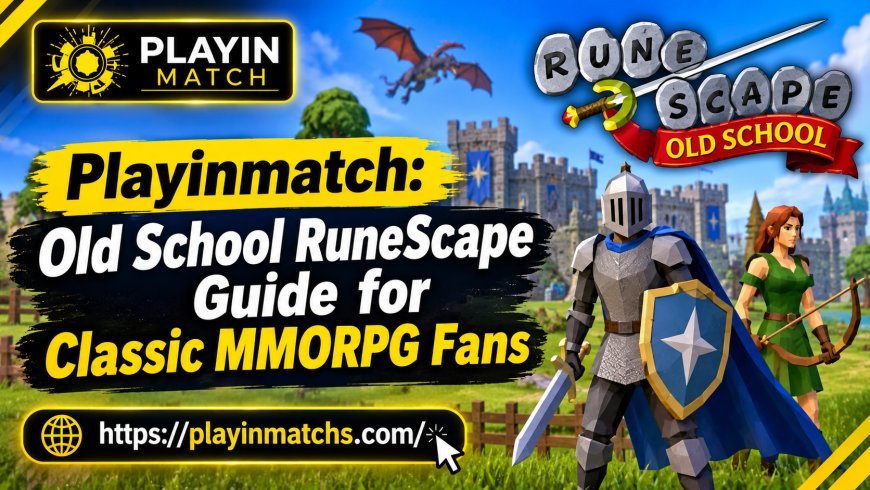
Classic MMORPGs continue to attract players because they offer something different from many modern games. Instead of focusing only on fast action and short missions, these games encourage exploration, character development, social interaction and long-term progression. Old School RuneScape is one of the best-known examples of this style. Its familiar graphics, open world and detailed skill system create an experience that appeals to both nostalgic players and newcomers.
Old School RuneScape, commonly known as OSRS, is a fantasy MMORPG developed by Jagex. Players enter the world of Gielinor, where they can complete quests, fight monsters, gather resources, develop skills and interact with other players. There is no single path that everyone must follow. Some players focus on combat, while others enjoy crafting, trading, exploration or completing difficult challenges.
For readers discovering different gaming experiences through Playinmatch, Old School RuneScape is an interesting title because it combines freedom with steady character progression. Its simple point-and-click gameplay makes it easy to approach, but the large world and many activities offer plenty of depth. This guide explains the game's main features, skills, quests, combat systems, account types and beginner strategies in simple language.
What Is Old School RuneScape?
Old School RuneScape is a massively multiplayer online role-playing game set in the fantasy world of Gielinor. It is based on an earlier version of RuneScape and preserves the classic gameplay style that many players remember. Although its appearance is retro, the game has continued to receive updates and new content.
Players create a character and begin their adventure by learning basic controls and completing the introductory tutorial. After entering the main world, they can explore towns, forests, dungeons, mountains and other locations. Each area offers different activities, enemies, resources and opportunities for progression.
One of the most important features of OSRS is its open-ended design. The game does not force players to follow one fixed storyline from beginning to end. Instead, players decide how to spend their time. They can improve their combat abilities, train non-combat skills, complete quests, earn in-game currency or explore unfamiliar locations.
The game also has a strong multiplayer community. Players can communicate, trade items, join groups and take part in activities together. This combination of individual progression and social interaction makes Old School RuneScape appealing to fans of traditional MMORPGs.
Exploring the World of Gielinor
Gielinor is the main world of Old School RuneScape. It contains different regions, towns, cities and wilderness areas, each with its own atmosphere and activities. Exploring the world is an important part of the experience because new locations can provide access to quests, resources, monsters and useful items.
Lumbridge is one of the most familiar starting locations for new players. It offers access to basic services and nearby training areas. Players can learn the fundamentals of the game while exploring the surrounding region. As their characters become stronger, they can travel to larger towns and more challenging locations.
Varrock is an important city with shops, services and quest opportunities. Falador is another major location known for its activities and access to nearby areas. Other regions offer different environments, from forests and mountains to deserts and dangerous wilderness zones.
Travel becomes easier as players discover transportation methods and unlock shortcuts. Some skills, quests and items provide access to useful routes. Learning how to move around efficiently can save time and make exploration more enjoyable.
The world also contains dangerous areas where players may encounter stronger monsters or other players. Beginners should understand the risks before entering unfamiliar locations, especially when carrying valuable equipment or items.
Understanding the Skill System
Skills are at the centre of character development in Old School RuneScape. Players improve their abilities by performing related activities and earning experience. As a skill level increases, new equipment, resources, activities and methods become available.
The game has 24 skills, covering combat, gathering and production activities. Each skill has a maximum level of 99, although players can continue earning experience beyond that level.
Combat skills include Attack, Strength, Defence, Ranged, Magic, Prayer and Hitpoints. These skills influence how players fight monsters and survive dangerous situations. Improving them can unlock stronger weapons, better armour and more effective combat abilities.
Gathering skills allow players to collect resources from the environment. Mining provides ores, Woodcutting produces logs and Fishing allows players to catch food. These resources can be used directly or processed through other skills.
Production skills focus on turning collected materials into useful items. Smithing allows players to work with metal, while Cooking prepares food. Crafting supports the creation of jewellery, armour and other products. Firemaking and Runecraft provide additional ways to use gathered resources.
Members also gain access to additional skills, including Agility, Herblore, Thieving, Fletching, Slayer, Farming, Construction, Hunter and Sailing. These activities expand the available gameplay and provide more opportunities for character development.
The best way to approach skills is to explore different activities and find a balance between progression and enjoyment. Players do not need to train every skill equally. They can focus on the abilities that support their preferred style of play.
Combat and Character Development
Combat is a major part of Old School RuneScape. Players can fight monsters, complete combat-focused quests, challenge bosses and participate in player-versus-player activities. The combat system uses different attack styles, each with its own strengths and equipment requirements.
Melee combat involves close-range attacks using weapons such as swords, axes and other equipment. Attack improves accuracy and allows access to stronger weapons, while Strength increases the damage that successful attacks can deal. Defence helps players use stronger armour and reduces the chance of being hit.
Ranged combat allows players to attack enemies from a distance. Bows, crossbows and other ranged weapons provide different options. Ranged training improves accuracy and damage potential, depending on the equipment and ammunition used.
Magic provides access to offensive spells and useful utility abilities. Players can use spells to damage enemies, teleport between locations, weaken opponents or perform other tasks. Runes are important because they are required for casting many spells.
Prayer provides temporary benefits through different prayers. These can support combat by improving defence, attack or other abilities. Players must manage Prayer points carefully because active prayers consume them over time.
Choosing suitable equipment is important for every combat style. Players should consider their skill levels, enemy weaknesses and the type of encounter before entering a fight. Strong equipment can help, but understanding combat mechanics and preparing properly are equally important.
Quests and Storytelling
Quests are one of the most enjoyable parts of Old School RuneScape. They take players across Gielinor and introduce stories involving characters, kingdoms, creatures and mysterious events. Some quests focus on simple tasks, while others involve complex puzzles, difficult enemies and long storylines.
Completing quests can provide experience, items, access to new locations and useful abilities. These rewards make questing an important part of character progression. Some quests also unlock transportation methods or areas that are difficult to access otherwise.
Beginners can start with shorter quests that introduce basic mechanics. These early experiences help players understand how to interact with characters, collect required items and complete objectives. As their skills improve, they can attempt more demanding quests.
It is useful to check quest requirements before starting. Some quests require particular skill levels, completed quests or specific items. Preparing in advance can prevent unnecessary travel and make the experience smoother.
Questing is also a good way to explore the game's world. Instead of training skills in one location for a long time, players can follow quest stories and discover new areas while earning rewards.
Gathering, Crafting and the In-Game Economy
The economy is another important part of Old School RuneScape. Players collect resources, create items and trade with others. This system connects many skills and gives players different ways to earn in-game currency.
Mining and Woodcutting are useful gathering skills because they provide materials for other activities. Fishing supplies food, while Farming allows players to grow crops and collect useful resources. These activities can be relaxing and provide steady progression.
Crafting and Smithing turn raw materials into equipment and other items. Cooking allows players to prepare food that supports combat and exploration. Herblore, which is available to members, involves preparing potions with different effects.
The Grand Exchange is a central trading system where players can buy and sell many items. It helps connect different parts of the economy because materials collected by one player may be needed by another. Understanding item demand and supply can help players make better trading decisions.
Beginners should avoid spending all their currency on expensive equipment. It is often more useful to keep some money available for supplies, quest requirements and future upgrades. Comparing item prices and understanding their purpose can also prevent unnecessary purchases.
Understanding Membership and Free-to-Play Content
Old School RuneScape offers free-to-play and membership content. Free players can explore a selection of locations, complete available quests, train several skills and experience the basic gameplay systems.
Membership expands the experience with additional skills, areas, quests, activities and equipment. It provides access to a much larger part of Gielinor and offers more options for players who want to progress further.
New players do not need to rush into membership immediately. The free version provides a useful introduction to the game and allows beginners to understand its mechanics. Once they become familiar with the world and decide that they want more activities, they can consider whether membership suits their interests.
It is important to review the current membership terms and available options through official Jagex channels. Players should also understand that Old School RuneScape and the modern version of RuneScape are separate games. Although membership status can be shared, character progress is not transferred between them.
Different Account Types and Playing Styles
Old School RuneScape supports different account styles that change how players experience progression. A regular account offers the broadest freedom. Players can trade with others, use the Grand Exchange and obtain items through different activities.
Ironman Mode creates a more independent experience. Ironman players are restricted from trading with other players and must obtain most of their equipment and resources themselves. This makes gathering, crafting and planning more important.
Hardcore Ironman adds a greater risk because the account has only one life for maintaining its special status. A dangerous death removes that status and changes the account to regular Ironman. This mode appeals to players who enjoy high-pressure challenges.
Ultimate Ironman provides an even more demanding experience by removing access to traditional banking. Players must manage their inventory carefully and make decisions about what items to carry or discard.
Group Ironman allows a small group of players to work together while following Ironman-style restrictions. Members of the group can support one another within the mode's rules.
Beginners should understand these differences before selecting an account type. A regular account is generally the most flexible starting point, while restricted modes are suitable for players who want additional challenges.
Beginner Strategies for Faster Progress
New players should begin by learning the controls, understanding the interface and exploring the starting areas. Completing introductory tasks can help them become familiar with movement, combat, inventory management and skill training.
Questing is a useful early activity because it can provide experience and unlock important content. Rather than spending all their time training one skill, beginners can complete suitable quests and develop several abilities naturally.
It is also helpful to train a mix of combat and non-combat skills. Improving combat makes it easier to defeat monsters, while gathering and production skills provide resources and useful items. This balance creates more opportunities throughout the game.
Players should learn how to use the bank and inventory efficiently. Carrying unnecessary items can limit the space available for resources and quest equipment. Keeping useful supplies organised makes activities easier to manage.
Another important habit is setting small goals. A beginner might aim to complete a quest, reach a particular skill level or unlock a new area. Smaller goals make progression feel more manageable and provide a clear reason to continue playing.
Common Mistakes New Players Should Avoid
One common mistake is focusing only on combat. Although combat is important, many useful activities depend on non-combat skills. Ignoring gathering and production can make it harder to obtain resources and complete certain quests.
Another mistake is purchasing expensive equipment too early. Strong gear may look attractive, but it is not always necessary for beginner activities. Players should check equipment requirements and choose upgrades that provide real value.
Some beginners also ignore quest requirements. Starting a quest without the necessary skills or items can lead to repeated travel and wasted time. Reading the requirements before beginning is a simple way to prepare.
Entering dangerous areas without understanding the risks can also cause problems. Players should check enemy strength, possible player-versus-player rules and the value of the items they are carrying.
Finally, beginners should avoid comparing their progress too closely with experienced players. Old School RuneScape is designed around long-term progression, and different players enjoy different activities. Consistency and personal enjoyment are more important than rushing towards high-level content.
Playing Old School RuneScape on PC and Mobile
Old School RuneScape supports both desktop and mobile gameplay. This gives players flexibility to enjoy the same game across supported devices. Account progression is shared when players use the same login details, allowing them to continue their adventure on another device.
The desktop experience is useful for activities that involve detailed inventory management, complex combat or extended gameplay sessions. Mobile access can be convenient for gathering resources, completing simpler tasks or checking character progress while away from a computer.
Players should use the official game client or authorised mobile application. Account security is important because login details and valuable in-game items can attract unwanted attention. Avoid suspicious links, unofficial offers and websites that request account credentials.
Why Old School RuneScape Appeals to Classic MMORPG Fans
Old School RuneScape remains appealing because it gives players control over their own progression. There is no requirement to follow one fixed route. Players can explore, train skills, complete quests, trade items or focus on combat depending on their interests.
Its skill system creates a strong sense of achievement. Every level represents time spent learning and improving a particular ability. Unlocking a new item, completing a difficult quest or defeating a challenging boss can provide a satisfying reward.
The community is another important part of the experience. Players can share advice, trade resources, join groups and participate in multiplayer activities. These interactions help make the world feel active and connected.
For readers exploring gaming guides through Playinmatch, Old School RuneScape is a strong example of a classic MMORPG that combines freedom, progression and community-based gameplay.
Exploring Gaming Content Through Playinmatch
Players interested in online gaming often look for clear guides that explain game mechanics, progression systems and useful beginner strategies. Playinmatch provides a platform-related topic for readers who want to explore different gaming experiences and learn about a variety of titles.
Readers using Playinmatch Login or exploring the Playinmatch app should review the platform's available features and terms before using any service. Old School RuneScape is a separate MMORPG developed by Jagex, with its own account system, membership options and gameplay rules. Its features should not be confused with those of another platform.
The game rewards patience, regular practice and informed decisions. Players can improve by understanding skill requirements, preparing for quests and managing their resources carefully. No single strategy is necessary for everyone, so the best approach is to choose activities that make the experience enjoyable.
Final Thoughts
Old School RuneScape offers a classic MMORPG experience built around exploration, quests, skill development, combat and community interaction. Its open-world design gives players the freedom to choose their own goals and develop their characters at their preferred pace.
Beginners can start by exploring Gielinor, completing introductory quests and learning the basic skills. As they gain experience, they can explore advanced combat, trading, membership activities and different account modes. Understanding the game's economy and preparing properly for dangerous areas can also make progression smoother.
For readers discovering classic MMORPGs through Playinmatch, Old School RuneScape is worth exploring because it combines familiar gameplay with a wide range of long-term challenges. Whether players enjoy questing, gathering resources, fighting monsters or interacting with others, the world of Gielinor offers many ways to build a memorable adventure.
What's Your Reaction?
 Like
0
 Dislike
0
 Love
0
 Funny
0
 Angry
0
 Sad
0
 Wow
0