























What Skills Should Children Develop Before Starting Kindergarten in Trivandrum?
Discover the essential skills children should develop before starting kindergarten in Trivandrum. Learn about communication, cognitive development, fine and gross motor skills, social-emotional growth, and self-help skills that help children build confidence and prepare for a smooth transition to kindergarten.

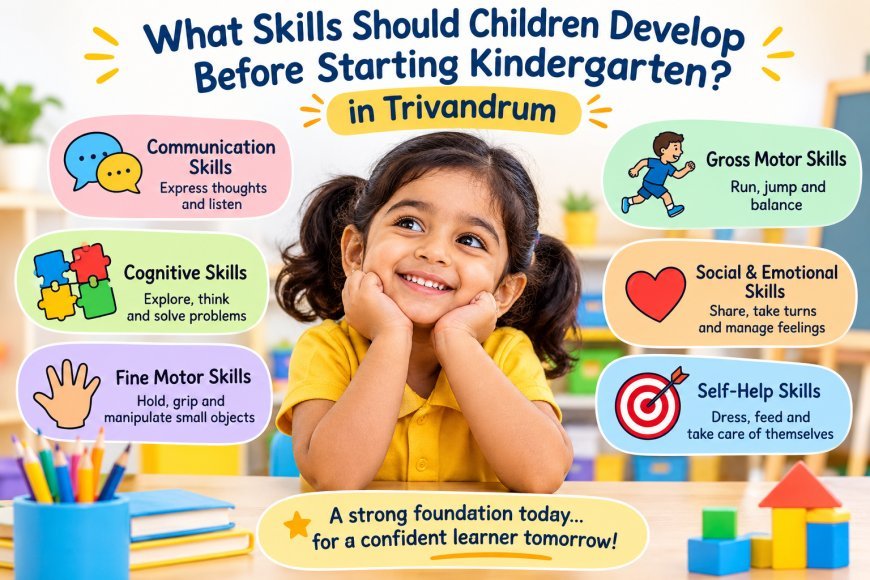
Starting kindergarten is an important milestone in a child's early learning journey. It introduces children to a more structured environment where they interact with peers, participate in group activities, follow routines and explore new concepts. While academic knowledge is useful, being ready for kindergarten involves much more than recognising letters or counting numbers.
Parents exploring kindergarten in Trivandrum often wonder what their children should know before entering the classroom. The good news is that kindergarten readiness is not about achieving perfection. It is about developing basic social, emotional, communication and practical skills that help children feel comfortable and confident in a learning environment.
Here are some important skills children can gradually develop before starting kindergarten.
1. Basic Communication Skills
Communication helps children express their thoughts, understand instructions and interact with teachers and classmates. Before entering kindergarten, children can benefit from learning to communicate their basic needs, describe their feelings and participate in simple conversations.
Parents can encourage these skills through everyday interactions, storytelling, picture books and conversations about familiar experiences.
Children should gradually become comfortable with:
-
Expressing their needs and preferences.
-
Answering simple questions.
-
Listening when someone is speaking.
-
Describing objects, people and everyday activities.
-
Asking questions when they need help.
These abilities make it easier for children to participate in classroom discussions and activities.
2. Social Skills and Interaction with Peers
Kindergarten gives children opportunities to interact with others in a group setting. Learning to share, take turns and cooperate with classmates helps them build positive relationships.
Children do not need to master every social skill before joining school. However, simple group activities at home or during playtime can help them become familiar with interacting with others.
Some useful social skills include:
-
Sharing toys and learning materials.
-
Taking turns during games.
-
Playing cooperatively with other children.
-
Respecting personal space.
-
Understanding simple classroom expectations.
A supportive environment in kindergarten schools in Trivandrum can help children gradually develop these skills through guided activities and everyday interactions.
3. Emotional Awareness and Self-Regulation
Starting kindergarten can bring new experiences, unfamiliar surroundings and temporary separation from parents. Children who begin recognising and expressing their emotions may find it easier to adjust to these changes.
Emotional readiness does not mean that children should never feel upset or anxious. Instead, they can gradually learn to identify their feelings and respond to different situations with support.
Parents can encourage emotional development by helping children:
-
Recognise feelings such as happiness, sadness, anger and frustration.
-
Express emotions using words.
-
Wait for short periods when necessary.
-
Accept small changes in daily routines.
-
Seek help from a trusted adult when they feel uncomfortable.
These experiences can support a smoother transition into kindergarten.
4. Basic Independence and Self-Help Skills
Kindergarten introduces children to everyday routines that encourage independence. Developing simple self-help skills before starting school can help children feel more confident when managing familiar activities.
Some useful skills include:
-
Eating independently, according to their abilities.
-
Washing and drying their hands.
-
Keeping personal belongings in the right place.
-
Following simple instructions.
-
Communicating when they need assistance.
-
Managing basic toilet routines according to their age and development.
Parents can support these habits by giving children opportunities to complete small tasks independently rather than doing everything for them.
5. Early Language and Literacy Awareness
Children do not need to read or write fluently before entering kindergarten. However, early exposure to language and literacy can help them become familiar with how communication and reading work.
Activities such as reading picture books, singing rhymes and identifying familiar objects can make language learning enjoyable.
Children can gradually develop an interest in:
-
Recognising familiar letters and sounds.
-
Listening to stories and remembering simple details.
-
Identifying pictures and naming objects.
-
Recognising their own name.
-
Understanding that printed words carry meaning.
Well-planned preschool programs in Trivandrum can provide opportunities for children to explore language through stories, conversations, songs and creative activities.
6. Early Mathematical and Problem-Solving Skills
Early mathematics is not limited to memorising numbers. Children begin understanding mathematical ideas through everyday experiences such as counting toys, sorting objects and comparing sizes.
Before kindergarten, parents can introduce simple activities that encourage logical thinking and curiosity.
For example, children can practise:
-
Counting everyday objects.
-
Identifying basic shapes and colours.
-
Sorting objects based on size or type.
-
Understanding simple concepts such as more, less, big and small.
-
Completing age-appropriate puzzles and matching activities.
These experiences help children become familiar with basic mathematical concepts without making learning feel like a formal lesson.
7. Listening and Following Instructions
Listening is an important skill in a kindergarten classroom. Children participate in storytelling, group discussions, games and creative activities that often involve following simple instructions.
Parents can develop listening skills through everyday activities such as asking children to put away their toys, choose a book or complete a simple two-step task.
Children can gradually learn to:
-
Pay attention during short conversations.
-
Follow simple instructions.
-
Listen to stories without frequent interruptions.
-
Understand basic classroom directions.
-
Wait for their turn to speak or participate.
These habits can help children engage more comfortably in group learning experiences.
8. Fine Motor Skills and Creative Expression
Fine motor skills involve the small movements of the fingers and hands. These abilities support activities such as drawing, colouring, holding crayons, turning book pages and handling learning materials.
Children can strengthen these skills through enjoyable activities, including:
-
Drawing and colouring.
-
Playing with clay or dough.
-
Building with blocks.
-
Tearing and pasting paper.
-
Using age-appropriate puzzles.
-
Turning pages in picture books.
Creative activities also encourage imagination, concentration and independent expression.
How Can Parents Prepare Children for Kindergarten?
Preparing for kindergarten does not require strict academic practice or lengthy study sessions. Simple experiences at home can help children become familiar with the routines and expectations of a learning environment.
Parents can support kindergarten readiness by:
-
Establishing consistent sleeping, eating and play routines.
-
Reading stories together and discussing familiar characters.
-
Encouraging independent play and simple household tasks.
-
Arranging opportunities for children to interact with other children.
-
Introducing age-appropriate puzzles, games and creative activities.
-
Talking positively about school and answering children's questions.
-
Allowing children to practise new skills at their own pace.
Most importantly, parents should remember that every child develops differently. Some children may communicate confidently, while others may need more time to become comfortable in group settings.
Choosing the Right Kindergarten Environment in Trivandrum
Along with developing essential skills at home, choosing a suitable learning environment is an important part of kindergarten preparation. Parents looking at kindergarten schools in Trivandrum can consider factors such as the learning approach, classroom environment, educator interaction, safety practices and opportunities for social development.
The best kindergarten in Trivandrum for a child is not necessarily the one that focuses most heavily on early academic achievement. A supportive environment should also encourage curiosity, creativity, communication, independence and positive social interactions.
Parents can explore the learning approach and age-appropriate activities offered by TRINS Early Learning Centre to understand whether its early learning environment aligns with their child's needs.
Conclusion
Kindergarten readiness is a combination of everyday skills that help children adjust to a new learning environment. Communication, emotional awareness, social interaction, independence, listening and early problem-solving abilities all contribute to a positive start.
Rather than expecting children to master everything before school begins, parents can focus on providing opportunities to explore, practise and learn through everyday experiences. With encouragement at home and a nurturing educational environment, children can gradually build the confidence and skills needed for their kindergarten journey.
What's Your Reaction?
 Like
0
 Dislike
0
 Love
0
 Funny
0
 Angry
0
 Sad
0
 Wow
0