






















Video or Image Ads? How to Decide What to Make First on Meta
Compare video and image ads to decide which creative format to test first on Meta. Learn how audience behavior, campaign goals, budget, and resources influence ad performance.
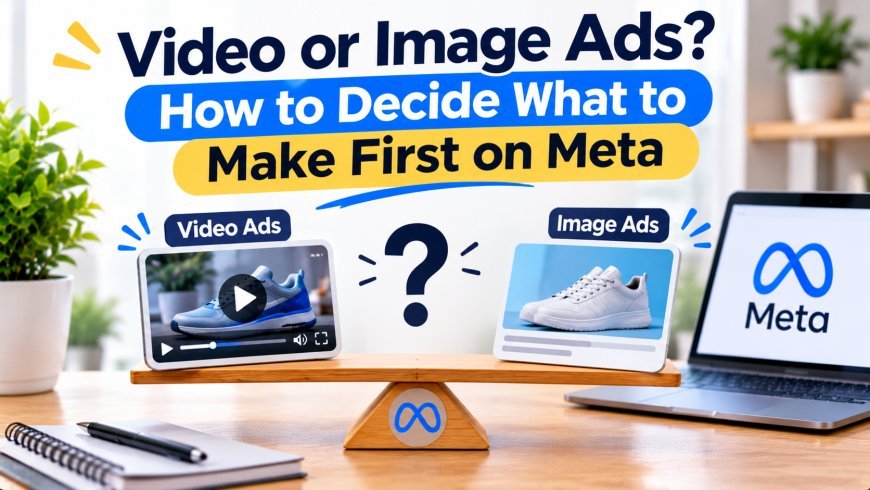
Every advertiser launching on Meta faces the same early decision: should the first ads be videos or images? Video sounds more modern and engaging. Images sound cheaper and quicker. Online advice tends to pick a side and defend it, which is not very helpful when you have a real budget and a real deadline.
The truth is that neither format is better in every situation. The right first choice depends on your product, your budget and what you are trying to learn. This guide gives you a practical way to decide.
Start With the Question You Need Answered
Before choosing a format, ask what you are trying to find out. Are you testing which message resonates? Which product to feature? Whether people understand your offer? Formats are tools, and different questions call for different tools.
If you are mostly testing messages, speed matters most, and images are usually the faster way to learn. If you need to demonstrate how something works or tell a longer story, video earns its place.
When Images Make the Better Starting Point
Simple, Direct Offers
If your offer can be understood at a glance, such as a clear discount, a recognizable product or a short benefit, an image can carry it perfectly well. There is no need to spend days producing a video to say something a headline can say in a second.
Limited Budget or Time
Images are quick and inexpensive to produce. That makes them ideal when money is tight or when you want to test several messages before investing in anything bigger.
Retargeting
People who already know your brand often need only a clear reminder and a reason to return. A clean image with a strong line can do that job well.
Planning images with intention is its own discipline. A thoughtful static ad strategy starts with customer research and a single clear idea per ad, rather than a product photo with a discount badge.
When Video Is Worth Making First
Products That Need Explaining
If people must see how something works to understand why it matters, motion helps. A demonstration, a before-and-after or a short story can explain value faster than a still image.
You Already Have Footage
If you have customer testimonials, creator content or clips of the product in use, video may be the faster path. Do not produce new images when you already own usable footage.
Cold Audiences Who Do Not Know You
New audiences may need more context to care. A short, honest video that starts from a problem they recognize can build interest in a way a single image sometimes cannot.
Whatever the format, video benefits from a plan. A sound video ad strategy decides the goal, the opening, the length and the platform before filming starts, which saves money and revision time.
Think About Where the Ad Will Appear
Meta shows ads in many places, including feeds, Stories and Reels. Some placements favor vertical, fast-moving video, while others work well with a clear image. Check Meta's current creative guidance before finalizing formats, since specifications and recommendations change over time.
Many viewers also watch with the sound off, so both formats should communicate clearly without audio. Captions and on-screen text help video, and a strong headline helps images.
A Simple Starting Plan
If you are unsure, begin with a small set of images built around different angles. They are quick to make and cheap to test, and they will show you which messages earn attention. Take the strongest angle and turn it into a short video, so you invest in production only after the idea has proven itself.
If you already have strong footage or your product demands demonstration, reverse the order and start with video, then create images from frames or key lines that worked.
Do Not Treat It as Either-Or
The most effective accounts rarely pick one format forever. Images and video do different jobs. An image may introduce an idea quickly, while a video may deepen it for people who show interest. Using both gives you more ways to reach different people at different stages.
Let your own results decide the balance. Over time, you will see which format earns better engagement and sales for each type of audience and message.
How to Compare Fairly
When testing formats against each other, keep everything else the same. Use the same message, the same audience and the same budget, so the format is the only difference. Otherwise you will not know whether the format or something else changed the result.
Look beyond clicks. Watch how many people take the action you care about, and what each result costs. A format that attracts many clicks but few sales is not a winner.
Common Mistakes to Avoid
The first is choosing a format because it is fashionable, not because it suits the goal. The second is overspending on production before testing the message. The third is making only one version and assuming it will work everywhere. The fourth is comparing formats unfairly, with different audiences or budgets.
If you are not sure where your account stands, a Meta ads specialist can review your setup and suggest which format to test first based on your product, margins and data.
Frequently Asked Questions
Do video ads always perform better than image ads on Meta?
No. Results depend on the product, message, audience and execution. Many accounts see strong results from images, and others from video, so testing both is wise.
Which format is cheaper to produce?
Images are generally quicker and less expensive to create, which makes them popular for early testing.
Can I turn a winning image into a video?
Yes. If an image message performs well, its angle can become the basis of a video, with the headline as the opening line.
How long should a Meta video ad be?
There is no fixed length. Shorter videos often suit cold audiences and fast placements, while longer ones can help when more explanation is needed. Test and see what your audience prefers.
Final Thoughts
The video-or-image question has no universal answer, but it does have a practical one. Start from what you need to learn, consider your product, budget and existing assets, and begin with the format that gets you answers fastest. Then use the results to guide your next move.
What's Your Reaction?
 Like
0
 Dislike
0
 Love
0
 Funny
0
 Angry
0
 Sad
0
 Wow
0