

























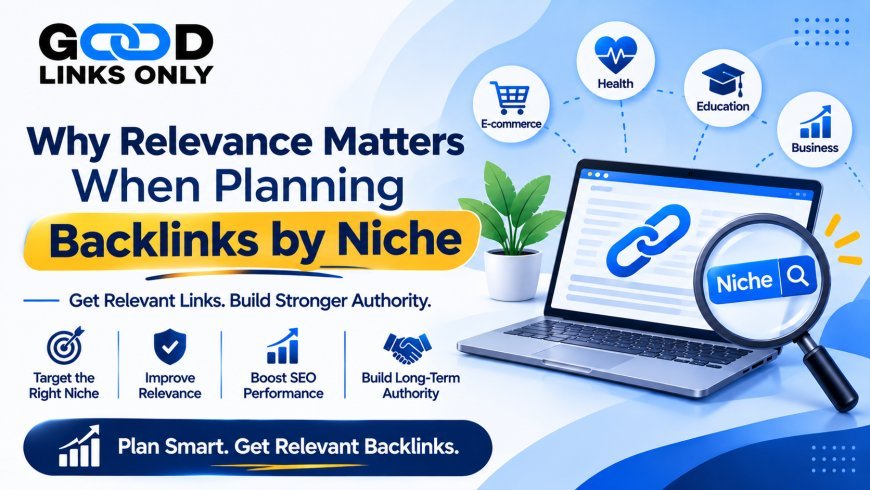
Why Relevance Matters When Planning Backlinks by Niche
Discover backlinks by niche to find relevant publishers, strengthen website authority, improve SEO visibility, and build a focused link-building strategy for long-term growth.
Backlinks are often discussed as an important component of search engine optimization, but not every link provides the same kind of value. The website linking to a business, the subject of the referring page, and the surrounding editorial context all influence how relevant that reference may be. A backlink from a website covering a closely related topic can make more sense to readers than a link placed on an unrelated publication.
Planning backlinks by niche allows businesses to organize link-building activities around their industry, audience, and content themes. Rather than approaching every publisher as an equally suitable opportunity, marketers can identify websites that have a meaningful connection to the subjects their business covers. This approach encourages more deliberate publisher selection and a stronger relationship between content and link acquisition.
Developing a Relevant Strategy for Backlinks by Niche
A niche-based strategy begins with understanding the business's subject area and identifying the publications that already serve its audience. The objective is not to restrict every backlink to an identical industry category, but to establish meaningful topical connections.
What Does Backlinks by Niche Mean?
The term backlinks by niche refers to organizing and evaluating backlinks according to the subject areas or industries of the referring websites. For example, a healthcare technology company may explore relevant publications covering healthcare operations, medical technology, digital security, and business software.
These categories help marketers assess whether a website is appropriate for a particular campaign. A publication does not have to cover exactly the same product or service to be relevant. Related subjects can also provide useful editorial opportunities when the connection is clear.
The important consideration is whether the link makes sense within the content and offers readers a useful next step.
Identify the Right Industry Categories
Before looking for publishers, define the primary and related topics associated with the business. A company operating in the financial technology sector, for example, may have relevant connections to accounting, payment systems, business management, and cybersecurity.
This research helps create a more focused publisher shortlist. It also reduces the likelihood of spending resources on websites that have little connection to the campaign's objectives.
Consider the questions potential customers ask, the topics they research, and the publications they already read. These insights can help identify suitable content environments beyond a narrow list of direct competitors.
Evaluate Topical Relevance and Website Quality
A website's niche category is only one part of the evaluation process. Marketers should also review the quality of its articles, audience focus, editorial standards, and publishing consistency.
Third-party domain metrics can support initial comparisons, but they should not be treated as definitive measures of quality. A website may have a strong numerical score while publishing content that is unrelated to its stated subject.
Look at the actual pages where a link might appear. Review their topics, depth, accuracy, and existing references. A relevant placement should fit the article naturally rather than appear as an unrelated commercial addition.
Match Content Topics With Suitable Publishers
Content planning can make niche-based link building more effective. Start by identifying useful resources on the business website, such as detailed guides, original research, educational articles, or practical explanations.
Next, consider which external publications might reasonably discuss those subjects. A business technology guide may be relevant to a publication covering digital transformation, while a consumer product resource may suit a publication focused on that product category.
The content should be developed for the publisher's audience rather than copied across multiple websites. Original contributions are more likely to provide a distinct editorial perspective and avoid repetitive publishing.
Organize Campaigns Around Different Niches
Businesses operating across multiple industries may need separate publisher lists and content plans. A single campaign structure can become difficult to manage when the target audiences and subject areas are significantly different.
Organize opportunities by niche, target page, publisher, article topic, and campaign objective. Track the status of each placement and periodically review whether the published links remain relevant and accessible.
Agencies can use this structure to maintain clearer reporting for clients. It also makes it easier to identify gaps in publisher coverage and prevent excessive concentration on a small group of websites.
Follow Responsible Link-Building Practices
A strategy based on backlinks by niche should still follow search engine guidelines. Buying links to manipulate rankings, participating in link schemes, or using excessive keyword-rich anchor text can create risks.
Paid placements should be disclosed and qualified appropriately, including through rel="sponsored" where applicable. Links should serve a legitimate editorial or audience purpose, and businesses should avoid treating any placement as a guaranteed ranking improvement.
Building a More Focused Link Acquisition Plan
Backlinks by Niche provide a useful framework for evaluating publisher relevance and organizing link-building campaigns. By grouping opportunities around related industries and audience interests, businesses can make more informed decisions about where their content should appear.
The process should combine topical research, website evaluation, editorial quality checks, and ongoing campaign monitoring. A relevant publication and a useful article provide a stronger foundation for a responsible link-building strategy than simply pursuing the largest possible number of backlinks.
What's Your Reaction?
 Like
0
 Dislike
0
 Love
0
 Funny
0
 Angry
0
 Sad
0
 Wow
0