





















Paper Food Trays: A Complete Guide to Food Packaging
Explore paper food trays, their types, materials, benefits, and customization options for restaurants, takeaways, and food businesses.
Explore paper food trays, their types, materials, benefits, and customization options for restaurants, takeaways, and food businesses.
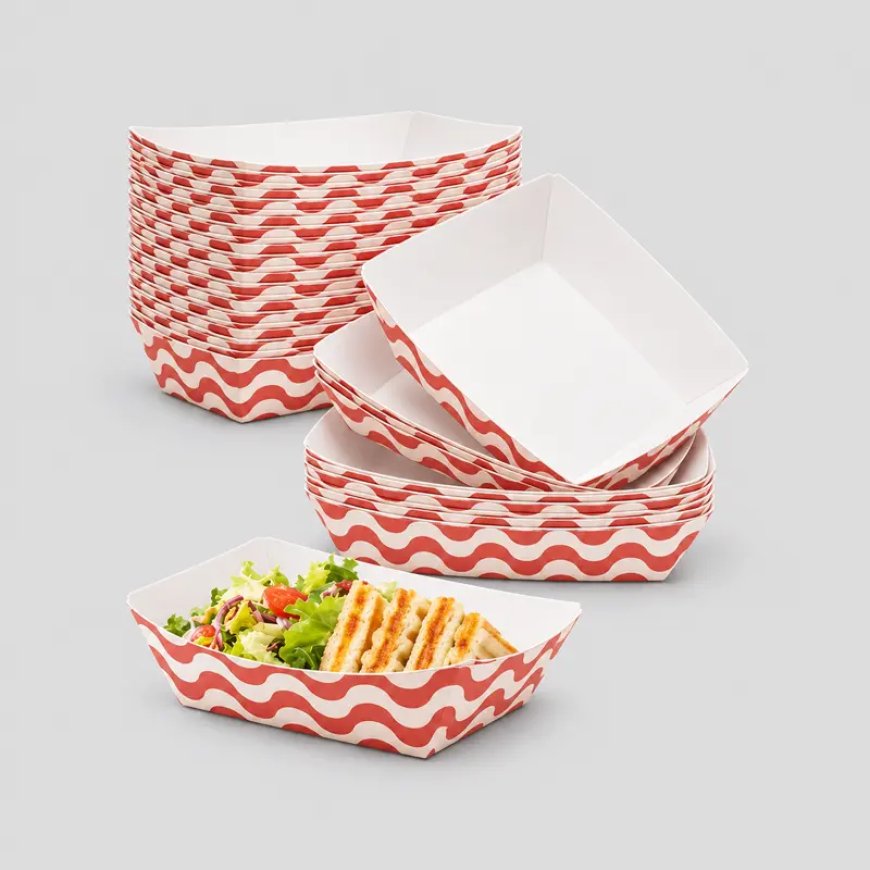
Paper food trays are a popular packaging solution for restaurants, cafés, food trucks, catering companies, and takeaway businesses. They provide a convenient way to serve different types of food while supporting organized presentation and easy handling. From French fries and burgers to nachos, sandwiches, chicken wings, and bakery products, paper food trays are available in different sizes, shapes, materials, and designs to meet various food service requirements.
As businesses look for practical alternatives to traditional food packaging, Custom paper food trays have become an important option for serving and takeaway operations. They can be customized with brand logos, colors, and printed designs, helping restaurants create recognizable food presentation. However, choosing the right tray involves more than appearance. Material strength, grease resistance, moisture protection, food-contact suitability, dimensions, and cost all influence packaging performance. This guide explains the different types of paper food trays, their materials, benefits, customization options, and important factors businesses should consider when selecting a reliable manufacturer.
What Are Paper Food Trays?
Paper food trays are disposable or single-use serving containers manufactured from paperboard, kraft paperboard, or other suitable paper-based materials. They are designed to hold, display, and serve food in restaurants, takeaway outlets, food stalls, stadiums, and catering environments.
Unlike traditional plates, paper trays often feature raised sides that help keep food contained during serving and handling. Their open-top structure also makes food accessible to customers without requiring complicated packaging. Depending on their design, they can accommodate dry snacks, greasy meals, baked goods, and selected hot or cold food products.
Businesses can choose different tray dimensions and structural styles depending on portion sizes and serving requirements. Some designs are simple rectangular trays, while others feature folded corners, deeper sides, or compartment-style sections. Food-contact suitability and any required grease or moisture barriers should always be verified before use.

Different Types of Paper Food Trays
Paper food trays come in several styles to accommodate different menu items and food service environments.
Kraft Paper Food Trays
Kraft paper food trays feature a natural brown appearance and are popular among cafés, food trucks, takeaway restaurants, and businesses seeking a simple packaging aesthetic. Food-grade kraft board can provide a practical structure for serving snacks, sandwiches, and other suitable foods.
White Paper Food Trays
White paper trays offer a clean, simple appearance that works well with different restaurant branding styles. Their neutral surface can also provide a suitable background for custom printing, logos, and product information.
Grease-Resistant Paper Food Trays
These trays are designed with materials or barrier treatments that help resist oil penetration. They are useful for serving French fries, fried chicken, burgers, and other foods that contain grease. Businesses should confirm the actual grease-resistance specifications before ordering.
Compartment Paper Food Trays
Compartment trays feature separate sections that help keep different food items apart. They can be useful for combination meals, snacks with sides, and catering portions where food separation is important.
Custom Printed Paper Food Trays
Custom printed trays allow restaurants to display their logos, brand colors, patterns, and promotional messages. They combine food serving functionality with brand presentation.
Materials Used in Paper Food Tray Manufacturing
Material selection plays an important role in determining the strength, durability, appearance, and suitability of paper food trays.
Common materials include:
-
Paperboard: A versatile material used for different tray structures and serving applications.
-
Kraft paperboard: Offers a natural appearance and can be used for selected food packaging applications.
-
Coated paperboard: May include barrier coatings to improve resistance to moisture and grease.
-
Corrugated paperboard: Features a fluted structure that provides additional rigidity for certain packaging applications.
-
Recycled-content paperboard: Uses recovered paper fibers where suitable for the intended food-contact application and applicable regulations.
The appropriate material depends on the food's weight, temperature, moisture, and grease content. Manufacturers should also provide information about coatings, adhesives, inks, and food-contact compliance.
Benefits of Paper Food Trays for Restaurants and Takeaways
Paper food trays offer several practical advantages for food service businesses.
Convenient food serving: Their open-top design allows customers and employees to access food easily. This makes them useful for quick-service restaurants, food trucks, and takeaway counters.
Lightweight construction: Paper-based trays are generally lightweight, making them convenient to handle, stack, transport, and distribute.
Different size options: Businesses can select tray dimensions according to their portion sizes, menu items, and serving requirements.
Branding opportunities: Custom printed paper food trays can display logos, colors, and promotional designs, helping businesses create consistent packaging.
Flexible applications: Different tray styles can accommodate snacks, fries, sandwiches, bakery products, and selected takeaway meals.
Practical storage: Many paper food trays are supplied flat or nested, depending on their structure, which can help businesses organize packaging inventory.
These advantages make paper food trays a practical choice for businesses looking to improve serving convenience and food presentation.
Choosing the Right Paper Food Tray Size and Style
Selecting the correct size is essential for creating functional food packaging. A tray that is too small may cause food to overflow, while an unnecessarily large tray can waste material and make serving less convenient.
Businesses should consider the following factors:
-
Food dimensions: Measure the length, width, and height of the food items.
-
Portion size: Choose dimensions that comfortably accommodate the intended serving.
-
Tray depth: Consider raised sides for foods that may move during handling.
-
Food weight: Select a material and structure capable of supporting the expected load.
-
Serving environment: Consider whether trays will be used for dine-in service, takeaway, catering, or food events.
-
Stacking requirements: Choose designs that can be stored efficiently in the available space.
Before ordering large quantities, businesses should test sample trays with their actual menu items.
Custom Printing and Branding Options for Paper Food Trays
Packaging is an important part of a restaurant's visual identity. Custom paper food trays allow businesses to incorporate branding into everyday food presentation. Instead of using plain serving trays, restaurants can add their logos, brand colors, promotional messages, and unique graphics.
Common customization options include:
-
Logo printing: Display your restaurant or food business logo on the tray.
-
Custom colors: Use brand colors to maintain a consistent visual identity.
-
Pattern printing: Add decorative patterns that complement the overall packaging design.
-
Promotional messages: Include special offers, social media handles, or short marketing messages.
-
Custom dimensions: Select tray sizes according to specific menu items and serving portions.
-
Material finishes: Choose suitable surface treatments based on the desired appearance and food-contact requirements.
When selecting custom printing, businesses should consider ink suitability, print quality, color consistency, and the tray's intended application. A professional manufacturer can help prepare artwork and recommend printing options that balance branding with practical performance.
Paper Food Trays for Different Types of Foods
Different foods require different packaging structures. Choosing the right paper food trays can improve serving convenience and help maintain an attractive food presentation.
|
Food Type |
Recommended Tray Features |
|---|---|
|
French fries |
Grease-resistant material and open-top design |
|
Burgers |
Wider trays with suitable depth |
|
Nachos |
Spacious trays with raised sides |
|
Chicken wings |
Strong construction and grease resistance |
|
Sandwiches |
Rectangular trays with sufficient space |
|
Bakery products |
Clean surfaces and suitable dimensions |
|
Fish and chips |
Grease-resistant materials and deeper sides |
|
Desserts |
Smaller trays with attractive presentation |
For hot and oily foods, businesses should prioritize suitable grease resistance and temperature performance. For dry snacks and bakery items, simpler paperboard structures may be sufficient.
It is also important to consider whether the food will be served immediately or remain in the tray for an extended period. Moisture, steam, sauces, and oils can affect paper packaging differently depending on the material and barrier treatment.
Paper Food Trays vs. Plastic Food Trays
Paper and plastic food trays are both used in the food service industry, but they offer different characteristics. The best option depends on the business's packaging requirements, budget, food type, and sustainability objectives.
|
Comparison Factor |
Paper Food Trays |
Plastic Food Trays |
|---|---|---|
|
Material |
Paperboard or kraft board |
Different plastic polymers |
|
Weight |
Generally lightweight |
Generally lightweight |
|
Customization |
Printing on suitable paper surfaces |
Printing, labels, or molded designs |
|
Grease resistance |
Depends on material and coating |
Depends on plastic type |
|
Moisture resistance |
Depends on barrier treatment |
Generally resistant to water |
|
Appearance |
Natural, white, or printed finishes |
Available in various colors and styles |
|
Disposal |
Depends on coatings and local facilities |
Depends on polymer and recycling facilities |
|
Applications |
Snacks, takeaway meals, and serving |
Food storage, takeaway, and serving |
Paper trays may appeal to businesses looking for paper-based packaging and branding opportunities. Plastic trays may be more suitable for applications requiring specific moisture barriers or reusable designs.
However, neither material is automatically the better environmental option in every situation. Businesses should evaluate the complete product specifications, manufacturing materials, disposal infrastructure, and local regulations before making a decision.
Sustainable Materials and Food Packaging Considerations
Sustainable packaging is becoming an important consideration for restaurants and food businesses. Paper food trays can be manufactured using responsibly sourced fibers, recycled-content materials where appropriate, and selected barrier treatments.
Businesses interested in more environmentally conscious packaging should consider:
-
Paperboard from responsibly managed sources.
-
Recycled-content materials where food-contact requirements permit.
-
Appropriate coatings that support the intended packaging application.
-
Printing inks suitable for food packaging.
-
Right-sized trays to avoid unnecessary material consumption.
-
Disposal and recycling options available in their local area.
It is important to understand that not all paper food trays are recyclable or compostable. Grease, food contamination, plastic coatings, and other treatments can affect disposal options. Businesses should request supporting documentation before advertising packaging as recyclable, biodegradable, or compostable.
Choosing the right material involves balancing food protection, packaging performance, environmental considerations, and cost.
Wholesale Paper Food Trays: What Businesses Should Know
Restaurants, catering companies, food trucks, and takeaway businesses often purchase packaging in bulk to maintain consistent inventory and manage purchasing costs. Wholesale paper food trays can provide a practical option for businesses with regular packaging requirements.
Before placing a wholesale order, consider these important factors:
Minimum order quantity (MOQ): Ask about the supplier's minimum purchasing requirements. Smaller businesses may prefer suppliers that accommodate lower order quantities.
Bulk pricing: Request quotations for different quantities to understand how unit costs change with order volume.
Customization costs: Custom printing, special dimensions, and additional material treatments may affect the total price.
Product samples: Request samples to evaluate tray strength, dimensions, printing quality, and food suitability.
Production time: Confirm manufacturing schedules and expected delivery dates before committing to a large order.
Storage requirements: Consider available warehouse or restaurant storage space when deciding how many trays to purchase.
Businesses should compare quotations using identical specifications. This makes it easier to evaluate the actual value offered by different suppliers rather than focusing only on the lowest advertised price.
How to Choose a Reliable Paper Food Tray Manufacturer
Selecting a dependable manufacturer is essential for maintaining consistent packaging quality. A reliable supplier should understand the food service industry's requirements and provide suitable materials, customization options, and production support.
Here are several factors to evaluate before choosing a manufacturer:
-
Manufacturing experience: Review the supplier's background and experience with paper-based food packaging.
-
Material selection: Check whether different paperboard, kraft, and barrier-treated options are available.
-
Customization capabilities: Ask about custom dimensions, structural designs, and printing options.
-
Quality control: Understand how the manufacturer checks dimensions, material consistency, printing, and finished products.
-
Food-contact suitability: Request relevant product specifications and compliance documentation.
-
Pricing and MOQ: Compare wholesale quotations and minimum order quantities.
-
Samples and prototypes: Evaluate physical samples before approving bulk production.
-
Production and delivery: Confirm lead times, shipping arrangements, and communication throughout the order.
A good supplier should be transparent about its products, pricing, manufacturing capabilities, and delivery expectations.
For businesses exploring customized packaging, HOF Pack offers a range of packaging solutions, including custom boxes, mailer boxes, rigid boxes, and retail packaging. Businesses can contact the company to discuss their packaging specifications, customization requirements, and wholesale purchasing needs.
Frequently Asked Questions About Paper Food Trays
1. What are paper food trays used for?
Paper food trays are used for serving and presenting foods such as French fries, burgers, sandwiches, nachos, chicken wings, bakery products, and takeaway meals.
2. Are paper food trays suitable for hot food?
Yes, appropriately designed paper food trays can be used for certain hot foods. However, businesses should verify the material's temperature resistance and food-contact suitability before purchasing.
3. Are paper food trays grease-resistant?
Some paper food trays feature grease-resistant coatings or barrier treatments. Their performance depends on the paper grade, coating, and type of food being served.
4. Can paper food trays be customized with a logo?
Yes. Custom paper food trays can feature business logos, brand colors, promotional messages, and printed patterns, depending on the manufacturer's printing capabilities.
5. Are paper food trays environmentally friendly?
Paper-based trays may offer environmental advantages in suitable applications, particularly when responsibly sourced materials are used. However, coatings, contamination, and local disposal facilities affect their overall environmental performance.
6. What materials are used to manufacture paper food trays?
Common materials include paperboard, kraft paperboard, coated paperboard, corrugated paperboard, and selected recycled-content materials.
7. Can I order paper food trays wholesale?
Yes. Many packaging suppliers offer wholesale purchasing options. Businesses should compare minimum order quantities, bulk pricing, customization costs, and delivery schedules.
8. How do I choose the right paper food tray size?
Consider the food's dimensions, serving portion, weight, grease content, and required tray depth. Testing samples with actual food products can help confirm the appropriate size.
Conclusion
Paper food trays provide a practical packaging solution for restaurants, cafés, food trucks, catering companies, and takeaway businesses. From kraft and white paper trays to grease-resistant and custom printed designs, different options can meet various food serving and presentation requirements.
Before selecting a supplier, businesses should evaluate material quality, tray dimensions, grease resistance, printing capabilities, wholesale pricing, and food-contact suitability. Choosing the right packaging manufacturer can help maintain consistent product quality, improve customer experience, and strengthen brand recognition.
HOF PACK offers customized packaging solutions for businesses looking to improve product presentation and packaging quality. Contact HOF PACK to explore its packaging range and discuss your wholesale and custom packaging requirements.
What's Your Reaction?
 Like
0
 Dislike
0
 Love
0
 Funny
0
 Angry
0
 Sad
0
 Wow
0