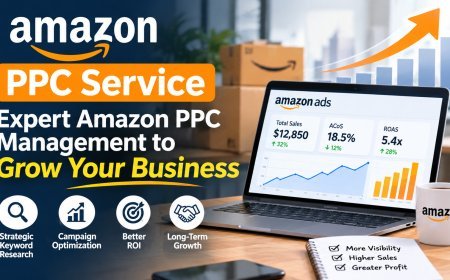
















Amazon PPC Service: Professional Amazon Advertising Management to Grow Your Business
Grow your Amazon sales with professional PPC management. Get expert keyword research, campaign optimization, bid management, and advertising strategies.

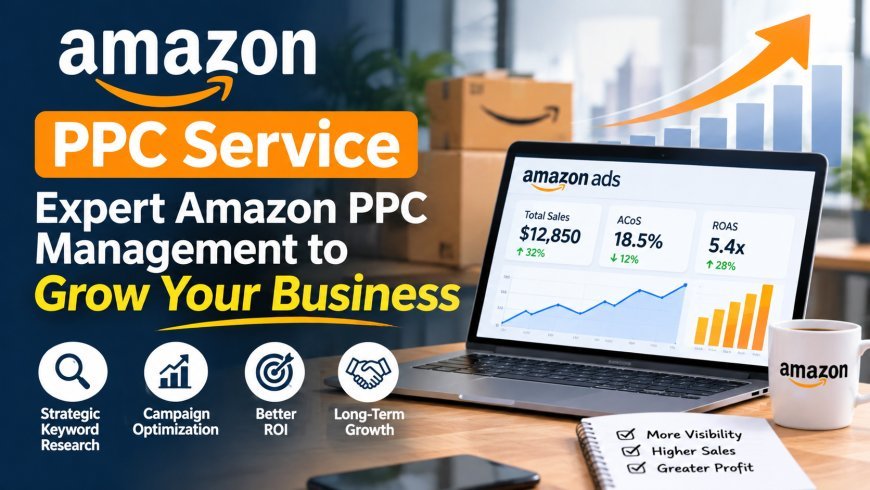
An Amazon PPC service helps businesses increase product visibility, attract relevant shoppers, and generate more sales through paid advertising on Amazon. Professional Amazon PPC management involves keyword research, campaign creation, bid optimization, budget management, competitor analysis, and continuous performance monitoring. Whether you are a manufacturer, established brand, or small business owner, a well-planned Amazon advertising strategy can help you reach potential customers while controlling advertising costs.
However, running successful Amazon PPC campaigns requires more than selecting keywords and increasing bids. Businesses need a clear advertising strategy that considers product profitability, competition, customer demand, inventory levels, and conversion performance.
Professional Amazon PPC management helps bring these elements together to build advertising campaigns around measurable business goals.
What Is an Amazon PPC Service and How Does It Work?
Amazon PPC (Pay-Per-Click) is an advertising model in which sellers pay when shoppers click their sponsored advertisements. These ads can appear in Amazon search results, product detail pages, and other eligible advertising placements.
An Amazon PPC service manages these advertising campaigns to help businesses attract relevant traffic and improve their advertising performance.
For example, imagine a company selling industrial safety equipment on Amazon. Its advertising campaign could target searches such as industrial safety gloves, protective workwear, or heavy-duty safety equipment. When shoppers search for relevant products, the company's sponsored advertisements may appear in eligible placements.
The advertiser pays when a shopper clicks an applicable cost-per-click ad.
A professional Amazon PPC management service typically includes:
-
Keyword and competitor research.
-
Campaign planning and setup.
-
Automatic and manual targeting.
-
Keyword and product targeting.
-
Bid and budget optimization.
-
Negative keyword management.
-
Advertising performance analysis.
-
Regular reporting and strategic improvements.
The objective is not simply to generate clicks. It is to attract shoppers who are more likely to purchase while maintaining sustainable advertising costs.
What Types of Amazon PPC Advertising Are Available?
Amazon provides different sponsored advertising formats to help businesses reach shoppers at different stages of their purchasing journey.
Understanding these options helps advertisers select campaigns that match their products and marketing objectives.
1. Sponsored Products
Sponsored Products are cost-per-click advertisements that promote individual product listings.
They can appear in shopping search results and on product detail pages. Businesses can use automatic or manual targeting to reach relevant shoppers.
For example, a manufacturer selling stainless steel water bottles could target keywords such as insulated water bottle, stainless steel bottle, and reusable travel bottle.
Sponsored Products are particularly useful for:
-
Increasing individual product visibility.
-
Targeting relevant shopping searches.
-
Supporting new product launches.
-
Promoting existing products.
-
Discovering profitable customer search terms.
2. Sponsored Brands
Sponsored Brands help businesses promote their brand, product collections, and brand identity through customized advertisements.
Depending on eligibility and campaign configuration, these ads can feature brand logos, product images, videos, and custom headlines.
For example, a company selling kitchen appliances could use Sponsored Brands to showcase several products and direct shoppers to its Amazon Brand Store.
Sponsored Brands are useful for:
-
Building brand awareness.
-
Promoting multiple products.
-
Increasing brand discovery.
-
Driving traffic to Amazon Brand Stores.
-
Supporting long-term brand growth.
3. Sponsored Display and Display Advertising
Amazon's display advertising solutions help advertisers reach relevant audiences through product and audience-based targeting.
Depending on the available format, placements can extend beyond Amazon's shopping pages.
For example, a business selling fitness accessories may use audience or product targeting to reach shoppers interested in similar products.
Display advertising can help businesses:
-
Reach relevant shopping audiences.
-
Promote complementary products.
-
Support product discovery.
-
Re-engage potential customers.
-
Expand advertising reach.
The availability and features of individual advertising products depend on marketplace, account eligibility, and Amazon's current advertising offerings.
Why Does Your Business Need Professional Amazon PPC Management?
Amazon advertising can become complicated as a business expands its product catalog, enters new marketplaces, or competes against established brands.
Professional Amazon PPC management provides a structured approach to advertising and helps businesses make informed decisions.
Increase Product Visibility
Even high-quality products can struggle to attract attention in competitive Amazon categories.
PPC advertising gives eligible products additional opportunities to appear in relevant shopping placements.
A carefully planned campaign can help manufacturers and sellers introduce their products to shoppers actively searching for related items.
Reach High-Intent Shoppers
Amazon PPC allows advertisers to target relevant shopping searches and products.
Instead of relying entirely on broad promotional activities, businesses can focus their advertising on shoppers demonstrating interest in specific product categories.
For example, targeting industrial-grade safety boots may attract a more relevant audience than using a general keyword such as footwear.
Improve Advertising Efficiency
Uncontrolled advertising spending can reduce profitability.
Professional campaign management involves reviewing search term reports, adjusting bids, excluding irrelevant searches, and reallocating budgets toward better-performing opportunities.
These activities help reduce avoidable advertising costs.
Support New Product Launches
New products often have limited sales history and little organic visibility.
Amazon PPC can help introduce new listings to relevant shoppers, generate initial traffic, and identify search terms that attract customer interest.
However, advertising results also depend on product pricing, listing quality, competition, customer reviews, and inventory availability.
Strengthen Brand Competition
Established brands need to protect their visibility while attracting shoppers who are considering competing products.
A structured advertising strategy can combine branded keywords, category targeting, and competitor product targeting to support different business objectives.
How Does an Amazon PPC Management Service Work?
Successful Amazon advertising requires ongoing research, implementation, and optimization.
A professional Amazon PPC agency generally follows a structured process.
Step 1: Amazon Advertising Account Audit
The first step is understanding the existing advertising account.
An audit helps identify campaign inefficiencies, unnecessary spending, weak targeting, and missed opportunities.
The review may include:
-
Existing campaign structures.
-
Advertising expenditure.
-
Keyword performance.
-
Search term reports.
-
ACoS and ROAS.
-
Product-level advertising results.
-
Campaign budgets and bidding strategies.
-
Historical performance trends.
For businesses with existing campaigns, this analysis provides a starting point for improvement.
Step 2: Keyword Research and Competitor Analysis
Keyword research helps identify the search terms shoppers use when looking for relevant products.
A professional PPC strategy may include:
-
Broad category keywords.
-
Specific long-tail keywords.
-
Product-related search terms.
-
Branded keywords.
-
Competitor product targeting.
-
Negative keyword opportunities.
For example, a manufacturer selling commercial cleaning equipment may target terms such as commercial floor scrubber, industrial cleaning machine, and professional floor cleaning equipment.
Competitor analysis also helps businesses understand market positioning, product pricing, advertising opportunities, and category competition.
Step 3: Campaign Structure and Setup
A well-organized campaign structure makes advertising easier to manage and optimize.
Campaigns can be separated according to:
-
Individual products.
-
Product categories.
-
Keyword match types.
-
Brand and non-brand searches.
-
Competitor targeting.
-
Advertising objectives.
For example, a business selling ten different kitchen appliances may create separate campaigns for its highest-priority products instead of placing everything into one poorly organized campaign.
This provides greater control over advertising budgets and product-level performance.
Step 4: Bid and Budget Optimization
Bidding determines how much an advertiser is willing to pay for an eligible click.
However, the highest bid does not always produce the best advertising results.
A PPC specialist evaluates keyword performance, conversion trends, competition, and product profitability before making bidding decisions.
Budget optimization may involve:
-
Increasing budgets for profitable campaigns.
-
Reducing spending on inefficient targets.
-
Adjusting keyword-level bids.
-
Monitoring daily budget limitations.
-
Testing different bidding strategies.
-
Allocating spending according to business priorities.
The aim is to use advertising budgets efficiently rather than simply spend more.
Step 5: Search Term Analysis and Negative Keywords
Not every search that triggers an advertisement is relevant to the advertised product.
Search term analysis helps identify which customer searches generate clicks and sales.
Negative keywords allow advertisers to exclude irrelevant searches and reduce unwanted traffic.
For example, if a business sells premium leather office bags, searches related to free bags or inexpensive plastic bags may not match its target market.
Excluding irrelevant searches can help improve campaign relevance and spending efficiency.
Step 6: Performance Monitoring and Continuous Optimization
Amazon PPC campaigns require regular performance reviews.
An experienced PPC manager monitors advertising results and makes adjustments according to campaign objectives.
Important activities include:
-
Reviewing search term reports.
-
Identifying profitable keywords.
-
Monitoring advertising costs.
-
Testing new targeting opportunities.
-
Adjusting keyword bids.
-
Reviewing product conversion performance.
-
Analyzing competitor activity.
-
Preparing regular performance reports.
Campaign optimization should be based on sufficient data rather than reacting to every short-term fluctuation.
What Is the Best Amazon PPC Strategy for Different Businesses?
Every business has different advertising objectives, product economics, and competitive challenges. A single campaign strategy will not work equally well for every seller.
Amazon PPC for Small Businesses
Small businesses often have limited advertising budgets and need to prioritize products with strong sales potential.
A practical approach includes:
-
Start with a small selection of commercially promising products.
-
Conduct keyword research before launching campaigns.
-
Use automatic targeting to discover relevant search terms.
-
Introduce manual campaigns for promising keywords.
-
Monitor spending and conversion performance.
-
Expand campaigns gradually as reliable data becomes available.
Small businesses should avoid distributing limited budgets across too many products without a clear strategy.
Amazon PPC for Manufacturers and Factories
Manufacturers often have broader product catalogs, specialized products, and different profit margins.
Their advertising strategy should account for product demand, production costs, inventory capacity, and competitive positioning.
For example, a factory manufacturing industrial tools may prioritize high-margin products, specific industry-related searches, and product categories with strong customer demand.
Important considerations include:
-
Product-level profitability.
-
Inventory and production capacity.
-
Seasonal demand.
-
Bulk and multi-pack product opportunities.
-
Competitor product targeting.
-
Brand positioning.
-
Long-term marketplace expansion.
Manufacturers should also ensure their product listings clearly communicate specifications, materials, applications, and product benefits.
Amazon PPC for Established Brands
Established brands need to balance customer acquisition with brand protection.
A structured approach may combine:
-
Sponsored Products for individual product promotion.
-
Sponsored Brands for brand discovery.
-
Display advertising for audience reach.
-
Branded keyword campaigns.
-
Competitor targeting.
-
Cross-selling opportunities.
Businesses should also evaluate whether advertising contributes to overall brand growth rather than measuring success through paid sales alone.
Amazon PPC for New Product Launches
New product launches require a different advertising approach because there may be limited historical performance data.
A launch strategy should include:
-
Keyword and competitor research.
-
Listing optimization before advertising.
-
Initial automatic targeting campaigns.
-
Relevant manual keyword campaigns.
-
Appropriate daily budgets.
-
Search term analysis.
-
Regular conversion and profitability reviews.
Advertising should be adjusted as the product generates more performance data.
Which Amazon PPC Metrics Should You Track?
Measuring the right metrics helps business owners understand whether advertising campaigns are supporting their commercial objectives.
The most important Amazon PPC metrics include the following.
1. Advertising Cost of Sales (ACoS)
ACoS measures advertising expenditure as a percentage of advertising-attributed sales.
Formula:
ACoS = (Advertising Spend ÷ Advertising Sales) × 100
Example:
If a company spends $200 on advertising and generates $1,000 in attributed sales:
ACoS = ($200 ÷ $1,000) × 100 = 20%
This means the business spends $20 on advertising for every $100 in attributed sales.
A lower ACoS is not automatically better. Businesses must consider their profit margins and growth objectives.
2. Total Advertising Cost of Sales (TACoS)
TACoS measures advertising expenditure against total sales, including both advertising-attributed and organic sales.
Formula:
TACoS = (Advertising Spend ÷ Total Sales) × 100
This metric provides a broader view of how advertising expenditure relates to overall business revenue.
For example, if a business spends $500 on advertising and generates $5,000 in total sales, its TACoS is 10%.
TACoS can help businesses evaluate the relationship between advertising activity and overall sales performance.
3. Return on Ad Spend (ROAS)
ROAS measures the revenue generated for each unit of advertising expenditure.
Formula:
ROAS = Advertising Sales ÷ Advertising Spend
For example, if a campaign spends $200 and generates $1,000 in advertising-attributed sales, its ROAS is 5x.
This means the campaign generates $5 in attributed sales for every $1 spent on advertising.
ROAS does not represent net profit because it does not account for product costs, Amazon fees, fulfillment expenses, and other business costs.
4. Cost Per Click (CPC)
CPC represents the average amount paid for each advertising click.
Formula:
CPC = Advertising Spend ÷ Total Clicks
Monitoring CPC helps businesses understand how much they are paying to attract shoppers.
5. Click-Through Rate (CTR)
CTR measures how frequently shoppers click an advertisement after seeing it.
Formula:
CTR = (Clicks ÷ Impressions) × 100
A higher CTR may indicate that an advertisement is attracting relevant shopper interest, although it does not guarantee sales.
6. Conversion Rate (CVR)
Conversion rate measures the percentage of clicks that result in purchases.
Formula:
CVR = (Orders ÷ Clicks) × 100
A low conversion rate may indicate issues with product pricing, images, reviews, product descriptions, or traffic relevance.
Businesses should examine these factors before increasing advertising bids.
How Do You Choose the Right Amazon PPC Management Agency?
Choosing an Amazon PPC agency is an important business decision. The right partner should understand advertising performance, marketplace competition, and the financial objectives of your business.
Consider these factors before selecting an agency.
1. Experience with Amazon Advertising
Look for a team with practical experience managing Sponsored Products, Sponsored Brands, and display advertising campaigns.
2. Transparent Reporting
An agency should provide clear reports covering advertising expenditure, attributed sales, ACoS, ROAS, and campaign performance.
3. Data-Driven Strategies
Avoid agencies that promise guaranteed rankings or sales. Effective advertising requires testing, analysis, and continuous adjustments.
4. Understanding of Business Profitability
Your PPC agency should understand product costs, marketplace fees, margins, and inventory limitations.
5. Customized Campaign Management
A manufacturer, private label seller, and small business do not necessarily need the same advertising strategy.
Choose a service provider that builds campaigns around your specific products and business objectives.
Frequently Asked Questions About Amazon PPC Services
1. What is an Amazon PPC service?
An Amazon PPC service is a professional advertising management solution that helps sellers create, manage, and optimize paid advertising campaigns on Amazon. It typically includes keyword research, campaign setup, bid management, budget optimization, and performance reporting.
2. How does Amazon PPC advertising work?
Amazon PPC works through an auction-based advertising system. Advertisers select products, targeting options, bids, and budgets. When eligible shoppers interact with sponsored advertisements, advertisers may pay for clicks depending on the campaign's pricing model.
3. How much does Amazon PPC management cost?
Amazon PPC management costs vary according to the number of products, advertising expenditure, campaign complexity, marketplace, and agency pricing model. Some agencies charge a fixed monthly fee, while others use a percentage of advertising spend or a customized pricing structure.
4. Is Amazon PPC worth it for small businesses?
Yes, Amazon PPC can be useful for small businesses that want to increase product visibility and reach relevant shoppers. However, success depends on product demand, pricing, competition, listing quality, and advertising budget management.
5. How much should a business spend on Amazon PPC?
There is no universal advertising budget for every business. The appropriate amount depends on product margins, average selling price, competition, conversion rates, and growth objectives. Businesses should establish a manageable test budget and adjust spending according to performance.
6. What is a good ACoS for Amazon advertising?
A good ACoS depends on product profitability and advertising objectives. A business with higher profit margins may tolerate a different ACoS than one operating with smaller margins.
To calculate a break-even ACoS, consider the percentage of sales revenue remaining after all relevant non-advertising costs. This helps establish the advertising cost level at which a campaign stops generating profit.
7. What is the difference between ACoS and TACoS?
ACoS compares advertising expenditure with advertising-attributed sales, while TACoS compares advertising expenditure with total sales, including organic revenue.
ACoS evaluates advertising efficiency, whereas TACoS provides a wider view of advertising expenditure in relation to overall sales.
8. How long does it take to see results from Amazon PPC?
Some campaigns can generate clicks and sales shortly after launch. However, meaningful optimization requires sufficient performance data. Initial campaign reviews over the first two to three weeks can provide useful insights, although the ideal evaluation period varies by product and category.
9. Which Amazon PPC campaign type is best for beginners?
Sponsored Products with automatic targeting is a practical starting point for many beginners. It helps discover relevant shopping searches and product targets. Advertisers can then use those insights to build more focused manual campaigns.
10. Can Amazon PPC help launch a new product?
Yes. Amazon PPC can help new products gain exposure, attract relevant shoppers, and identify valuable search terms. However, advertising alone cannot guarantee a successful launch. Product quality, pricing, listing optimization, reviews, and inventory availability also matter.
11. Why are my Amazon PPC campaigns getting clicks but no sales?
Several factors can contribute to this problem, including irrelevant keywords, uncompetitive pricing, weak product images, poor descriptions, insufficient reviews, and low product demand.
Review search terms, product detail pages, pricing, and conversion data before increasing advertising expenditure.
12. Should I hire an Amazon PPC agency or manage campaigns myself?
Businesses with limited product catalogs and advertising experience may manage basic campaigns internally. However, larger businesses, manufacturers, and brands with complex catalogs may benefit from professional management, particularly when they need structured reporting, advanced targeting, and ongoing optimization.
Grow Your Amazon Business With Professional PPC Management
Successful Amazon advertising requires the right combination of research, campaign planning, budget control, and continuous optimization.
Whether you are a manufacturer introducing new products, an established brand expanding its marketplace presence, or a small business looking for more sales opportunities, a professional Amazon PPC strategy can help you make better advertising decisions.
At Bizistech, we help businesses manage their Amazon advertising activities through strategic campaign planning, keyword research, bid optimization, and performance monitoring.
Our approach focuses on understanding your products, business goals, and advertising requirements before developing a suitable PPC strategy.
Ready to improve your Amazon advertising performance?
Contact Bizistech to discuss your Amazon PPC management requirements and explore how a structured advertising strategy can support your business growth.
What's Your Reaction?
 Like
0
 Dislike
0
 Love
0
 Funny
0
 Angry
0
 Sad
0
 Wow
0