
















Essential Towing Safety Tips Every Driver Should Know
Learn essential towing safety tips for every driver. Understand the tow hitch tongue, towbar tongues, weight limits and safe loading before your next trip.
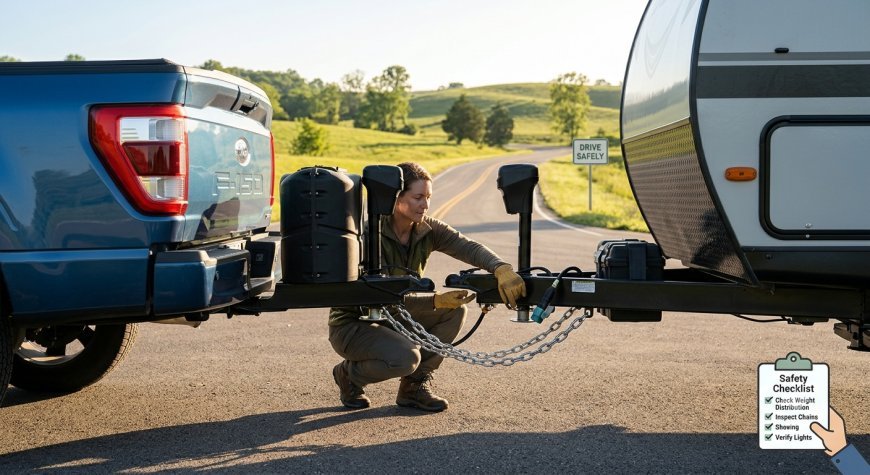
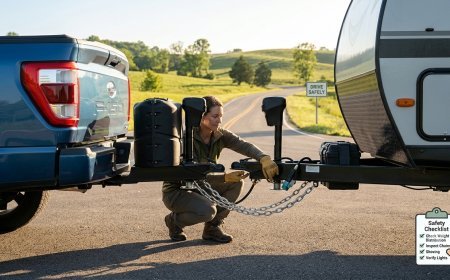
Towing can feel scary the first time. You have a heavy load behind you, and your car does not act the same way. But with a few good habits, towing can be safe and calm.
This guide shares simple safety tips for every driver. It also explains the tow hitch tongue and towbar tongues, which are small parts that play a big role.
What Is a Tow Hitch Tongue?
The tow hitch tongue is the part that sticks out from your vehicle's hitch. It holds the tow ball or the coupling point. You can think of it as the arm that reaches out to hold the trailer.
On some setups, the tongue is a flat bar with a ball bolted on top. On others, it slides into a receiver tube on the back of the vehicle. The trailer also has its own tongue, which is the front part that connects to the ball.
What Are Towbar Tongues?
Towbar tongues are the same idea, but the name is common in some parts of the world, such as the UK, Ireland and Australia. They are the sections of the towbar that carry the ball and take the pulling force.
Towbar tongues come in different shapes and strengths. Some are fixed, and some can be removed. Each one has a weight rating that you must not go over.
Why the Tongue Matters
All the force from the trailer passes through the tongue. It carries the pulling force and the downward push. If it bends, cracks or comes loose, the trailer could separate.
That is why you should know its rating, keep it clean and check it often. A strong, healthy tongue is the base of safe towing.
Know Your Weight Limits
Every part in your towing setup has a limit. These include:
-
The towing capacity of your vehicle
-
The rating of your tow hitch tongue
-
The rating of your tow ball and coupler
-
The weight of your loaded trailer
The lowest number in this list is your real limit. Never go above it, even if the other parts are stronger. You can find these numbers in your owner's manual or on labels on the parts.
Understand Tongue Weight
Tongue weight is the downward push of the trailer on the hitch. It is a key safety number.
A good rule is that tongue weight should be about 10 to 15 percent of the total trailer weight. For example, a 1,000 kg trailer should press down with about 100 to 150 kg.
Too little tongue weight can make the trailer sway from side to side. Too much can lift the front of your vehicle and make steering feel light. Both are unsafe.
Load the Trailer the Right Way
How you pack the trailer changes how it behaves. A badly loaded trailer is one of the top causes of accidents.
Follow these simple tips:
-
Put heavy items low and close to the axle
-
Keep the load balanced from left to right
-
Do not stack too much weight at the back
-
Tie everything down so nothing can slide
-
Keep the load below the maximum weight
If the trailer feels light at the front, move some weight forward. If it feels too heavy on the hitch, move some back.
Check the Hitch Before Every Trip
A short check can stop a big problem. Do this every time you tow, even for short trips.
Look closely at these parts:
-
The tow hitch tongue for cracks, bends or rust
-
Bolts and pins for tightness
-
The tow ball for wear or flat spots
-
The coupler and latch on the trailer
-
Safety chains or cables
If you see damage, do not tow. Fix or replace the part first.
Hook Up Slowly and Carefully
Take your time when you connect. Rushing leads to mistakes.
-
Line up the vehicle with the trailer
-
Lower the coupler onto the ball
-
Close and lock the latch
-
Insert the safety pin
-
Cross the safety chains under the tongue
-
Plug in the lights and brake cable
-
Raise the jockey wheel
Then give the coupler a firm tug upward. If it lifts off the ball, it is not locked on.
Use Safety Chains and Breakaway Cables
Safety chains act as a backup. If the main coupling fails, they help hold the trailer. Cross them in an X shape under the tongue so they can catch it if it drops.
A breakaway cable applies the trailer brakes if the trailer comes loose. Clip it to the vehicle, not to the hitch. Leave enough slack for turns, but keep it off the ground.
Test Lights and Brakes
Other drivers rely on your lights to see what you are doing. Before you leave, test every light. Check the brake lights, indicators and tail lights. Ask a friend to watch while you press the pedal and use the signals.
If your trailer has brakes, test them too. Good brakes are very important, especially on hills.
Check Your Tyres and Mirrors
Tyres carry the whole load. Check the pressure on both the vehicle and the trailer. Look for cuts, bulges and worn tread. A flat or weak tyre on a trailer can cause a serious crash.
Mirrors are just as important. You must be able to see along both sides of the trailer. If your mirrors do not give a clear view, use extension mirrors. Many places require them by law.
Drive Slower and Smoother
Towing changes how your vehicle handles. It takes longer to speed up and much longer to stop. Turns need more room.
Keep these habits in mind:
-
Drive below the legal towing speed limit
-
Keep a big gap from the car ahead
-
Brake early and gently
-
Take wide corners
-
Avoid sudden turns of the wheel
Smooth driving keeps the trailer steady and the load safe.
What to Do If the Trailer Sways
Sway happens when the trailer swings side to side. It can start from wind, a passing truck or a poor load.
If it happens, stay calm. Do the following:
-
Take your foot off the gas
-
Hold the steering wheel straight
-
Do not slam the brakes
-
Slow down gradually
-
Use the trailer brake lightly if you have one
Once the trailer is steady, pull over and check the load and tongue weight.
Take Care on Hills
Going uphill puts stress on the engine. Going downhill puts stress on the brakes.
On the way up, keep a steady speed and use a lower gear if needed. On the way down, use a lower gear too. This lets the engine help slow the vehicle. Do not ride the brakes for too long, because they can overheat.
Be Careful When Reversing
Reversing with a trailer is tricky. The trailer turns the opposite way to the wheel. Go slowly and use a spotter if you can.
Place your hand at the bottom of the steering wheel. Move your hand in the direction you want the trailer to go. Small moves work best. If the angle gets too sharp, pull forward and try again.
Stop and Recheck on Long Trips
Vibration can loosen parts. After the first few kilometres, pull over and check everything again. Look at the hitch, tongue, chains, plugs and tyres.
Then check again at each rest stop. This takes only a minute and can catch problems early. Rest stops are also good for you, since tired drivers make more mistakes.
Keep the Tongue Clean and Protected
Dirt, water and salt can cause rust. Rust weakens metal over time.
Clean your tow hitch tongue after trips. Wipe off mud and old grease. Apply a light coating of grease on the ball if the guide says so. Cover the ball or remove the tongue when not in use, if it is removable.
Know When to Replace Parts
Parts wear out. Replace them if you see:
-
Cracks or deep rust
-
Bent or twisted metal
-
A worn or uneven ball
-
Loose or stretched holes
-
Damage after an accident
Always buy parts with clear ratings. Unmarked or cheap parts may fail when you need them most.
Know the Rules
Towing laws are different in each country. They cover speed limits, weight rules, lights, mirrors and licence needs. Check what applies where you live and where you plan to travel. Following the rules keeps you safe and avoids fines.
Final Thoughts
Safe towing is about small, steady habits. Know your weight limits. Pay attention to the tow hitch tongue and towbar tongues. Load the trailer well, check your gear and drive with care.
None of these tips is hard. Together, they lower the risk and make every trip calmer. Take your time, stay alert and enjoy the journey.
What's Your Reaction?
 Like
0
 Dislike
0
 Love
0
 Funny
0
 Angry
0
 Sad
0
 Wow
0